
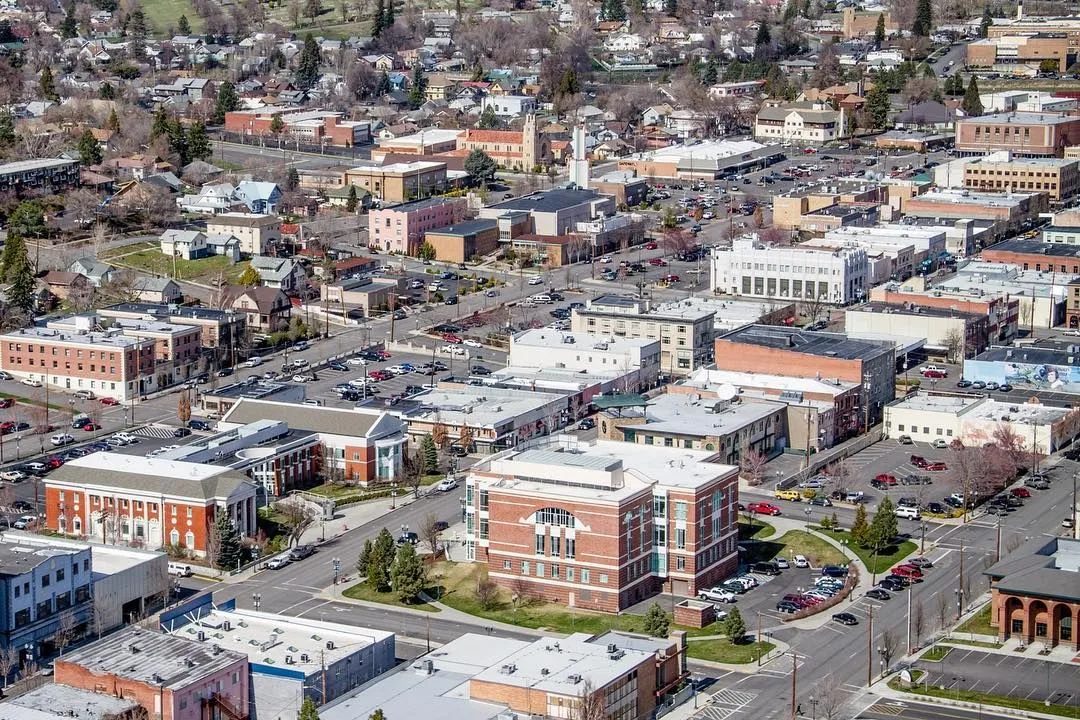
There are places where history lives behind museum glass, and then there are places where it is practically impossible to drive across town without passing through it. Klamath Falls belongs to the second category.
The railroad tracks, irrigation canals, old brick storefronts, historic homes and broad agricultural valleys all reveal different chapters of a remarkable Southern Oregon story. Even the city's name carries a reminder of a landscape that looked different before dams, industrial development and modern transportation reshaped the region.
Understanding Klamath Falls means understanding much more than when the town was founded. It means exploring the people who lived in the basin long before a town existed, the settlers who established Linkville, the industries that attracted thousands of workers, and the economic changes that shaped the community residents know today.
A History That Began Long Before Linkville
Long before the first Euro-American settlement developed beside the Link River, the Klamath Basin was home to Indigenous communities with deep cultural and economic connections to its lakes, rivers, marshes, forests and surrounding mountains.
The Klamath Tribes, consisting of the Klamath, Modoc and Yahooskin Paiute peoples, have enduring connections to this region. Their history includes sophisticated relationships with the natural environment, trade networks, food-gathering traditions and cultural practices that reach back many generations.
The establishment of American settlements did not mark the beginning of civilization in the basin. It marked a new and frequently disruptive period in an already ancient human landscape.
Our separate Indigenous History and Cultural Heritage collection examines that story in much greater depth, including tribal sovereignty, cultural preservation, displacement and contemporary tribal communities.
The Settlement That Became Linkville
In 1867, George Nurse established a trading outpost and ferry operation along the Link River, the short waterway connecting Upper Klamath Lake with Lake Ewauna.
The location was strategically important. Travelers needed reliable river crossings, ranchers needed supplies, and the surrounding countryside was gradually attracting more Euro-American settlers.
The community became known as Linkville.
By 1872, the settlement reportedly had approximately forty residents. It was small, isolated and a long way from becoming the regional center that exists today.
Yet the foundations were already being established.
Ranching expanded in the surrounding valleys. William S. Moore established a sawmill in 1877. Businesses opened to serve residents and travelers. Roads and transportation routes connected the settlement to surrounding communities.
When Klamath County was established in 1882, Linkville became the county seat, an important distinction that strengthened its role as a center for government, commerce and regional services.
From Linkville to Klamath Falls
In 1893, Linkville was renamed Klamath Falls.
The new name referred to the rapids and falls associated with the Link River. Today, visitors sometimes wonder where the famous waterfall is hiding. The answer is that the river environment changed significantly as water-control infrastructure and urban development transformed the area.
The name nevertheless preserved an important connection to the city's geography.
Klamath Falls incorporated in 1905, just as a series of economic developments was about to accelerate its growth.
Water and the Transformation of the Basin
Water has always been central to life in the Klamath Basin.
Early agriculture relied on available water sources and local irrigation systems, but the federal Klamath Project dramatically expanded the scale of agricultural development during the early twentieth century.
Construction of the project's A Canal began in 1906, and water deliveries followed in 1907.
Canals, diversion structures and drainage systems made additional land available for irrigated agriculture. Farmers established operations, agricultural communities expanded, and the region became increasingly important for crop production.
However, these changes also altered wetlands, lake environments, fish habitat and the broader ecosystem.
The consequences remain relevant today, particularly in discussions about water rights, endangered species, agricultural needs and ecological restoration.
For anyone considering rural property, this history helps explain why water availability and water rights deserve careful investigation before purchasing land.
The Railroad Arrives
In 1909, Southern Pacific reached Klamath Falls.
Few developments had a more immediate economic effect.
Previously, transportation into and out of the basin was difficult and expensive. Rail service connected the community to larger markets, allowing timber, agricultural products and other goods to move more efficiently.
Businesses expanded. Construction accelerated. New workers arrived. Hotels and commercial buildings served the growing population.
The railroad helped transform Klamath Falls from an isolated regional settlement into an important industrial and commercial center.
The Timber Years
The surrounding forests contained extensive stands of ponderosa pine, and railroad access made large-scale timber production economically attractive.
Sawmills, lumber companies and box factories became major employers.
The Ewauna Box Company was among the significant industrial operations associated with the region's timber economy. In 1929, Weyerhaeuser opened a major sawmill in Klamath Falls, further reinforcing the city's position in the lumber industry.
Timber shaped daily life.
Workers purchased homes, supported downtown businesses, raised families and participated in schools, churches and civic organizations.
The industry influenced neighborhood growth, transportation patterns and the city's identity for generations.
Although timber employment eventually declined, its historical importance remains visible in local architecture, industrial sites and community memory.
A Growing Downtown
As Klamath Falls expanded, its downtown became the commercial and civic heart of the community.
Banks, hotels, theaters, stores, government buildings and professional offices appeared.
City Hall, constructed in 1914, reflected the community's growing confidence and investment in public institutions.
The Baldwin Hotel became another recognizable part of the historic downtown landscape.
These buildings were more than architectural statements. They represented a city serving farmers, ranchers, loggers, business owners and families across a vast region.
Today, downtown Klamath Falls offers an opportunity to experience that history through surviving buildings, museums and streetscapes.
Klamath Falls During World War II
World War II brought military activity directly into the community.
Naval Air Station Klamath Falls was commissioned in January 1944 at the municipal airport.
The military also established the Klamath Falls Marine Barracks, which served as a specialized rehabilitation facility for Marines affected by tropical diseases, including malaria and filariasis, contracted during service in the Pacific.
Military personnel became part of everyday community life.
Local businesses, families, churches and civic organizations interacted with servicemen during a period when the war touched nearly every American community.
The installations eventually closed, but their stories remain an important part of Klamath Falls history.
Postwar Growth and Economic Change
After World War II, Klamath Falls experienced the changes familiar to many Western communities.
Veterans returned home. Families sought housing. Schools, transportation infrastructure and commercial services evolved.
Timber remained important, but changing technology, markets, environmental policies and forest-management practices gradually altered the industry.
The community faced economic challenges as employment patterns changed.
At the same time, health care, education, government services, agriculture, tourism and other industries became increasingly important.
Oregon Institute of Technology helped strengthen the city's educational identity, while regional medical services supported residents across a large geographic area.
Klamath Falls Today
Modern Klamath Falls combines elements of its historic identity with newer opportunities.
Agriculture remains visible throughout the basin. Timber continues to be part of the regional economy, though its role has changed. The city serves as a center for medical care, education, shopping, government and professional services.
Its location also makes it a gateway to remarkable outdoor recreation.
Crater Lake National Park, Upper Klamath Lake, wildlife refuges, forests, trails and high-desert landscapes attract visitors and provide residents with access to experiences that are difficult to find in many larger cities.
For people considering relocation, understanding the city's history offers something more meaningful than a list of amenities.
It explains why neighborhoods developed where they did, why some properties have older architectural character, why rural water issues matter and why the community retains such strong connections to land and natural resources.
Klamath Falls is not simply a former railroad or timber town.
It is a community shaped by repeated adaptation, and that process continues.
Frequently Asked Questions
When was Klamath Falls founded?
The Euro-American settlement that became Klamath Falls was established as Linkville in 1867.
What was Klamath Falls originally called?
Linkville, named for its location along the Link River.
When did Klamath Falls become an incorporated city?
Klamath Falls incorporated in 1905.
What industries helped Klamath Falls grow?
Agriculture, timber, rail transportation, commerce and regional services were particularly important during the city's early development.
What is Klamath Falls known for today?
Its high-desert and mountain setting, proximity to Crater Lake, outdoor recreation, agriculture, regional services and educational institutions.
Explore More
Sources and Further Reading
- Oregon Encyclopedia: Klamath Falls (city)
- Oregon Historical Society
- Klamath County Museums
- Bureau of Reclamation: Klamath Project
- National Park Service: Crater Lake National Park
Historical claims in this article trace to the authoritative sources listed above. Illustrations are labeled as such and are not archival photographs.