
Water is the defining resource of the Klamath Basin.
It shaped Indigenous food systems and settlement patterns long before modern irrigation existed. It influenced the location of towns, the development of agriculture and the growth of regional industries.
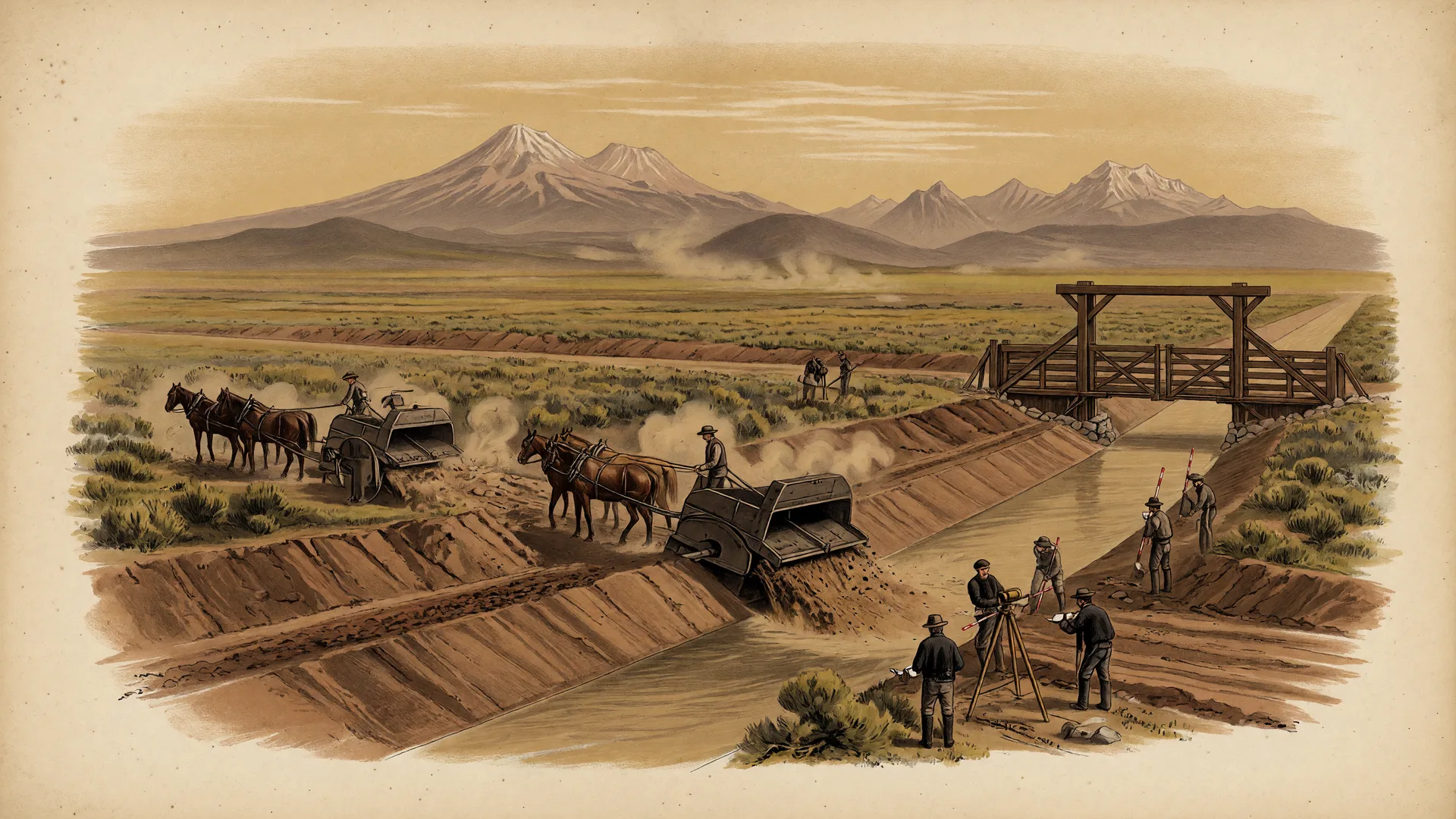
During the early twentieth century, federal irrigation engineering changed the landscape on an enormous scale.
The consequences are still visible today.
Before the Klamath Project
The basin historically contained extensive wetlands, lakes, marshes and interconnected waterways.
These environments supported fish, waterfowl and other wildlife.
Indigenous communities maintained deep cultural and practical relationships with these ecosystems.
Euro-American ranchers and farmers also used local water sources, and private irrigation efforts existed before federal reclamation.
However, expanding agriculture on a large scale required major infrastructure.
The Federal Reclamation Era
The Reclamation Act of 1902 established a federal framework for irrigation development in the American West.
The Klamath Project became one of the early federal reclamation projects.
Construction of the A Canal began in 1906.
Water deliveries began in 1907.
Over time, the project developed a network of canals, drains, diversion structures and other facilities.
These systems helped support irrigated agriculture across portions of the basin.
How Irrigation Changed the Economy
Reliable water delivery allowed agricultural operations to expand.
Farms produced crops for local and distant markets.
Agricultural communities grew.
Businesses developed to supply machinery, equipment, storage, transportation and other services.
The economic effects reached Klamath Falls and smaller communities throughout the basin.
Agriculture became a major component of the regional economy.
What Happened to the Wetlands?
Reclamation did not simply deliver water to fields.
It also involved drainage and conversion of areas that had historically functioned as wetlands.
These changes altered habitat, hydrology and ecological relationships.
The basin's wetlands are particularly important for migratory birds.
Changes to water availability also affected fish and other aquatic species.
Understanding the project requires considering both its agricultural achievements and the environmental changes it produced.
Water Rights and Competing Needs
The Klamath Basin contains overlapping water demands and legal interests.
Agricultural irrigation is one major use.
Fish habitat, tribal water rights, wildlife refuges and other ecological needs are also significant.
Federal and state agencies, tribal governments, irrigation districts, agricultural producers and conservation organizations all play roles in water discussions.
The resulting legal and policy landscape is complex.
A simple claim that one group “owns all the water” or that one project “caused every problem” would not accurately represent the situation.
Drought and Modern Challenges
Drought can intensify competition for limited water supplies.
Water deliveries may be affected by hydrologic conditions, legal requirements and operational decisions.
Those conditions can change from year to year.
Anyone researching current agricultural operations should consult current official information rather than relying on historical averages or assumptions.
What Property Buyers Need to Know
A canal beside a parcel does not prove that the property has an irrigation entitlement.
Likewise, a parcel's historic agricultural use does not automatically establish current water availability.
Buyers should investigate documented water rights, irrigation district membership, assessments, infrastructure responsibilities and any applicable restrictions.
For residential buyers, water issues may also involve wells, municipal supply systems or local water districts.
These matters are particularly important in rural Klamath County.
Why the History Matters
The Klamath Project explains much of the modern basin's geography.
Fields, canals, roads, agricultural towns and drainage systems reflect decisions made over generations.
It also explains why water remains central to regional public policy.
For people who live here, the subject is not merely historical.
It affects agriculture, ecosystems, property ownership and community relationships.
Frequently Asked Questions
What is the Klamath Project?
A federal reclamation project developed to support irrigation and agricultural production in the Klamath Basin.
When did construction begin?
Major early construction began in 1906.
Did irrigation change the basin's wetlands?
Yes. Reclamation and drainage altered substantial portions of the historic wetland landscape.
Are water rights included automatically with rural property?
No. Water rights and delivery arrangements must be verified for each property.
Explore More
Read the Agricultural History of the Klamath Basin and Lincoln Home's guides to Rural Property, Wells, Irrigation Districts and Buying Acreage.
Sources and Further Reading
- Bureau of Reclamation: Klamath Project
- Oregon Water Resources Department
- U.S. Fish and Wildlife Service
- Klamath Tribes
Historical claims in this article trace to the authoritative sources listed above. Illustrations are labeled as such and are not archival photographs.