
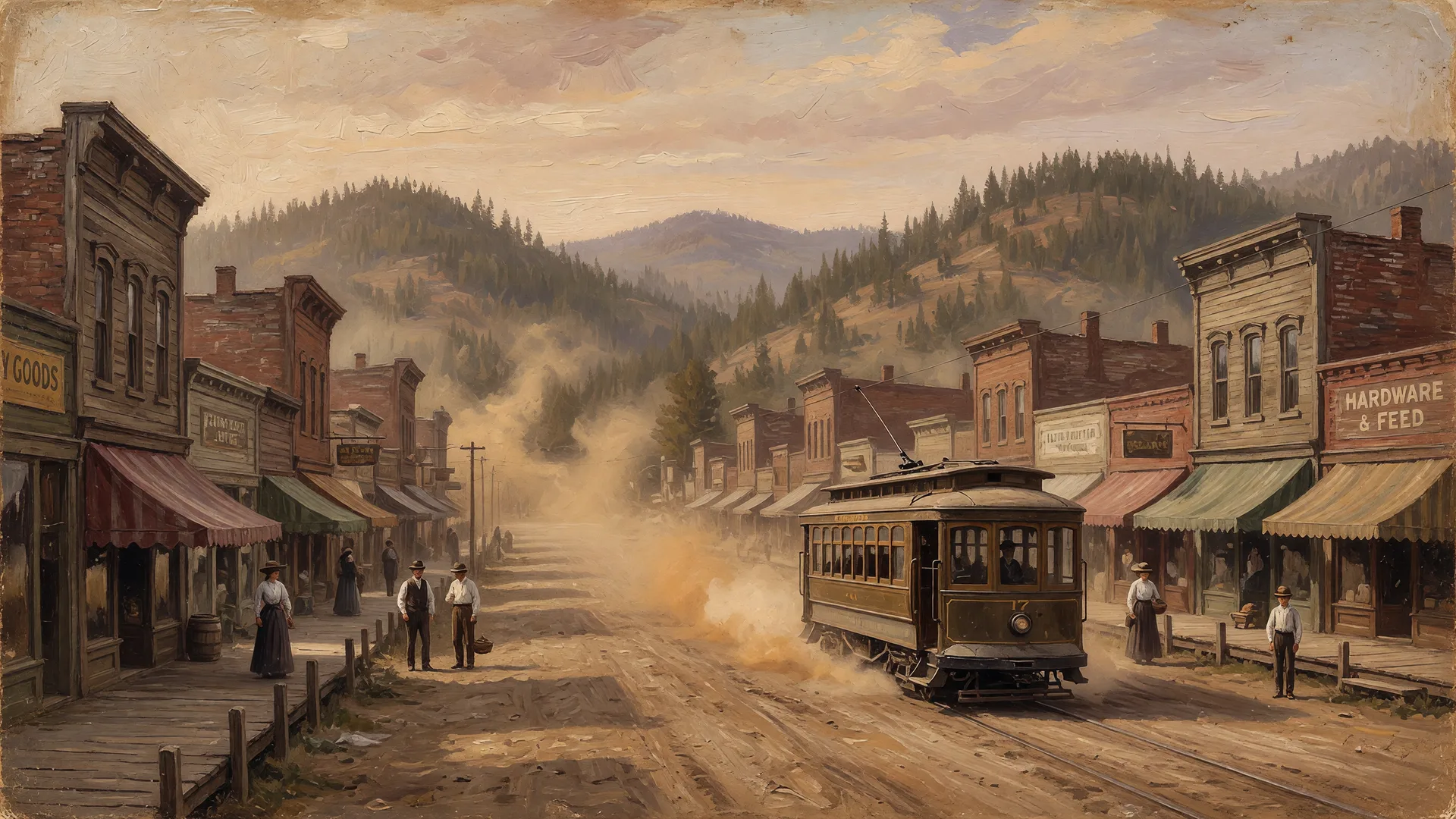
Imagine Klamath Falls in 1905.
The community had just incorporated as a city.
Its population was still modest compared with what it would become.
Much of the surrounding basin remained rural, and transportation into the region could be difficult.
Yet enormous changes were approaching.
Within a few years, irrigation construction, rail transportation and industrial investment would transform the city's economy and physical appearance.
A City at the Beginning of a New Era
The community had changed its name from Linkville to Klamath Falls in 1893.
By 1905, incorporation formalized its municipal identity.
The city was already a county seat and regional commercial center.
But it had not yet experienced the full impact of twentieth-century infrastructure development.
Federal Irrigation Construction
The Klamath Project began major early construction in 1906.
Water deliveries followed in 1907.
Irrigation infrastructure supported agricultural expansion and encouraged settlement in surrounding farming areas.
The project also changed wetlands and waterways, creating environmental consequences that remain significant.
Agricultural development increased demand for businesses and transportation services in Klamath Falls.
A Streetcar in a Growing Town
Klamath Falls briefly operated a street railway beginning in 1907.
The idea of a streetcar in a relatively small Southern Oregon community may surprise modern readers.
But it reflected the optimism of the period.
Residents expected growth and wanted transportation infrastructure suited to a developing city.
The streetcar system was short-lived, yet it remains an intriguing example of early urban ambition.
The Railroad Arrives
Southern Pacific reached Klamath Falls in 1909.
The impact was immediate.
Rail access made it easier to transport timber and agricultural products.
Commercial investment increased.
New businesses and buildings appeared.
The city became more closely connected to regional and national markets.
The Building Boom
The early twentieth century brought construction that helped establish the appearance of downtown Klamath Falls.
Commercial buildings, hotels, banks and civic structures reflected the growing economy.
City Hall was constructed in 1914.
These buildings represented a transition from a frontier-style settlement toward a more established urban community.
The Timber Economy Expands
The railroad made large-scale timber production more practical.
Sawmills and box factories grew.
Workers arrived.
Families needed housing.
Businesses served an expanding population.
Timber became a major force in the city's economy.
What Was Daily Life Like?
Life in early twentieth-century Klamath Falls combined modernizing infrastructure with the realities of a relatively remote Western community.
Residents increasingly had access to commercial services, entertainment and public institutions.
Yet rural surroundings remained close.
Agriculture and timber influenced employment.
Weather could still complicate travel.
Families relied on local organizations, schools, churches and community relationships.
The Great Depression and Industrial Change
The economic optimism of earlier decades faced challenges during the Great Depression.
Businesses and families throughout the United States experienced financial hardship.
Resource-dependent communities were particularly vulnerable to changes in demand.
Klamath Falls was not immune.
Yet the city's established industries, institutions and regional role helped shape its continued development.
The Legacy of the Early 1900s
Much of what people recognize as historic Klamath Falls developed during this period.
Downtown architecture, industrial corridors, transportation patterns and older residential areas reflect the growth of the early twentieth century.
Understanding that era helps explain why the city looks the way it does today.
Frequently Asked Questions
When did Klamath Falls incorporate?
1905.
When did the railroad arrive?
1909.
What industries drove early twentieth-century growth?
Agriculture, timber, transportation and commerce.
Are early twentieth-century buildings still standing?
Yes. Historic structures survive in portions of downtown and established residential areas.
Explore More
Sources and Further Reading
- Oregon Encyclopedia: Klamath Falls (city)
- Klamath County Museums
- Oregon Historical Society
- National Register of Historic Places
Historical claims in this article trace to the authoritative sources listed above. Illustrations are labeled as such and are not archival photographs.