
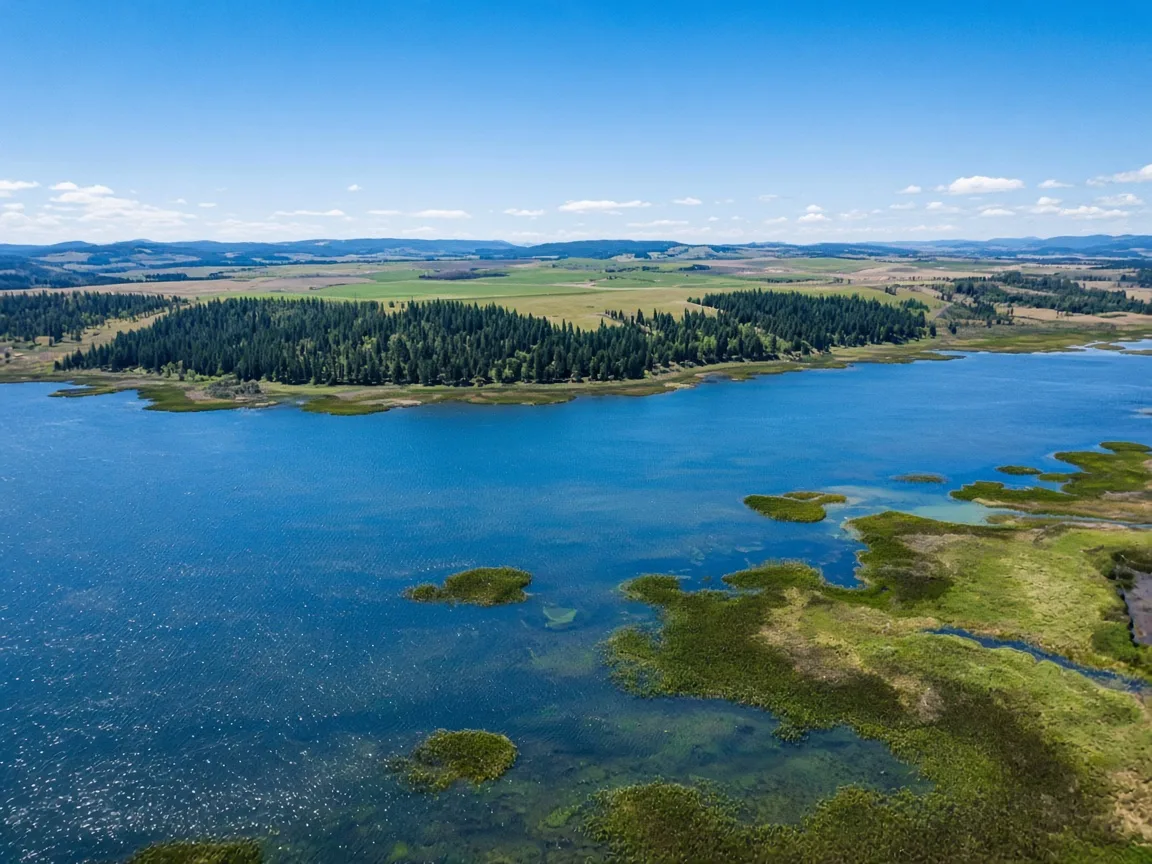
Klamath County is one of those places where a short drive can make you feel as though you've entered an entirely different part of Oregon.
Travel north from Klamath Falls and you encounter forests, volcanic landscapes and mountain communities. Head south and the scenery opens into agricultural valleys, irrigation canals and broad fields. To the east, the landscape becomes increasingly dry and expansive. Around the lakes and wetlands, water and wildlife dominate the view.
These differences are more than scenic. They help explain how Klamath County developed, why its communities have such distinctive identities and why land ownership here can be remarkably different from one location to another.
A History Older Than the County
Klamath County was created in 1882, but the region's human history extends back thousands of years.
The Klamath, Modoc and Yahooskin Paiute peoples have deep cultural connections to the region. Their histories include fishing, gathering, hunting, trade, seasonal movement, permanent communities and complex relationships with the land.
The establishment of Oregon's county governments occurred during a period of profound disruption for Indigenous communities, including warfare, displacement, treaties and federal policies that changed access to ancestral homelands.
Understanding the county requires acknowledging both the region's ancient Indigenous history and the much more recent political boundaries imposed during American settlement.
How Klamath County Was Established
In 1882, Klamath County was formed from the western portion of Lake County.
Linkville, later renamed Klamath Falls, became the county seat.
That designation helped establish the community as a center of government and commerce.
County residents needed access to public records, courts, legal services and administrative offices. Businesses developed around the people traveling into town.
Over time, Klamath Falls became the largest urban community in the county, but the surrounding rural communities continued to develop their own identities.
Ranching and the Early Rural Economy
Ranching was among the important early economic activities of Euro-American settlers.
The basin offered grasslands, meadows and extensive grazing areas. Cattle operations expanded during the nineteenth century.
Yet the environment presented challenges.
Cold winters, seasonal water availability and long distances from major markets could make ranching difficult. Severe winters in the late nineteenth century caused substantial livestock losses.
Ranching families had to understand the land, weather and transportation limitations.
Those realities remain familiar to many rural property owners today.
Owning acreage in Klamath County can mean managing fences, livestock facilities, water systems, snow removal and access roads. The romance of rural living is real, but so are its responsibilities.
Agriculture Changes the Landscape
During the early twentieth century, irrigation development dramatically altered portions of the Klamath Basin.
The federal Klamath Project expanded infrastructure that delivered water to agricultural lands.
Canals, drainage systems and other facilities supported farming and the development of agricultural communities.
The region became associated with crops suited to its climate and soils, including potatoes, hay and other agricultural products.
Agriculture also created demand for machinery, transportation, processing, storage and commercial services.
However, irrigation and drainage altered wetlands and aquatic ecosystems, creating environmental consequences that remain important in regional water discussions.
The Timber Industry
Forests in northern and western Klamath County supported extensive timber operations.
Rail transportation helped make commercial logging more economically practical.
Sawmills, logging camps and wood-products businesses provided employment across the region.
Klamath Falls became a major timber-processing center, while communities closer to forest resources developed around logging and related industries.
The timber economy influenced roads, railroads, housing and local businesses.
When the industry later contracted, communities had to adapt to changing employment opportunities.
Communities With Different Histories
Klamath Falls developed as the county's principal commercial center.
Merrill and Malin became closely associated with agriculture in the southern basin.
Bonanza developed as a small rural community serving surrounding farms and ranches.
Chiloquin has a history deeply connected to the Klamath Tribes, transportation and the regional timber economy.
The Fort Klamath area reflects nineteenth-century military history, ranching and proximity to the northern basin.
These communities are not interchangeable.
Each has a different landscape, economic history and relationship to surrounding natural resources.
Klamath County Today
Modern Klamath County combines agriculture, forestry, education, health care, tourism, government and other economic activities.
Its outdoor recreation opportunities are extraordinary.
Residents and visitors have access to Crater Lake National Park, extensive public lands, lakes, forests, wildlife refuges and high-desert landscapes.
Yet the county's size creates practical differences in daily life.
Some residents live minutes from medical facilities and shopping. Others may travel substantial distances for services.
Rural properties may rely on wells and septic systems, while homes inside incorporated communities may have municipal utilities.
Internet access, road maintenance, winter conditions and emergency services can vary by location.
These are not reasons to avoid rural living. They are reasons to research it carefully.
Why History Matters When Buying Property
Understanding the county's development helps explain modern property differences.
Historic agricultural land may have irrigation arrangements requiring careful review.
Former timber areas may contain forested acreage with wildfire-management responsibilities.
Older communities may have homes with unique architectural features and maintenance considerations.
Land-use rules may differ depending on zoning and whether a property lies inside city limits.
A knowledgeable real estate search should account for these distinctions rather than treating every Klamath County property as though it belongs to the same market.
Frequently Asked Questions
When was Klamath County established?
Klamath County was created in 1882.
What is the county seat?
Klamath Falls.
What industries shaped Klamath County?
Ranching, agriculture, timber, transportation and regional commerce were historically important.
What should buyers investigate when purchasing rural land?
Zoning, legal access, water rights, wells, septic systems, utilities, wildfire exposure, road maintenance and permitted uses.
Explore More
Continue with Lincoln Home's guide to Klamath Falls, Merrill, Malin, Bonanza, Chiloquin and rural Klamath County. The Relocation Center and Rural Property Resource Center explain how geography and infrastructure influence everyday living.
Sources and Further Reading
- Oregon Encyclopedia: Klamath Falls (city)
- Klamath County Museums
- Klamath Tribes
- Bureau of Reclamation: Klamath Project
- Klamath County government
Historical claims in this article trace to the authoritative sources listed above. Illustrations are labeled as such and are not archival photographs.