
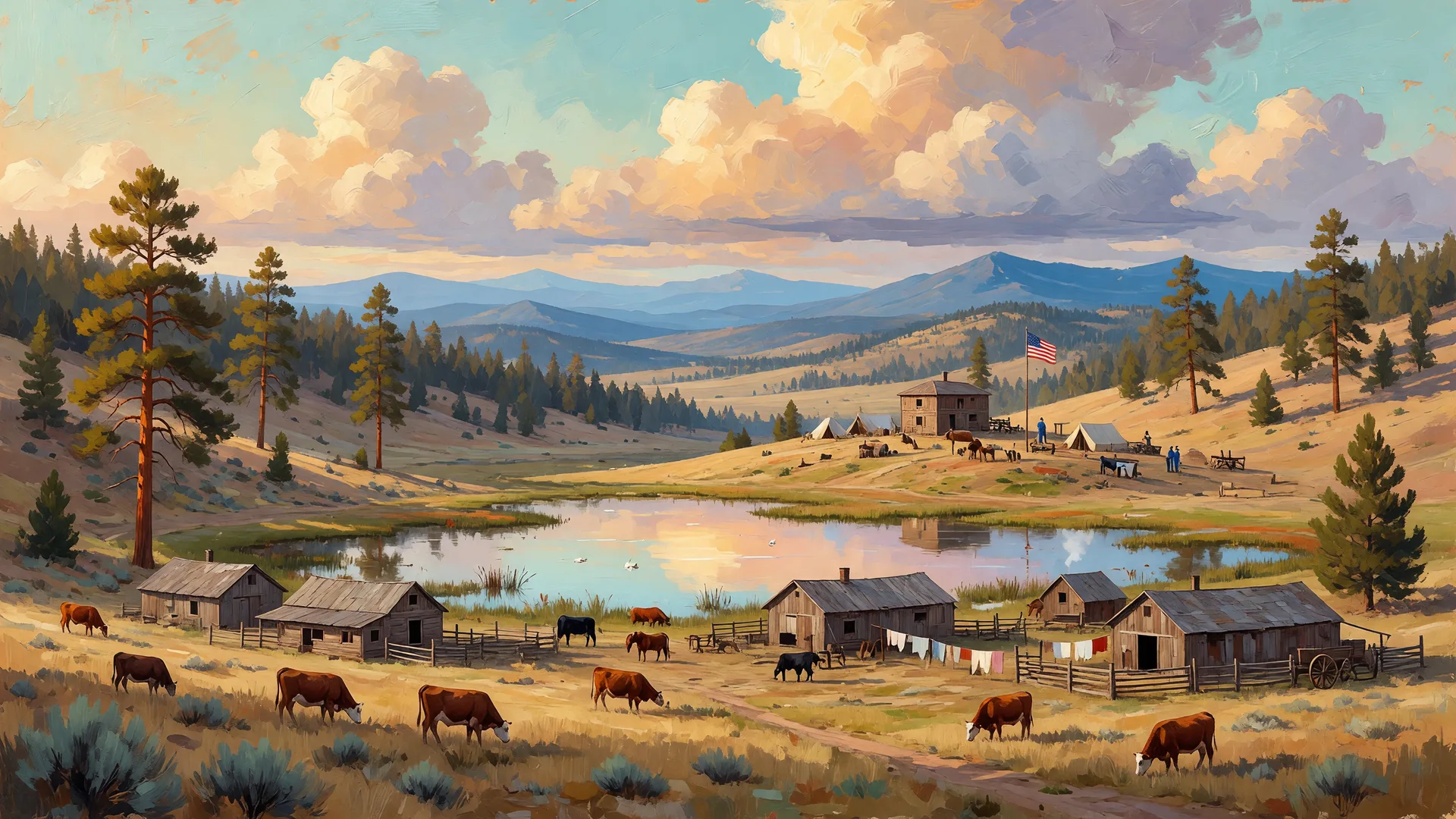
Before paved roads, railroad depots and modern neighborhoods, the Klamath Basin was a place of considerable distances.
Mountains separated communities. Wetlands complicated travel. Winter weather could make transportation difficult. Rivers and lakes shaped the routes people followed.
Yet the region had been home to Indigenous peoples for thousands of years, with established travel routes, food systems, communities and deep cultural relationships with the landscape.
The arrival of Euro-American settlers during the nineteenth century introduced a different pattern of ranches, trading posts, military installations and towns.
Those developments shaped many of the communities that exist today.
Why the Basin Attracted Newcomers
The Klamath Basin offered resources that appealed to nineteenth-century settlers.
There was grazing land for livestock, timber in surrounding forests and water that could potentially support agricultural development.
The landscape also created challenges.
High elevation meant cold winters and a relatively short growing season.
Wetlands and waterways made some land difficult to travel across or cultivate without substantial engineering.
Distance from major population centers complicated commerce.
Settlers therefore concentrated around transportation routes, reliable water sources, ranching opportunities and locations where trade could develop.
Ranching Takes Root
Cattle ranching became an important early activity.
Open grazing country and meadowlands attracted livestock operators, although harsh winters could cause severe losses.
Historical accounts describe major setbacks during the winters of 1879–1880 and 1889–1890.
Those events illustrate an important reality of the region: the natural environment has always influenced economic success.
A ranch might appear prosperous during favorable seasons and face enormous challenges when weather conditions changed.
That relationship between climate, land and livestock remains relevant to modern agricultural operations.
The Development of Linkville
Linkville developed after George Nurse established his trading and ferry operation in 1867.
Its location beside the Link River made it useful for travelers moving through the basin.
The community gradually attracted businesses and residents.
When Klamath County was created in 1882, Linkville became the county seat.
That decision helped distinguish it from other small settlements.
While many rural communities remained focused on agriculture or local trade, Linkville developed a broader governmental and commercial role.
Fort Klamath and the Military Presence
Fort Klamath represents another important chapter in nineteenth-century regional history.
The U.S. Army established Fort Klamath in 1863.
Its history is inseparable from federal expansion into Indigenous homelands and the conflicts and coercive policies that accompanied that expansion.
The fort was associated with military operations in the region and with the period surrounding the Modoc War.
Visitors can explore this difficult history through the Fort Klamath Museum and authoritative tribal and historical resources.
It is important not to romanticize military settlement while ignoring the experiences of Indigenous communities affected by federal policy.
Rural Communities Develop
Over time, settlements emerged across the basin.
Communities such as Merrill, Malin, Bonanza and Chiloquin developed different economic identities influenced by agriculture, transportation, timber and regional commerce.
Their growth did not occur simultaneously or for identical reasons.
Southern agricultural communities were shaped strongly by irrigation and farming.
Northern communities were more closely connected to forest resources and transportation routes.
Klamath Falls became the largest commercial center.
These distinctions remain visible today.
A drive through Klamath County reveals very different landscapes and settlement patterns depending on the direction of travel.
How Irrigation Changed Settlement
One of the most significant developments occurred during the early twentieth century when federal reclamation expanded irrigation infrastructure.
Canals, diversions and drainage systems changed agricultural possibilities.
Land that had previously been wetland or difficult to farm was altered for agricultural use.
Farming communities expanded, and agricultural production became an increasingly important part of the regional economy.
These developments also had major ecological consequences, particularly for wetlands, fish and water availability.
The history of settlement in the basin is therefore closely connected to the history of environmental change.
What Early Settlement Means for Today's Property Owners
Historic settlement patterns still influence modern real estate.
Older communities may have distinctive street layouts, housing styles and infrastructure.
Rural properties may rely on wells, septic systems or irrigation arrangements rather than municipal services.
Some properties have complex water-rights histories.
Others may face access, zoning or land-use considerations that differ substantially from those inside Klamath Falls.
A buyer interested in acreage should investigate these issues rather than assume that every rural parcel can be used in the same way.
The same geography that influenced nineteenth-century settlement still influences property ownership today.
Frequently Asked Questions
What was one of the earliest Euro-American settlements in the Klamath Basin?
Linkville, established in 1867, became the community now known as Klamath Falls.
When was Fort Klamath established?
The U.S. Army established Fort Klamath in 1863.
What industries supported early settlement?
Ranching, agriculture, timber, trade and transportation were important economic activities.
Did people live in the basin before Euro-American settlement?
Yes. Indigenous peoples inhabited the region for thousands of years before nineteenth-century settlement.
Explore More
Sources and Further Reading
- Klamath County Museums
- Oregon Historical Society
- Oregon Encyclopedia: Klamath Falls (city)
- National Park Service: Modoc Homeland
- The Klamath Tribes: History
Historical claims in this article trace to the authoritative sources listed above. Illustrations are labeled as such and are not archival photographs.