
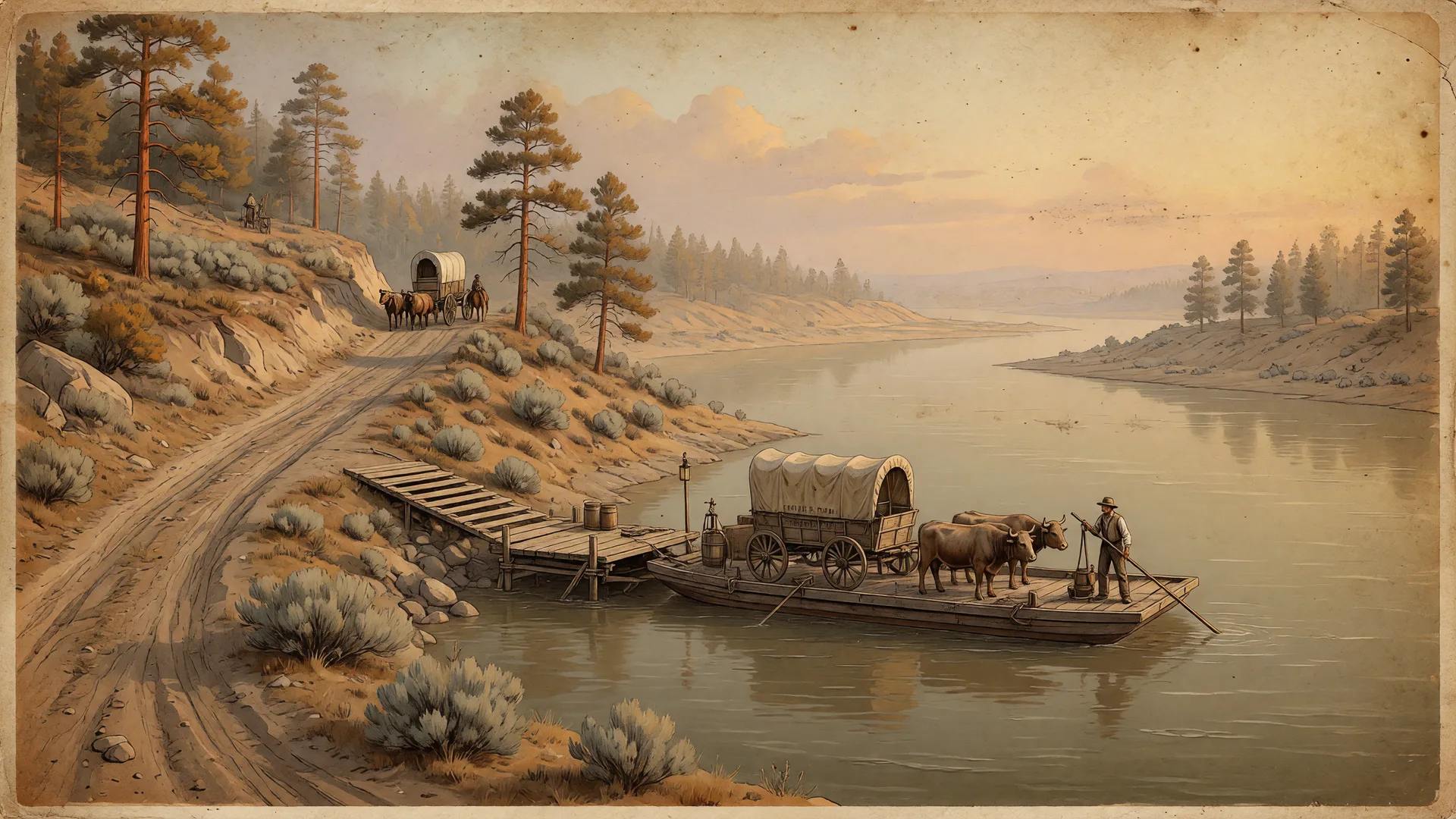
Imagine planning a trip from Klamath Falls to another Oregon community before modern highways existed.
There would be no GPS offering three alternate routes. No roadside convenience stores every few miles. No reliable weather alerts warning about approaching storms.
Instead, travelers had to consider road conditions, river crossings, available supplies, livestock or wagon transportation, and the possibility that weather could turn a manageable journey into a difficult one.
Transportation was one of the most important forces shaping early Klamath Basin development.
Geography Dictated the Routes
The Klamath Basin contains mountains, lakes, wetlands, rivers and broad valleys.
Those features influenced where people traveled.
Long before Euro-American roads were established, Indigenous peoples maintained routes connecting communities, fishing locations, gathering areas and trading networks.
Later settlers often relied on geographic corridors that had already supported human travel.
River crossings became particularly important.
A convenient crossing could determine where a settlement developed.
The Link River Ferry
In 1867, George Nurse established a ferry and trading operation along the Link River.
The location became the nucleus of Linkville.
The ferry provided a practical service in a region where crossing water could be difficult.
Travelers needed ways to move livestock, supplies and personal belongings across the river.
A ferry operation could also support nearby commercial activity.
People waiting to cross might purchase supplies, seek lodging or conduct business.
Over time, transportation and commerce reinforced one another.
Wagon Roads and Stage Travel
Before rail service, overland transportation depended heavily on wagons, horses and stage routes.
Travel could be slow and physically demanding.
Roads were vulnerable to mud, snow and seasonal deterioration.
Mountain passes could become difficult during winter.
Long distances between communities meant travelers needed to plan carefully.
The condition of a road could determine whether agricultural products reached market or whether supplies arrived on time.
These limitations contributed to the relative isolation of early Klamath Falls.
Klamath Falls Had a Streetcar
One of the more surprising chapters in local transportation history is the Klamath Falls street railway.
Service began on July 4, 1907, using a former San Francisco horsecar.
The line reflected the community's confidence in its future growth.
After Southern Pacific reached Klamath Falls, the streetcar route was extended toward the railroad depot.
The operation was short-lived, with tracks beginning to be removed in 1911.
Although it did not become a permanent transportation system, the streetcar remains a fascinating reminder of the city's early ambitions.
The Railroad Changes Regional Travel
Southern Pacific reached Klamath Falls in 1909.
Rail service transformed the movement of freight and passengers.
Timber products could reach distant markets more efficiently.
Agricultural businesses gained access to larger transportation networks.
Heavy equipment and commercial goods could be brought into the region.
Rail transportation also encouraged new businesses and industrial development.
The railroad's influence extended beyond the tracks themselves.
It helped determine where warehouses, mills, businesses and neighborhoods developed.
The Automobile Era
As automobiles became more common, demand increased for improved roads.
Highway construction and maintenance gradually transformed regional travel.
Motor vehicles offered flexibility that rail passenger service could not always provide.
Residents could travel directly between smaller communities without relying on train schedules.
Road improvements also changed the practical relationship between Klamath Falls and surrounding towns.
Over time, Highway 97 became one of the region's major transportation corridors.
Other routes connected the city to Medford, Lakeview, Crater Lake and Northern California.
Transportation and Today's Real Estate
Historic transportation patterns continue to influence modern property decisions.
Homes close to major roads may offer convenient access to shopping, employment and services.
Rural properties may provide privacy and acreage but require longer drives.
Winter access is especially important.
A road that is pleasant in summer may present very different challenges during snow or freezing conditions.
Buyers should investigate whether roads are publicly maintained, privately maintained or subject to shared maintenance agreements.
Legal access should also be verified.
These practical questions are modern versions of the same transportation challenges that influenced settlement more than a century ago.
Frequently Asked Questions
How did people travel through the Klamath Basin before railroads?
Travel relied on Indigenous routes, wagon roads, horses, stage transportation and river crossings.
When did the railroad reach Klamath Falls?
Southern Pacific reached the city in 1909.
Did Klamath Falls really have a streetcar?
Yes. A short-lived street railway began service in 1907.
Why does transportation history matter to property buyers?
Road access, winter conditions, travel distances and infrastructure still influence property usability and everyday convenience.
Explore More
Continue into the History of the Railroad in Klamath Falls, Rural Property Buying guides and Lincoln Home's historic neighborhood resources. The Relocation Center also helps prospective residents evaluate commuting distances and access to services.
Sources and Further Reading
- Oregon Encyclopedia
- Klamath County Museums
- Oregon Historical Society
- Oregon State Archives (historical records)
Historical claims in this article trace to the authoritative sources listed above. Illustrations are labeled as such and are not archival photographs.