
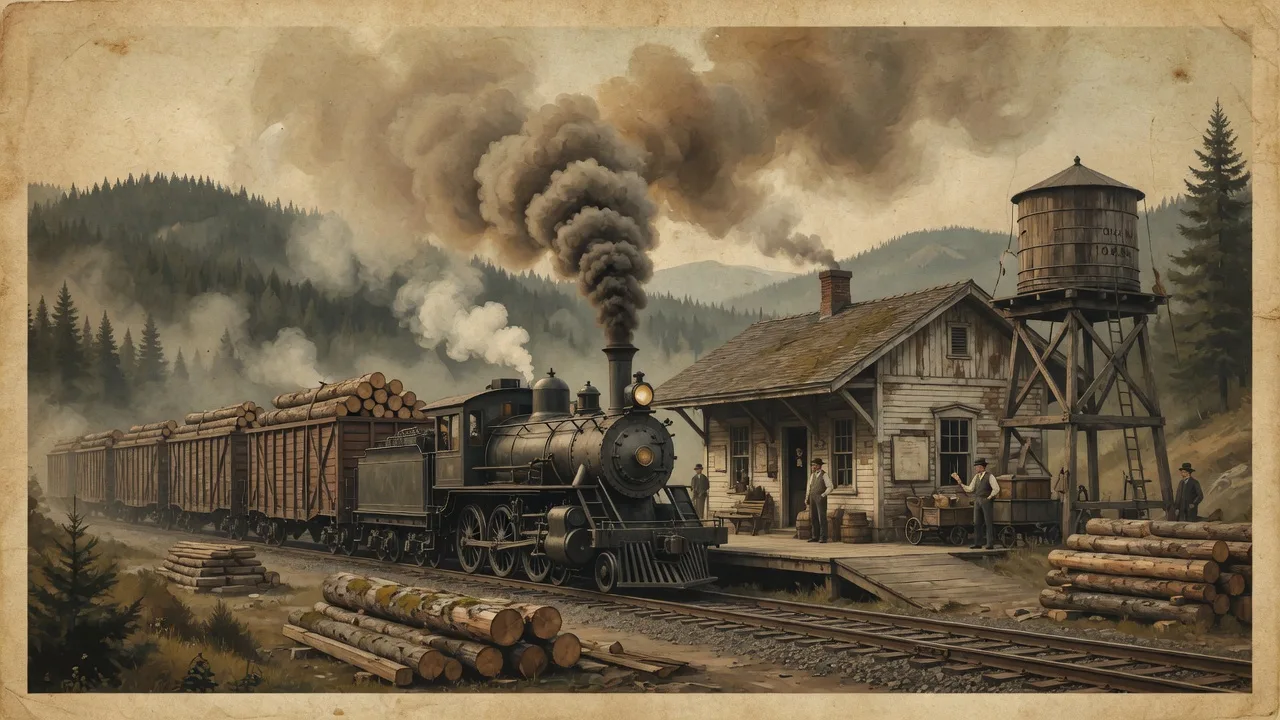
Some historical events unfold gradually.
Others create a clear dividing line between what a community was and what it would become.
For Klamath Falls, the arrival of Southern Pacific in 1909 belongs firmly in the second category.
Before the railroad, the city had valuable natural resources but limited transportation connections.
After the railroad, those resources became accessible to much larger markets.
The difference was enormous.
Life Before Rail Access
Klamath Falls was geographically isolated from major commercial centers.
Moving heavy freight by wagon was expensive and time-consuming.
Agricultural producers faced transportation limitations.
Timber companies could harvest trees, but moving large quantities of lumber to distant buyers was a major challenge.
Businesses also needed equipment, machinery and merchandise brought into the region.
Transportation costs influenced nearly every economic decision.
Why the Railroad Was So Important
Railroads transformed nineteenth- and early twentieth-century American commerce because they could move large volumes of freight efficiently.
For Klamath Falls, this meant access to regional and national markets.
Timber could be shipped to customers far beyond Southern Oregon.
Agricultural products could travel greater distances.
Manufactured goods and equipment could arrive more easily.
Passenger travel became more practical.
Rail transportation made investments possible that would have been far more difficult without it.
The Arrival in 1909
Southern Pacific reached Klamath Falls in 1909.
The city was already growing, but rail access accelerated development.
New businesses opened.
Construction increased.
Industrial operations expanded.
The community's commercial identity changed rapidly.
Historical accounts describe a surge in building activity around the railroad's arrival.
This was not surprising.
Rail service made Klamath Falls more attractive to investors and businesses that needed dependable freight transportation.
Timber Becomes a Major Industry
The surrounding forests contained extensive stands of ponderosa pine.
Rail access helped make large-scale lumber production economically viable.
Sawmills and box factories expanded.
The timber industry became one of the defining forces in the city's twentieth-century economy.
The Ewauna Box Company was among the important industrial operations associated with the growing lumber economy.
In 1929, Weyerhaeuser opened its major Klamath Falls mill.
Rail transportation and timber production supported one another.
Without efficient shipping, the industry could not have developed on the same scale.
Agriculture Benefits Too
The railroad also supported agriculture.
Farmers needed ways to transport products to markets and bring machinery and supplies into the basin.
As federal irrigation development expanded agricultural production, transportation became increasingly important.
Rail connections helped integrate the region's farms into broader commercial networks.
A Railroad City Takes Shape
The physical layout of Klamath Falls was influenced by rail infrastructure.
Depots, warehouses, industrial sites and commercial areas developed around transportation needs.
Workers and families required housing.
Businesses served travelers and employees.
The city's growth was reflected in downtown buildings, residential neighborhoods and industrial districts.
Even today, railroad corridors help explain certain patterns of land use.
Railroads and the Modern Community
Rail transportation remains important for freight movement, although its role in everyday passenger travel has changed substantially.
The historical influence is still visible.
Older industrial properties often occupy locations shaped by rail access.
Historic buildings reflect periods of rapid commercial expansion.
Neighborhoods developed in response to employment opportunities created by the railroad economy.
For residents interested in local history, these connections make ordinary streets and buildings more meaningful.
Visiting Railroad History
A good starting point is the Klamath County Museum, where visitors can explore regional transportation and industrial history.
Historic maps and photographs can help identify former railroad facilities and industrial corridors.
When exploring active railroad areas, remain on public property and never enter tracks or restricted facilities.
Rail infrastructure is both historically interesting and an active transportation system.
Frequently Asked Questions
When did the railroad arrive in Klamath Falls?
1909.
Which railroad reached Klamath Falls?
Southern Pacific.
Why did the railroad matter so much?
It provided efficient transportation for timber, agricultural products, equipment, freight and passengers.
Did the railroad influence neighborhood development?
Yes. Employment, industrial activity and transportation access contributed to residential and commercial growth.
Explore More
Read about the Timber Industry, Downtown Development and Historic Neighborhoods. If you enjoy established communities with architectural character, explore Lincoln Home's Klamath Falls neighborhood resources and local property search.
Sources and Further Reading
- Oregon Encyclopedia: Klamath Falls (city)
- Klamath County Museums
- Oregon Historical Society
- Oregon Historical Society Research Library (railroad collections)
Historical claims in this article trace to the authoritative sources listed above. Illustrations are labeled as such and are not archival photographs.