
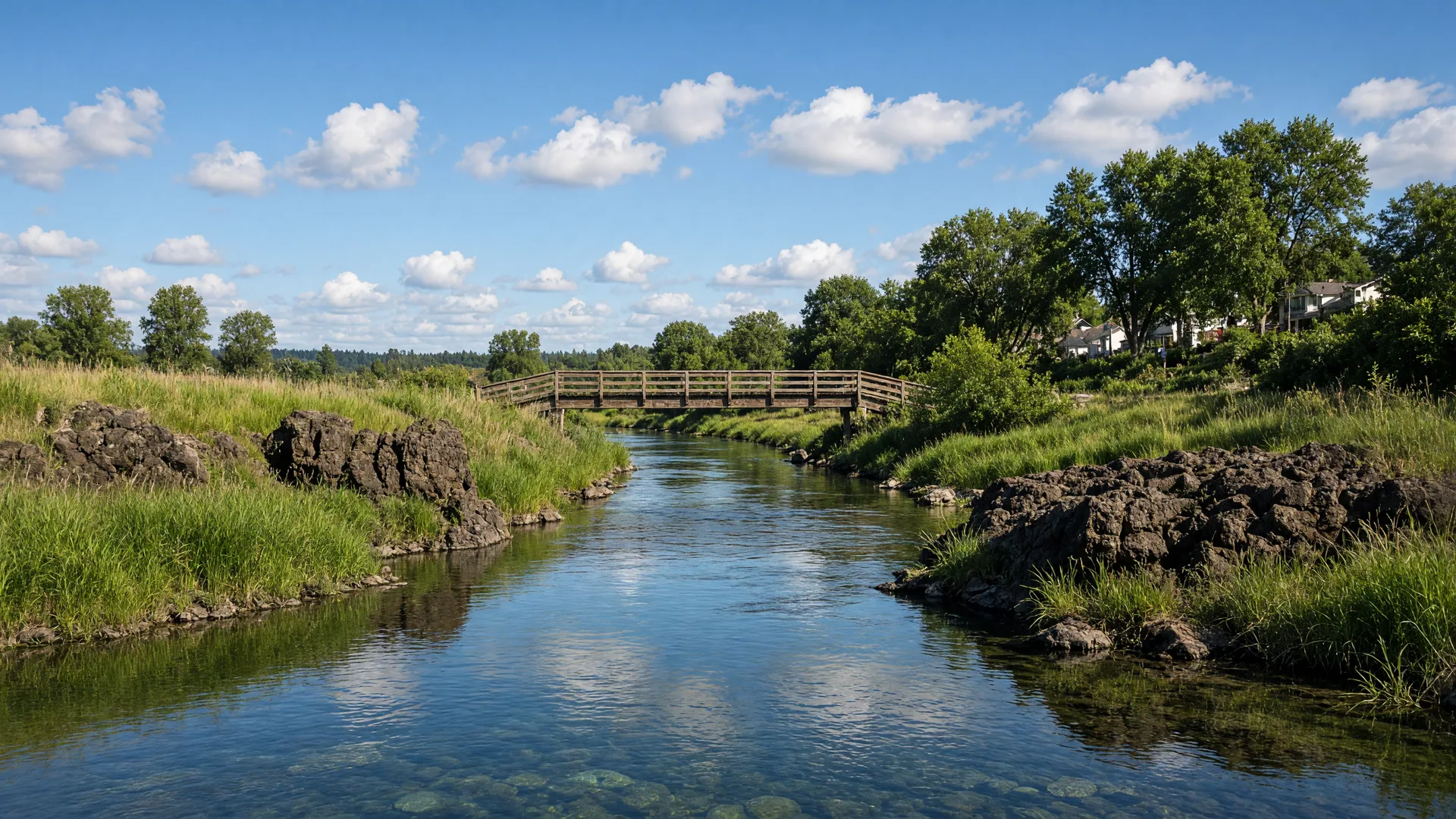
One of the most entertaining questions visitors ask about Klamath Falls is also one of the most reasonable.
“Where are the falls?”
After all, a city with the word Falls in its name sounds like it should have a dramatic waterfall somewhere near downtown.
Visitors familiar with Multnomah Falls or other famous Oregon waterfalls may imagine something similar.
The actual story is more interesting because it reveals how much the landscape has changed since the city received its name.
Before Klamath Falls, There Was Linkville
The community began as Linkville in 1867.
George Nurse established a trading outpost and ferry crossing beside the Link River, the waterway connecting Upper Klamath Lake to Lake Ewauna.
In a region where rivers could create major obstacles for travelers, a dependable crossing was valuable.
The ferry helped make the location an important stop for people moving through the basin. Ranchers, merchants and travelers needed supplies and transportation connections.
Over time, homes and businesses developed around the crossing.
The settlement took its name from the Link River.
It was practical, geographically descriptive and appropriate for a small community built around a river crossing.
Why Was the Name Changed?
By the 1890s, Linkville was developing a more ambitious identity.
The community had become the Klamath County seat in 1882, and its role in regional commerce was expanding.
In 1893, the town adopted the name Klamath Falls.
The new name connected the community with the broader Klamath region and the rapids or falls historically associated with the Link River.
It also sounded like the name of a growing city.
Although the precise motivations of every person involved in the name change cannot be reduced to a single explanation, the timing fits a period when Western communities were increasingly promoting themselves as destinations for commerce, investment and settlement.
So Where Were the Falls?
The Link River is unusually short for a river with such regional importance.
It carries water from Upper Klamath Lake toward Lake Ewauna, connecting important parts of the Klamath River system.
Historically, the river included rapids and falls that influenced the city's name.
Subsequent water-control projects and development changed the river environment.
That means a modern visitor should not expect to discover a giant, untouched waterfall in the middle of town.
Instead, the name preserves a memory of the river's earlier character.
It is a reminder that landscapes are not static.
Rivers change through natural processes, but human engineering can also dramatically alter how they look and function.
The Link River Still Matters
Although the original falls are no longer experienced as they once were, the Link River remains a defining feature of Klamath Falls.
It connects two major bodies of water and provides a visible reminder of the city's origins.
The surrounding river corridor also offers opportunities to observe local scenery and wildlife.
For residents, the river is more than an interesting historical footnote.
It is part of the landscape that influenced transportation, settlement, industry and the development of the city.
Why the Name Still Fits
Klamath Falls has always been closely connected to water.
Upper Klamath Lake lies immediately beside the city. Lake Ewauna forms another important part of its setting. Agricultural canals extend into the surrounding basin.
Wetlands support bird populations, and the larger watershed remains central to agriculture, fisheries, ecology and regional policy.
The community's relationship with water has been economically productive, environmentally complicated and historically significant.
In that sense, the name Klamath Falls still captures something essential about the place.
It tells visitors to look toward the landscape for the beginning of the story.
Frequently Asked Questions
What was Klamath Falls originally named?
Linkville.
When did Linkville become Klamath Falls?
In 1893.
Why was it called Linkville?
The settlement developed beside the Link River.
Does Klamath Falls have a waterfall?
The city's name refers to historic rapids or falls along the Link River. Later water-control infrastructure altered the original river conditions.
Can visitors see the Link River?
Yes. The river remains a geographic feature of Klamath Falls.
Explore More
Sources and Further Reading
- Oregon Encyclopedia: Klamath Falls (city)
- Oregon Encyclopedia: Linkville and the Moore Family
- Klamath County Museums
- Oregon Historical Society
- Bureau of Reclamation: Klamath Project
Historical claims in this article trace to the authoritative sources listed above. Illustrations are labeled as such and are not archival photographs.