
World War II reached communities far beyond the battlefields.
Factories changed production. Families watched loved ones leave for military service. Communities participated in rationing, fundraising and civil-defense activities.
In Klamath Falls, the war also brought military installations directly into the region.
For several years, this Southern Oregon community became part of a much larger national military system.
Why Klamath Falls Became Important
Klamath Falls had transportation connections, an established regional economy and an airport that could be adapted for military purposes.
Its location and facilities made it suitable for wartime operations.
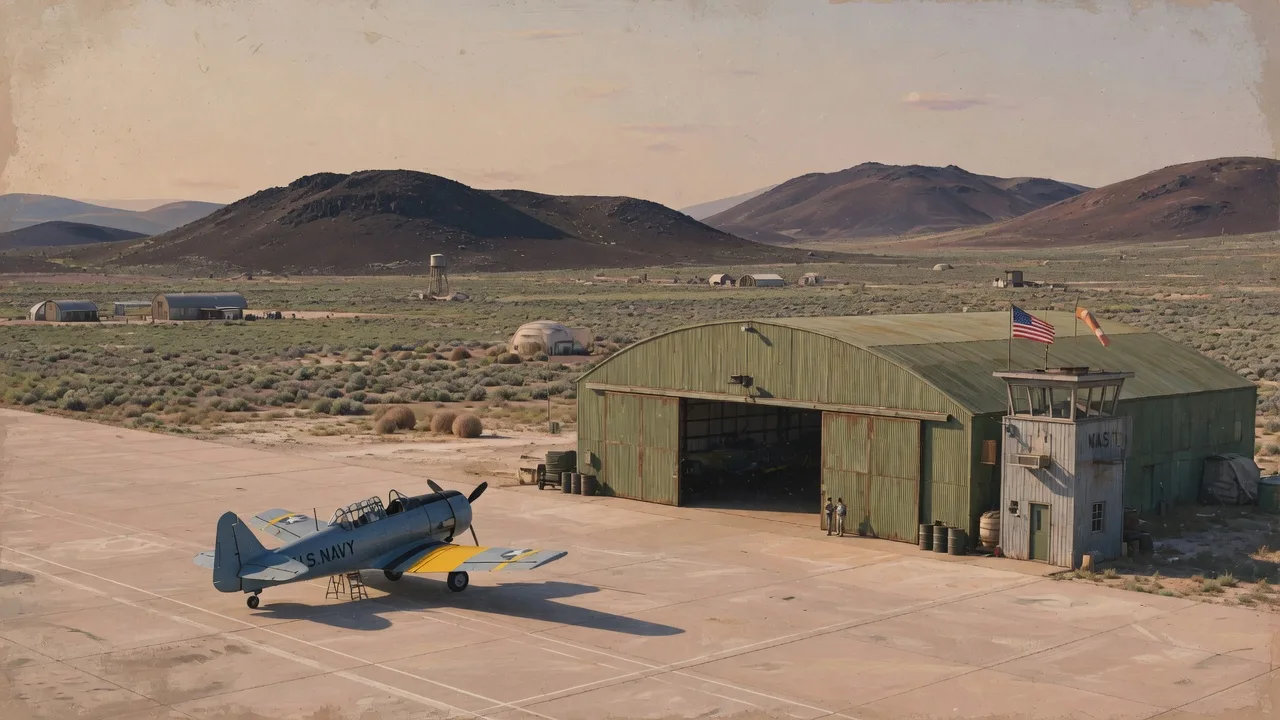
The Navy took over the municipal airport and commissioned Naval Air Station Klamath Falls in January 1944.
The installation became part of the military aviation infrastructure supporting the war effort.
Naval Air Station Klamath Falls
Military aviation required trained personnel, aircraft maintenance, operational facilities and substantial support services.
The naval air station brought military activity to the airport and connected the community to the broader wartime aviation system.
Its presence also affected local commerce.
Military personnel needed supplies, transportation, recreation and other services.
The installation was temporary, but it became an important chapter in local history.
The Marine Barracks
Klamath Falls also hosted a specialized Marine rehabilitation facility.
The Marine Barracks served servicemen suffering from tropical diseases, particularly filariasis and malaria, contracted during Pacific service.
The facility's role was unusual.
It was not simply a conventional training installation.
It provided a place for affected Marines to receive care and rehabilitation.
The story connects Klamath Falls with the medical consequences of warfare in tropical environments.
Military Personnel and Local Residents
The arrival of military personnel changed daily life.
Servicemen interacted with local businesses and civic organizations.
Community members participated in activities supporting military personnel.
Entertainment venues, churches and social organizations provided opportunities for interaction.
For some residents, the wartime years became a memorable period of community activity.
For military families and personnel, Klamath Falls became part of their personal histories.
Life on the Home Front
Like communities across the country, Klamath Falls residents experienced the demands of wartime life.
National rationing programs affected consumer goods.
Families followed news from overseas.
Local organizations participated in wartime support activities.
Businesses operated in an economy shaped by military needs and labor demands.
The war touched both public institutions and private households.
The War Ends
After World War II, temporary military installations across the United States were reduced or closed.
Klamath Falls experienced that transition.
The naval air station and Marine Barracks did not remain permanent wartime institutions.
Yet their presence left historical records, personal memories and connections to military families.
Why This History Deserves Attention
Military history is often told through battles and famous commanders.
But places such as Klamath Falls reveal another dimension.
The war depended on aviation facilities, medical care, transportation, civilian workers and communities willing to support military operations.
Understanding these contributions creates a fuller picture of World War II.
Frequently Asked Questions
Was there a naval air station in Klamath Falls?
Yes. Naval Air Station Klamath Falls was commissioned in January 1944.
What was the Marine Barracks used for?
It served as a specialized rehabilitation facility for Marines affected by tropical diseases.
Did the installations remain after the war?
They were wartime facilities that closed as military needs changed.
Where can I learn more?
Klamath County Museums and authoritative U.S. Navy and Marine Corps historical resources are useful starting points.
Explore More
Continue with the History of the Klamath Falls Marine Barracks and Postwar Klamath Falls. Lincoln Home's regional history collection also explores how military activity fits into the community's larger twentieth-century story.
Sources and Further Reading
- Naval History and Heritage Command
- U.S. Marine Corps (historical resources)
- Klamath County Museums
- National Archives
Historical claims in this article trace to the authoritative sources listed above. Illustrations are labeled as such and are not archival photographs.