
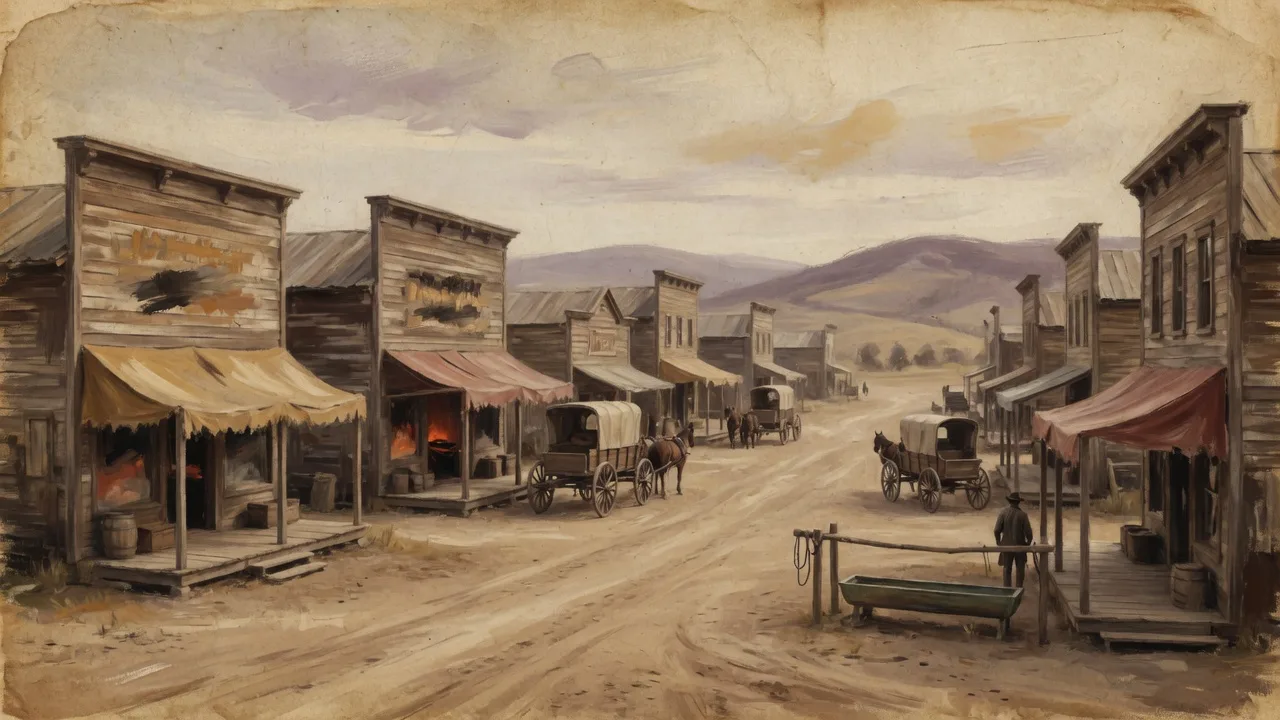
Before Klamath Falls had major employers, large commercial buildings or a modern shopping district, it had a trading post.
That is an appropriate beginning for a city whose growth was closely connected to transportation and commerce.
Businesses did more than sell goods.
They helped establish gathering places, created employment, supported families and encouraged permanent settlement.
The Trading Post at the River
George Nurse's 1867 outpost along the Link River helped establish the settlement of Linkville.
A trading location was valuable because residents and travelers needed supplies.
The surrounding region was isolated from major commercial centers.
Obtaining ordinary goods could require significant travel.
A local merchant therefore provided a service that was essential to everyday life.
General Stores and Frontier Commerce
Early general stores commonly supplied a broad assortment of merchandise.
Customers might need food staples, household goods, tools, clothing or equipment.
Unlike modern specialty retailers, frontier merchants often had to meet many different needs.
They also served as informal gathering places where people exchanged news and information.
In a small settlement, the local store could be as socially important as it was economically useful.
Sawmills and Industrial Businesses
William S. Moore established a sawmill in 1877.
That operation reflected the importance of local timber resources.
As transportation improved, the timber industry expanded dramatically.
Sawmills, lumber yards and box factories eventually became major components of the regional economy.
These industrial businesses created employment and supported commercial activity throughout the city.
Hotels and Hospitality
As Klamath Falls became a county seat and later a railroad destination, lodging became increasingly important.
Travelers came for government business, commerce and transportation connections.
Hotels provided accommodations and often became recognizable landmarks.
The Baldwin Hotel remains an important part of the city's historic architectural landscape.
Banks and Financial Services
Economic growth created demand for financial institutions.
Businesses needed capital.
Farmers and ranchers required financing for land, livestock and equipment.
Families needed places to manage savings and financial transactions.
Banks and professional offices became part of the expanding downtown business district.
Their buildings often reflected the prosperity and aspirations of the community.
Businesses That Served Timber Families
The timber boom created a large customer base for local merchants.
Mill workers and logging families purchased food, clothing, furniture and other necessities.
Restaurants, entertainment venues and service businesses benefited from the spending generated by industrial employment.
This is one reason major industries influence communities far beyond their own payrolls.
A mill closure could affect stores and restaurants as well as mill workers.
How Shopping Changed
The automobile transformed consumer habits.
Improved roads allowed residents to travel farther for shopping.
Commercial development gradually expanded beyond traditional downtown districts.
Later, national retail chains and online commerce introduced additional changes.
Klamath Falls businesses had to adapt, just as businesses in communities throughout the country did.
Why Local Business History Matters
Historic businesses reveal how residents lived.
A former hotel tells us about travel.
A box factory tells us about regional industry.
A general store tells us about access to goods.
A bank building tells us about investment and commercial growth.
Together, they provide a more personal understanding of the city than population figures alone.
Frequently Asked Questions
What was one of the earliest businesses in Linkville?
George Nurse's trading outpost and ferry operation began in 1867.
When did sawmilling begin locally?
A sawmill associated with William S. Moore was established in 1877.
Why did downtown businesses grow rapidly?
County government, rail transportation, timber production and agriculture created demand for commercial services.
Are historic business buildings still visible?
Yes. Parts of downtown Klamath Falls retain buildings associated with earlier periods of commercial development.
Explore More
Explore Lincoln Home's Downtown History, Timber Industry, Railroad History and Historic Architecture articles. Our Community Guides also introduce the businesses and amenities that serve residents today.
Sources and Further Reading
- Klamath County Museums
- Oregon Historical Society
- Historic Oregon Newspapers
- City of Klamath Falls (historic preservation)
Historical claims in this article trace to the authoritative sources listed above. Illustrations are labeled as such and are not archival photographs.