
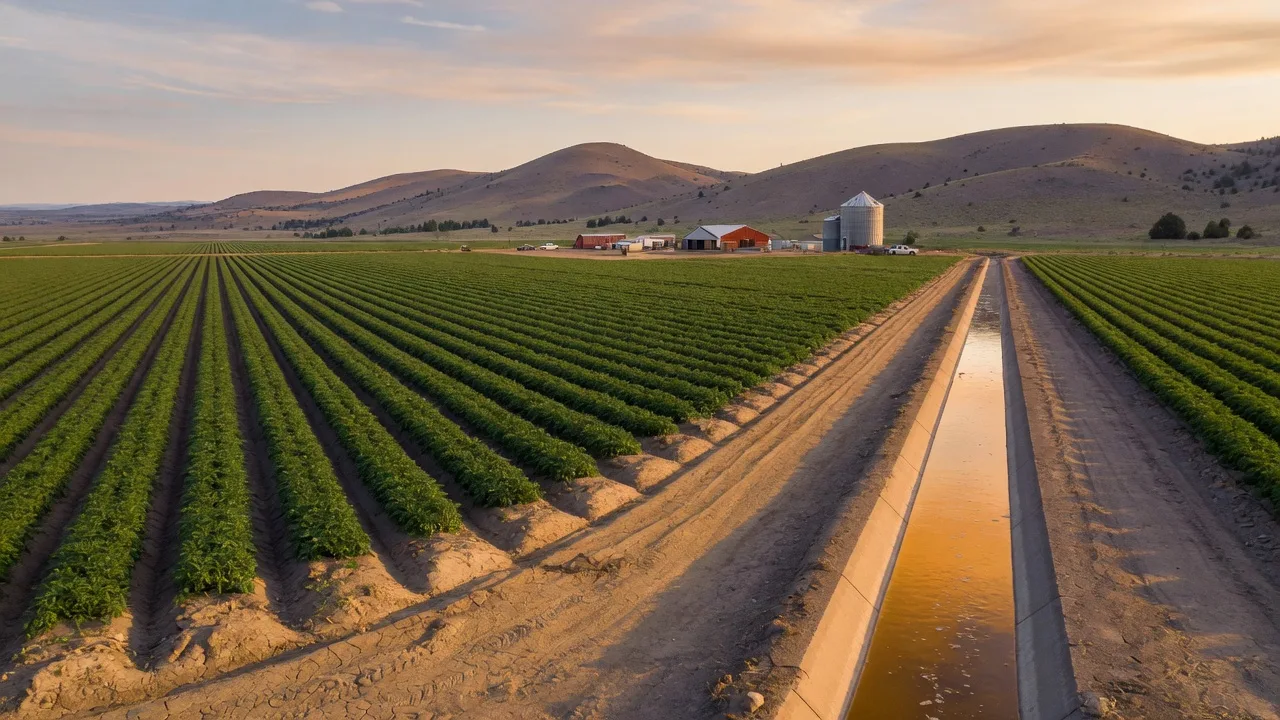
Drive south from Klamath Falls toward Merrill or Malin and the landscape tells a different story from the forests to the north.
Fields stretch across the basin. Irrigation infrastructure crosses the countryside. Farm buildings, equipment and rural homes reflect generations of agricultural activity.
The agricultural history of the Klamath Basin is a story of opportunity, engineering, hard work and difficult decisions about water.
It is also a story that remains very much alive.
Agriculture Before Modern Irrigation
The basin's Indigenous peoples developed food systems adapted to the region's lakes, wetlands, rivers and surrounding landscapes.
Those systems included fishing, gathering, hunting and careful knowledge of seasonal resources.
Euro-American settlers later introduced and expanded ranching and farming operations.
Livestock grazing became important during the nineteenth century.
However, agricultural expansion faced limitations.
The basin's climate includes cold winters, relatively short growing seasons and substantial differences in moisture availability.
Reliable irrigation could dramatically increase the kinds and quantities of crops grown.
Ranching in the Nineteenth Century
Cattle operations developed in the region during the 1800s.
Ranchers used available grazing lands and meadows, but severe weather could create serious problems.
Historical accounts describe major livestock losses during especially difficult winters.
These events demonstrated that agricultural success depended on more than owning land.
Water, forage, winter preparation, transportation and weather all mattered.
That remains true for livestock owners today.
Federal Reclamation Transforms Farming
The federal Klamath Project became a defining development during the early twentieth century.
Construction of the A Canal began in 1906, and project water deliveries followed in 1907.
The project expanded irrigation infrastructure through canals, diversions and drainage systems.
Agricultural development increased in areas that could now receive managed water supplies.
Communities grew around farming operations.
The transformation was substantial, but it also altered wetlands and aquatic ecosystems.
The agricultural benefits and environmental consequences are both essential parts of the region's history.
What Crops Are Associated With the Basin?
The Klamath Basin has been associated with potatoes, hay, grains and other crops suited to local conditions.
Crop selection depends on factors such as soils, water availability, growing season and market conditions.
Livestock production also remains important in portions of the county.
Agriculture is not identical throughout the region.
The conditions near Merrill or Malin differ from those in higher-elevation ranching areas or forested parts of northern Klamath County.
Farming Communities Grow
Agricultural development supported businesses in rural communities.
Farmers needed machinery, seed, fuel, transportation, storage and financing.
Local schools, churches and civic organizations served agricultural families.
Towns such as Merrill and Malin developed identities closely connected to farming.
Those relationships remain visible in community events, surrounding landscapes and local businesses.
The Complicated History of Water
Water is one of the most important issues in Klamath Basin agriculture.
Irrigation supports farming, but the region's water resources also sustain fish, wetlands, wildlife and tribal cultural interests.
Water allocation has been the subject of major disputes and policy decisions.
Drought and changing environmental conditions can make those conflicts especially difficult.
For readers interested in current conditions, historic explanations should be paired with up-to-date information from water-management agencies and irrigation districts.
What Agricultural History Means for Rural Buyers
A property with green fields or nearby irrigation canals does not automatically have usable irrigation rights.
Water rights are legally and technically complex.
Buyers should verify the source, priority, permitted use and transferability of any claimed water rights.
They should also investigate irrigation district assessments, delivery limitations and infrastructure responsibilities where applicable.
Other important considerations include soil conditions, zoning, access, wells, septic systems and permitted agricultural activities.
Agricultural property can offer extraordinary opportunities, but successful ownership requires understanding the land beyond its appearance.
Frequently Asked Questions
What crops are grown in the Klamath Basin?
The region has historically produced potatoes, hay, grains and other agricultural products, with crop choices varying by location and conditions.
When did federal irrigation development begin?
The Klamath Project's early construction began in the first decade of the twentieth century.
Does every agricultural property have water rights?
No. Water rights must be individually verified.
Why is water controversial in the basin?
Agricultural, ecological, tribal and other water needs intersect within a complex watershed.
Explore More
Continue with the History of the Klamath Project, Merrill and Malin Community Guides, and Lincoln Home's Rural Property and Water Rights resources.
Sources and Further Reading
- Bureau of Reclamation: Klamath Project
- Oregon Water Resources Department
- Oregon State University Extension
- Klamath County Museums
- Klamath Tribes
Historical claims in this article trace to the authoritative sources listed above. Illustrations are labeled as such and are not archival photographs.