
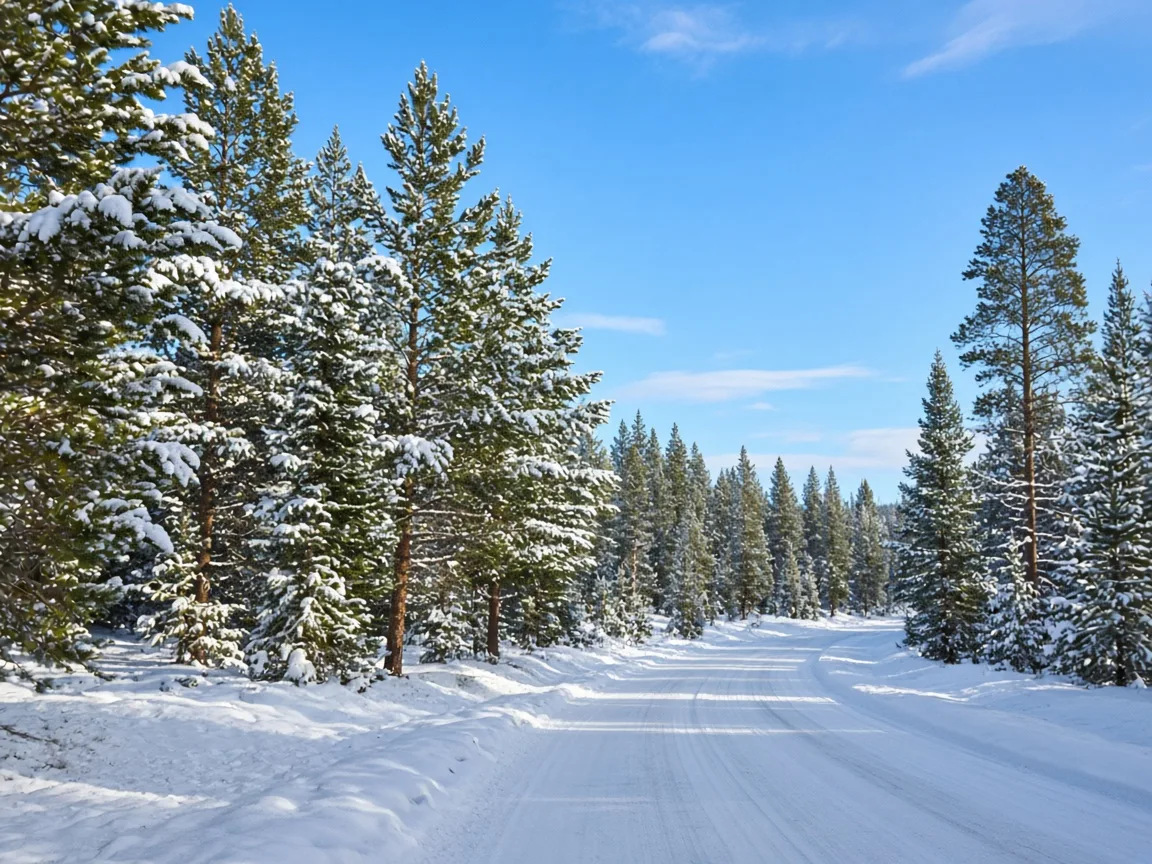
Forested terrain in the Klamath Basin, similar to the mature forest habitat Bear Valley protects.
Not every remarkable natural place needs a parking lot, a trail system, and a scenic overlook.
Some places are important precisely because people generally stay out.
Bear Valley National Wildlife Refuge is an excellent example.
Located in the Klamath Basin region, the refuge protects forest habitat used by wintering bald eagles.
Its primary purpose is not to entertain visitors but to provide wildlife with a place to rest.
Why Bear Valley Was Established
Bear Valley National Wildlife Refuge was established in 1978 to protect an important winter night-roosting site for bald eagles.
The refuge encompasses approximately 4,200 acres and includes forests with ponderosa pine, incense cedar, white fir, and Douglas-fir.
Large trees provide roosting opportunities, while nearby wetland and agricultural landscapes offer feeding habitat.
Why Eagles Need Protected Roosts
A bald eagle may travel considerable distances between feeding and resting locations.
During winter, conserving energy is important.
Repeated disturbance can force birds to leave suitable roosting areas unnecessarily.
Protected forest habitat helps provide the relative security needed for overnight resting.
This is a reminder that conservation requires thinking about an animal's entire daily routine rather than protecting only the places where people enjoy watching it.
Can Visitors Enter Bear Valley?
Public entry is generally prohibited, with a limited exception identified by the refuge for certain walk-in deer hunting before November 1.
The U.S. Fish and Wildlife Service directs people interested in winter eagle viewing toward nearby Tule Lake and Lower Klamath refuges.
Visitors should never assume that a refuge is open to hiking simply because it appears on a recreational map.
Appreciating Places We Cannot Enter
It can feel frustrating to discover a beautiful protected landscape and learn that access is restricted.
But wildlife conservation sometimes requires prioritizing habitat over recreation.
The existence of a protected area can benefit the wider region even when most residents never step inside it.
Bear Valley illustrates that principle particularly well.
Forest Conservation and Nearby Communities
Forested landscapes provide more than scenery.
They influence wildlife movement, watershed conditions, wildfire behavior, and the character of surrounding communities.
Responsible forest management involves balancing ecological needs, fire resilience, access, and other land uses.
For rural homeowners, this can translate into practical decisions about vegetation management, defensible space, and protecting mature trees where appropriate.
Conservation and Property Ownership
Protected natural areas contribute to the region's character, but buyers should distinguish between living near conservation land and having legal recreational access to it.
Frequently Asked Questions
Why is Bear Valley important?
It protects significant winter roosting habitat for bald eagles.
Can people hike there?
General public access is restricted. Consult the refuge for specific exceptions.
Where should visitors watch eagles instead?
Lower Klamath and Tule Lake refuges are recommended alternatives.
Sources and Further Reading
Conditions, access, weather, water quality, fees, and regulations can change. Verify current information with the managing agency and the official sources above before traveling.
Related reading
Protected natural areas contribute to the region's character, but buyers should distinguish between living near conservation land and having legal recreational access to it. Lincoln Home can help you evaluate rural properties.
Lincoln Home never implies a property offers guaranteed wildlife sightings, hunting access, water rights, development rights, or public-land access. Verify each of these independently for any specific parcel.