
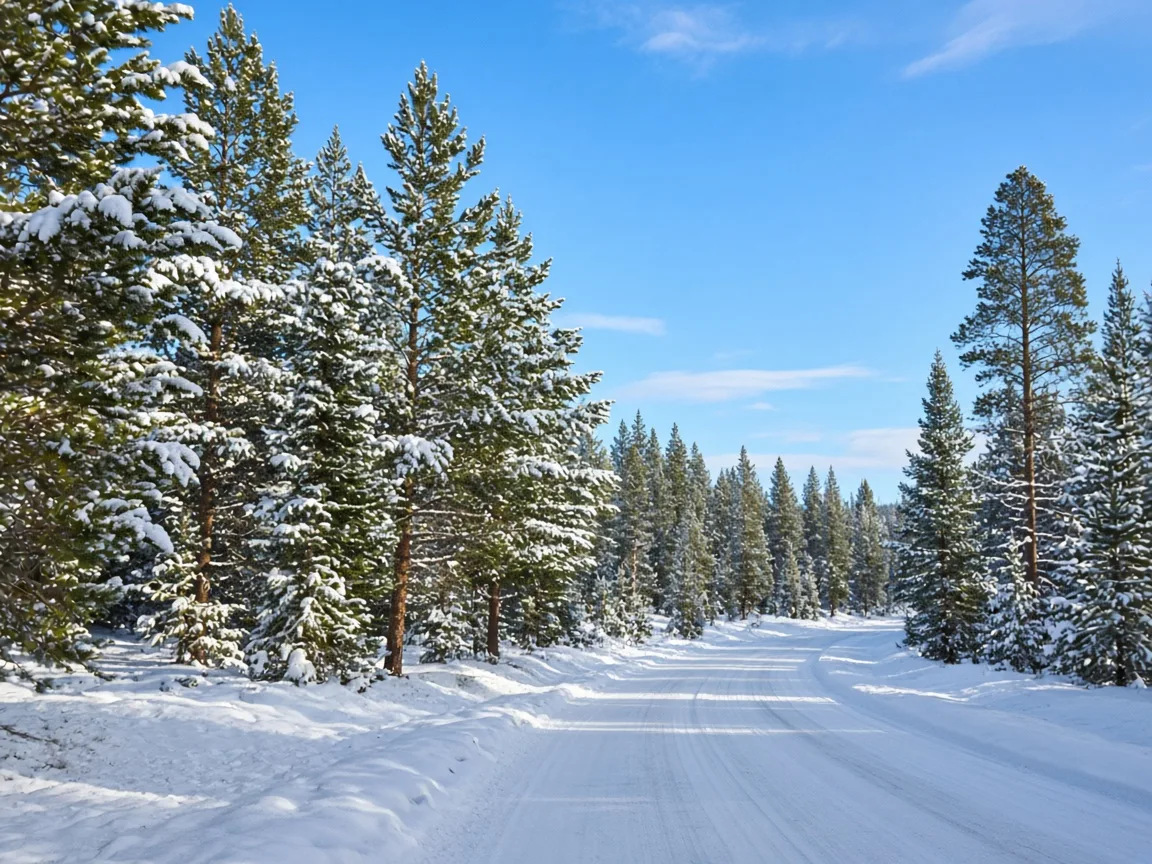
A quiet forest road in winter near Klamath Basin eagle roosting habitat.
Imagine leaving home on a cold January morning, driving through a landscape of frost-covered fields and quiet wetlands, and spotting an eagle in a roadside tree.
A few miles later, another appears. Then perhaps several more, perched above the countryside or moving between feeding and roosting areas.
This is the experience that helped establish the Klamath Basin's reputation among winter birdwatchers.
But the story behind those eagles is more interesting than the photographs alone.
A Winter Landscape That Supports Predators
Bald eagles need food, suitable roosting habitat, and places where they can rest without constant disturbance.
The Klamath Basin historically provided an important combination of those resources.
Wintering waterfowl use the wetlands and surrounding agricultural landscape, while forested areas provide large trees suitable for eagle roosts.
Bear Valley National Wildlife Refuge was established in 1978 specifically to protect an important winter night-roosting site for bald eagles.
An eagle's daily routine may involve leaving its roost, traveling toward feeding areas, and returning to protected trees later in the day.
Observing these movements helps explain why preserving one isolated feeding location is not enough.
Wildlife often depends on several connected habitats.
Why Winter Viewing Requires Flexibility
The basin's eagle concentrations change with conditions.
Water availability, winter weather, prey distribution, and migration patterns influence where birds gather.
A refuge that produced excellent sightings during one visit may be relatively quiet during another.
That's normal.
Visitors should resist the temptation to treat historic eagle counts as a promise.
The more rewarding approach is to appreciate the entire winter landscape, including ducks, geese, hawks, and other species.
Planning an Eagle-Watching Trip
Start by reviewing current refuge conditions.
Lower Klamath and Tule Lake are logical places to investigate because of their history as eagle feeding areas.
Dress for cold weather, bring binoculars, and plan for limited services in rural areas.
Carry drinking water, snacks, a charged phone, and a vehicle emergency kit.
Winter roads can be icy, muddy, or temporarily inaccessible.
Never stop in a travel lane to photograph wildlife.
If you're using a camera, a telephoto lens is far more useful than attempting to get close to an eagle.
The Importance of Protecting Roosting Areas
People sometimes assume that conservation means protecting only the place where an animal feeds.
But an eagle also needs somewhere to rest safely.
Repeated disturbance at a winter roost can cause unnecessary energy expenditure during a season when conserving energy matters.
Bear Valley's restrictions are a practical example of habitat protection taking priority over recreational access.
You can appreciate a place without entering it.
Why This Matters Beyond Birdwatching
The winter eagle story demonstrates how different landscapes support one another.
Wetlands, farmland, forest, and open space form a connected ecological system.
That connection is also relevant to land-use planning.
Roads, subdivisions, timber management, and other changes can influence habitat quality even when the affected land does not appear especially important at first glance.
Responsible growth requires looking beyond individual property boundaries.
A Region Worth Calling Home
Wildlife viewing is one example of how residents can enjoy the region's natural resources throughout the year.
Lincoln Home's community guides help visitors explore the practical side of making Klamath County home.
Frequently Asked Questions
Do bald eagles gather in the Klamath Basin every winter?
The basin remains recognized as winter eagle habitat, but the number and distribution of birds vary.
Can I photograph eagles at Bear Valley?
Bear Valley generally restricts public entry. Nearby public viewing opportunities should be used instead.
What time of day is best?
Early morning and late afternoon can be productive, but sightings depend on weather, food availability, and individual bird behavior.
Sources and Further Reading
Conditions, access, weather, water quality, fees, and regulations can change. Verify current information with the managing agency and the official sources above before traveling.
Related reading
Lincoln Home's community guides help visitors explore the practical side of making Klamath County home.
Lincoln Home never implies a property offers guaranteed wildlife sightings, hunting access, water rights, development rights, or public-land access. Verify each of these independently for any specific parcel.