
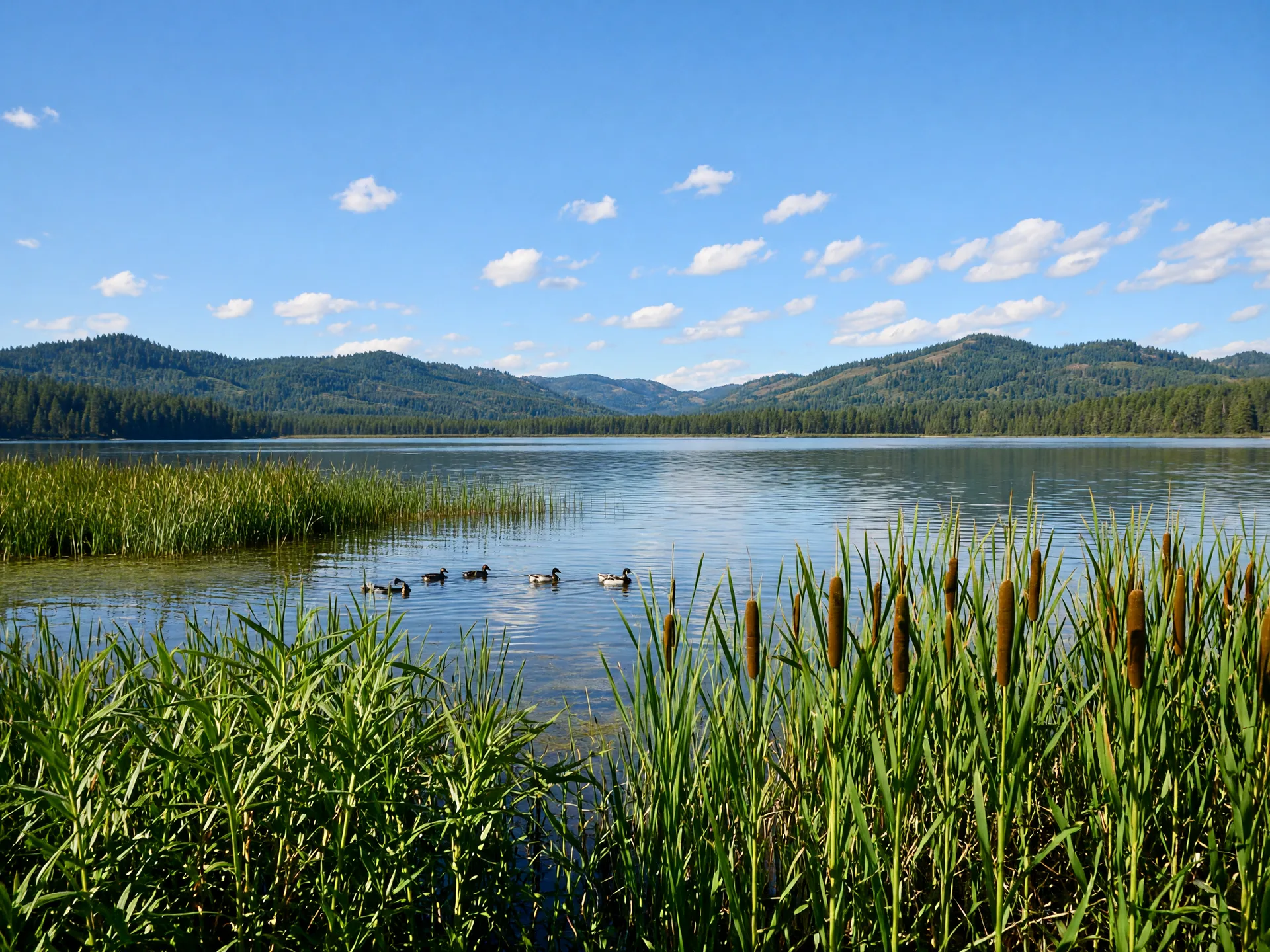
A freshwater marsh and lake in the Klamath Basin, an accessible starting point for birdwatching.
Birdwatching has a reputation for being a hobby that requires expensive binoculars, an enormous identification book, and the ability to recognize a bird from a noise that sounds suspiciously like a squeaky shopping cart.
Fortunately, none of that is necessary to begin.
If you can look outside, notice a bird, and wonder what it is, you're already participating.
The Klamath Basin is an especially rewarding place to develop that curiosity because its wetlands, forests, grasslands, and lakes attract such a wide variety of birds.
Start With Birds That Are Easy to Recognize
Waterbirds are excellent subjects for beginners because many are relatively large and can be observed from designated viewing locations.
Great blue herons are tall, long-legged birds that often stand patiently near shallow water.
American white pelicans are enormous white birds with distinctive bills.
Canada geese are familiar to many people, while bald eagles and red-tailed hawks introduce newcomers to the world of raptors.
The first goal isn't memorizing hundreds of species.
It's learning to notice differences in size, shape, movement, and habitat.
Choosing Your First Binoculars
A pair of 8x42 binoculars is a popular general-purpose choice because it balances magnification, brightness, and ease of use.
The first number represents magnification.
The second describes the diameter of the objective lenses in millimeters.
Higher magnification isn't always better. It can make the image harder to hold steady and reduce the field of view.
Comfort matters more than impressing another birdwatcher with specifications.
Helpful Bird Identification Tools
The Merlin Bird ID app from the Cornell Lab of Ornithology can help identify birds using photographs, descriptions, and sounds.
Its suggestions should be checked against visual characteristics and local occurrence.
eBird provides bird observations submitted by birdwatchers and can help users understand which species have been reported in a particular area.
These tools are useful, but they shouldn't replace attention to the actual animal.
A bird's behavior and habitat can be just as informative as its coloring.
Learning the Seasons
Spring and fall are important migration periods.
Summer brings breeding activity and young birds, while winter can offer excellent opportunities to observe waterfowl and raptors.
Water conditions influence what visitors may see at the basin's refuges, so reviewing recent observations and official refuge updates is worthwhile.
Birdwatching Etiquette
Avoid playing recorded bird calls repeatedly to attract birds, particularly near nesting areas.
Do not enter closed habitat, approach nests, or disturb roosting flocks.
Stay on designated routes and respect private property.
A public road does not grant permission to enter an adjacent field.
And remember that the person beside you may be trying to enjoy the quiet.
Birdwatching is one hobby where being the loudest person in the group rarely improves the experience.
Make It Part of Everyday Life
You don't have to visit a national wildlife refuge every weekend.
Watch birds in your yard.
Notice seasonal changes around local parks.
Keep a simple journal documenting what you see and when.
Over time, familiar places begin revealing details you previously overlooked.
For Klamath County residents, that can be one of the pleasures of living in a region where natural habitats remain close to communities.
Explore More of Southern Oregon
Discover the Klamath Basin's community and outdoor-lifestyle resources through Lincoln Home to learn how recreation fits into everyday life.
Frequently Asked Questions
Do I need expensive equipment?
No. Comfortable clothing, patience, and basic binoculars are enough to begin.
What is the best season for birdwatching?
Every season offers opportunities, but spring and fall migration are particularly interesting.
Can children participate?
Absolutely. Short outings, identification games, and simple checklists make birdwatching accessible to families.
Sources and Further Reading
- Merlin Bird ID — Cornell Lab of Ornithology
- eBird
- Cornell Lab of Ornithology
- U.S. Fish and Wildlife Service
Conditions, access, weather, water quality, fees, and regulations can change. Verify current information with the managing agency and the official sources above before traveling.
Related reading
Discover the Klamath Basin's community and outdoor-lifestyle resources through Lincoln Home to learn how recreation fits into everyday life.
Lincoln Home never implies a property offers guaranteed wildlife sightings, hunting access, water rights, development rights, or public-land access. Verify each of these independently for any specific parcel.