
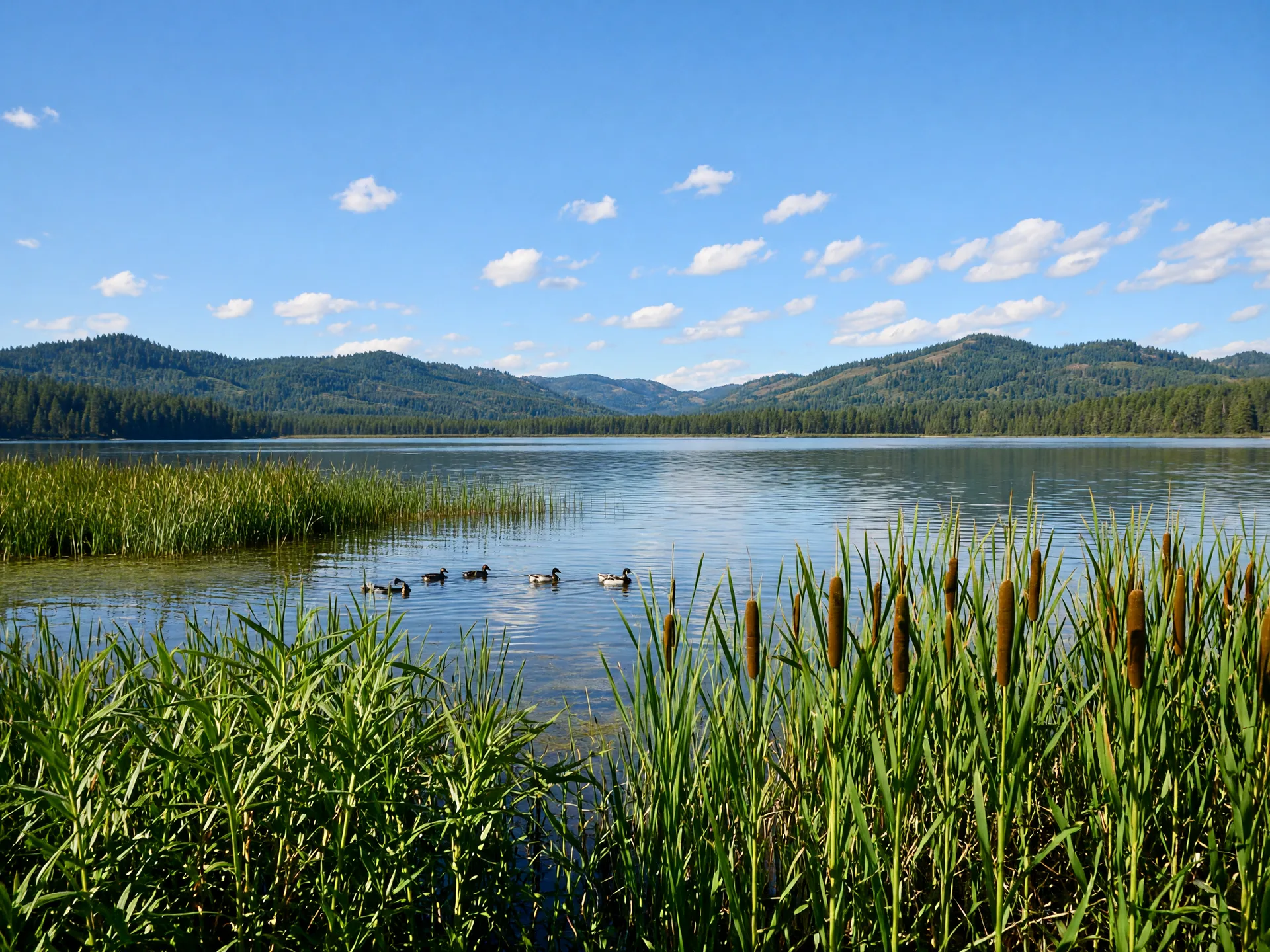
A freshwater marsh and lake in the Klamath Basin, a safe and scenic starting point for family wildlife outings.
A child doesn't need to see a bear or an elk for a wildlife outing to be memorable. A red-winged blackbird calling from the reeds, a fresh animal track or a line of waterfowl crossing the sky can be enough to spark a question that lasts all afternoon. The Klamath Basin is a wonderful place to practice looking closely at the natural world, provided the day is planned around safety and respect for wildlife.
Choose a Manageable First Outing
Start with a public trail, wildlife refuge visitor area or established viewpoint rather than a remote backcountry destination. Check current hours, seasonal closures, restroom availability, weather and trail conditions. Keep the route short enough that children finish curious instead of exhausted. Public wildlife refuges around the basin can offer educational opportunities, but access varies by season and management needs.
Give Children a Mission
Try a simple observation challenge: spot three kinds of birds, notice two different animal tracks, listen for a sound you cannot immediately identify, and describe one change in the landscape. Encourage children to ask what an animal is doing rather than rushing to name every species. The goal is attention, not a perfect checklist.
Pack for Conditions, Not Just the Forecast
Bring water, snacks, sun protection, layers and appropriate footwear. Wetland areas may have mosquitoes, mud and rapidly changing weather. Keep children away from unstable banks and open water unless the setting is designed and supervised for that activity. If the outing involves boating, use properly fitted life jackets and follow Oregon boating rules.
Teach the Wildlife Distance Rule
Animals are not pets. A child should never run toward wildlife, touch a nest, pick up a baby animal or offer food. Explain that using binoculars is a way of being kind to wildlife: we get a closer look without forcing an animal to move. Keep dogs leashed or otherwise controlled as required.
Make a Family Field Journal
A notebook or phone photo album can become a record of seasonal change. Record the date, weather, habitat and observations. Avoid sharing precise locations of sensitive nests or dens online. Children can compare what they see in spring with what they notice in fall and begin to understand migration and habitat.
Wildlife and Family Life in Klamath County
Families considering a move to Southern Oregon often ask what children can do outside. Wildlife observation is one example of an activity that doesn't require an expensive attraction. Yet rural and nature-adjacent living also involves safety, supervision and seasonal planning. A family-friendly property is about practical fit—schools, roads, access, fencing and daily routines—not merely the possibility of seeing animals.
Frequently Asked Questions
What age is best for birdwatching?
Even young children can enjoy short, supervised outings focused on sounds, colors and movement.
Can we visit wildlife refuges year-round?
Many areas have seasonal access rules. Check the specific refuge's official site before departing.
Should we bring a dog?
Check pet restrictions first. Dogs can disturb wildlife even when they appear calm.
Sources and Further Reading
- U.S. Fish and Wildlife Service
- Klamath Basin National Wildlife Refuge Complex
- Oregon Department of Fish and Wildlife
- Oregon State Marine Board
Conditions, access, weather, water quality, fees, and regulations can change. Verify current information with the managing agency and the official sources above before traveling.
Related reading
Curious about raising a family in Klamath County? Explore Lincoln Home's community and relocation guides, and ask us about the practical details that make a neighborhood or rural property work for your household.
Lincoln Home never implies a property offers guaranteed wildlife sightings, hunting access, water rights, development rights, or public-land access. Verify each of these independently for any specific parcel.