
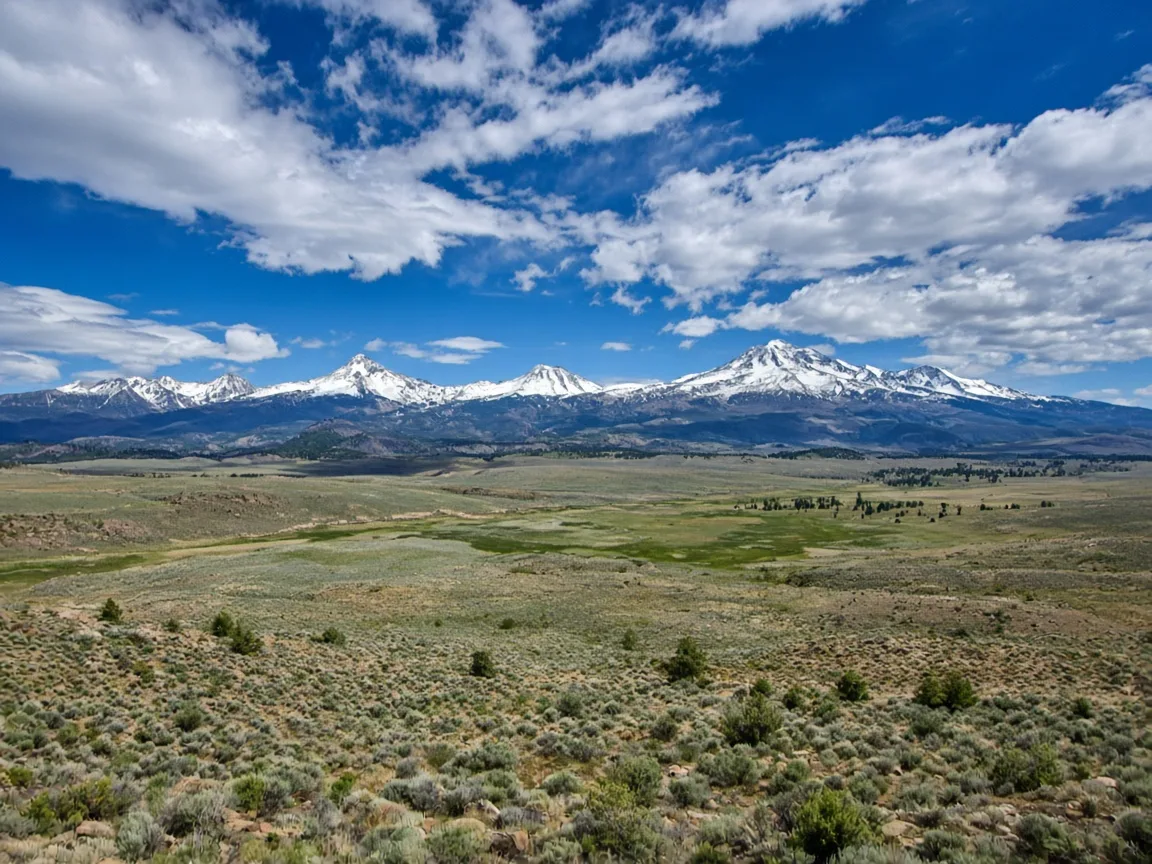
Open water and wetland marsh in the Klamath Basin, habitat used by ducks, geese, and swans.
If you've ever watched a large flock of geese lift off a wetland all at once, you know that nature doesn't always believe in being quiet.
The sound can be extraordinary: wings beating, birds calling, and an entire section of the sky suddenly filling with movement.
Waterfowl are among the Klamath Basin's most recognizable wildlife, and their presence connects the region to migration routes stretching across western North America.
What Counts as Waterfowl?
Waterfowl generally include ducks, geese, and swans.
Although these birds share certain characteristics, their feeding habits and preferred habitats vary.
Dabbling ducks often feed in relatively shallow water, sometimes tipping forward with their tails pointing upward.
Diving ducks pursue food below the surface.
Geese commonly graze on vegetation, while swans may feed on aquatic plants.
Understanding these differences helps birdwatchers predict where to look.
Ducks of the Basin
Depending on season and habitat, visitors may encounter mallards, northern pintails, American wigeons, green-winged teal, and other duck species.
Some have distinctive plumage during the breeding season, while females and immature birds can be more difficult to identify.
Behavior, body shape, and bill characteristics can be useful clues.
Geese and Swans
Canada geese are familiar throughout much of North America, but the Klamath Basin also supports other migratory goose species.
Snow geese and white-fronted geese may be associated with regional migration and wintering activity.
Swans add another dimension to waterfowl watching.
Their large size and graceful appearance make them memorable, although identifying species accurately may require careful observation.
Why Wetland Conditions Matter
Waterfowl depend on suitable habitat for feeding, resting, and sometimes nesting.
Water depth, vegetation, food availability, and disturbance influence how birds use different locations.
A wetland that looks empty one year may be productive another year under different conditions.
This is one reason long-term habitat conservation is so important.
Waterfowl Hunting and Wildlife Management
Hunting is part of the region's outdoor traditions and is regulated through wildlife-management systems.
Hunters must follow applicable seasons, licensing requirements, bag limits, ammunition rules, and refuge-specific restrictions.
Nonhunters should also be aware that certain public lands allow hunting during designated periods.
Responsible hunting and responsible wildlife watching both depend on understanding the regulations and respecting other land users.
Outdoor Living in Klamath County
Access to birdwatching and waterfowl hunting is one aspect of Klamath County's outdoor lifestyle.
Buyers should evaluate legal public-land access rather than assuming nearby open space is available for recreation.
Frequently Asked Questions
When can I see migrating waterfowl?
Spring and fall are major migration periods, with winter viewing also possible depending on conditions.
Are all ducks protected from hunting?
Hunting rules vary by species, season, location, and current regulations.
Where can beginners learn identification?
The Cornell Lab of Ornithology and local refuge resources are useful starting points.
Sources and Further Reading
- Oregon Department of Fish and Wildlife
- Cornell Lab of Ornithology — All About Birds
- U.S. Fish and Wildlife Service
Conditions, access, weather, water quality, fees, and regulations can change. Verify current information with the managing agency and the official sources above before traveling.
Related reading
Access to birdwatching and waterfowl hunting is one aspect of Klamath County's outdoor lifestyle. Lincoln Home can help you evaluate legal public-land access when considering property.
Lincoln Home never implies a property offers guaranteed wildlife sightings, hunting access, water rights, development rights, or public-land access. Verify each of these independently for any specific parcel.