
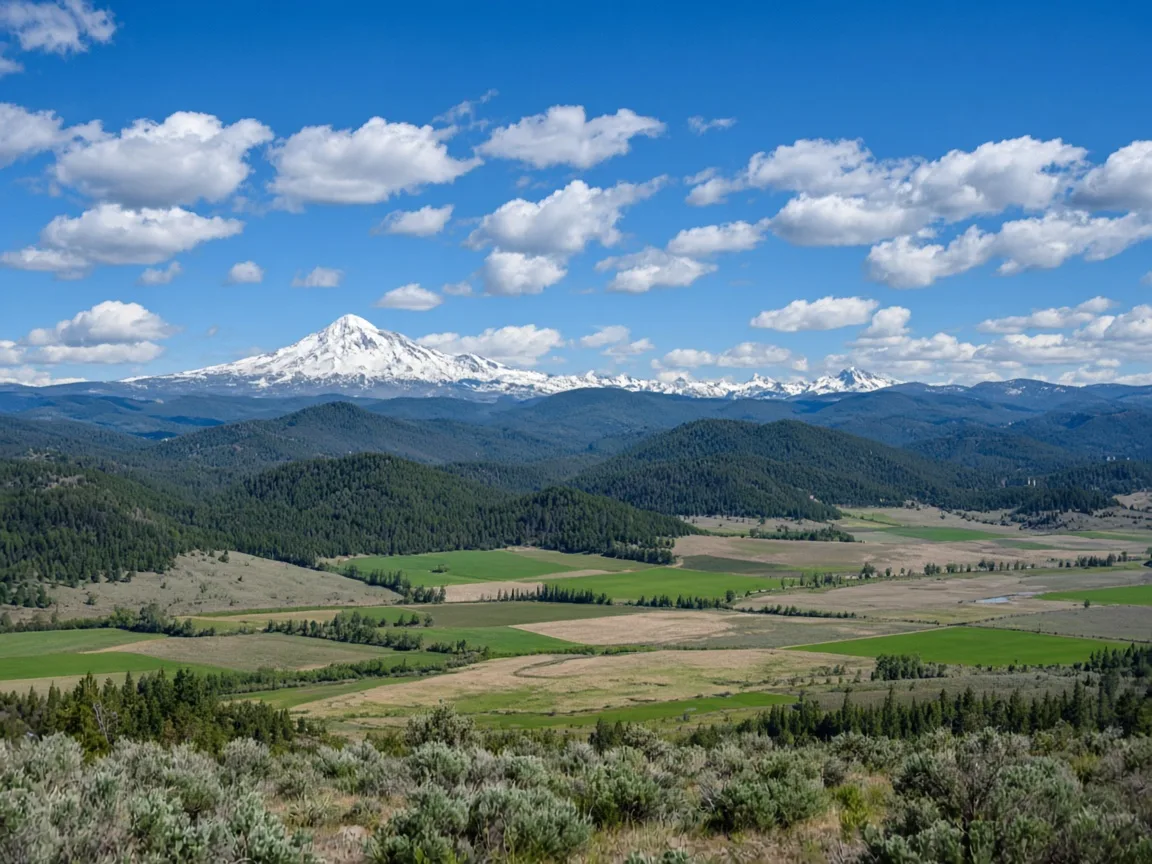
Aquatic habitat in the Klamath Basin, similar to the lakes and wetlands American white pelicans use.
The first time you see an American white pelican up close—or even reasonably close—it's difficult not to be impressed.
These are enormous birds, with broad wings, long bills, and a graceful way of moving through the air that seems almost improbable for something their size.
Unlike the brown pelicans many people associate with coastal diving, American white pelicans typically feed by swimming and gathering fish from the water.
What Makes American White Pelicans Distinctive?
American white pelicans have predominantly white plumage, black flight feathers visible when their wings are extended, and large orange bills.
Their wingspan can reach roughly nine feet, making them among North America's largest birds.
In flight, they may soar in groups, circling on rising air currents with surprisingly little wing movement.
Where Might You See Them?
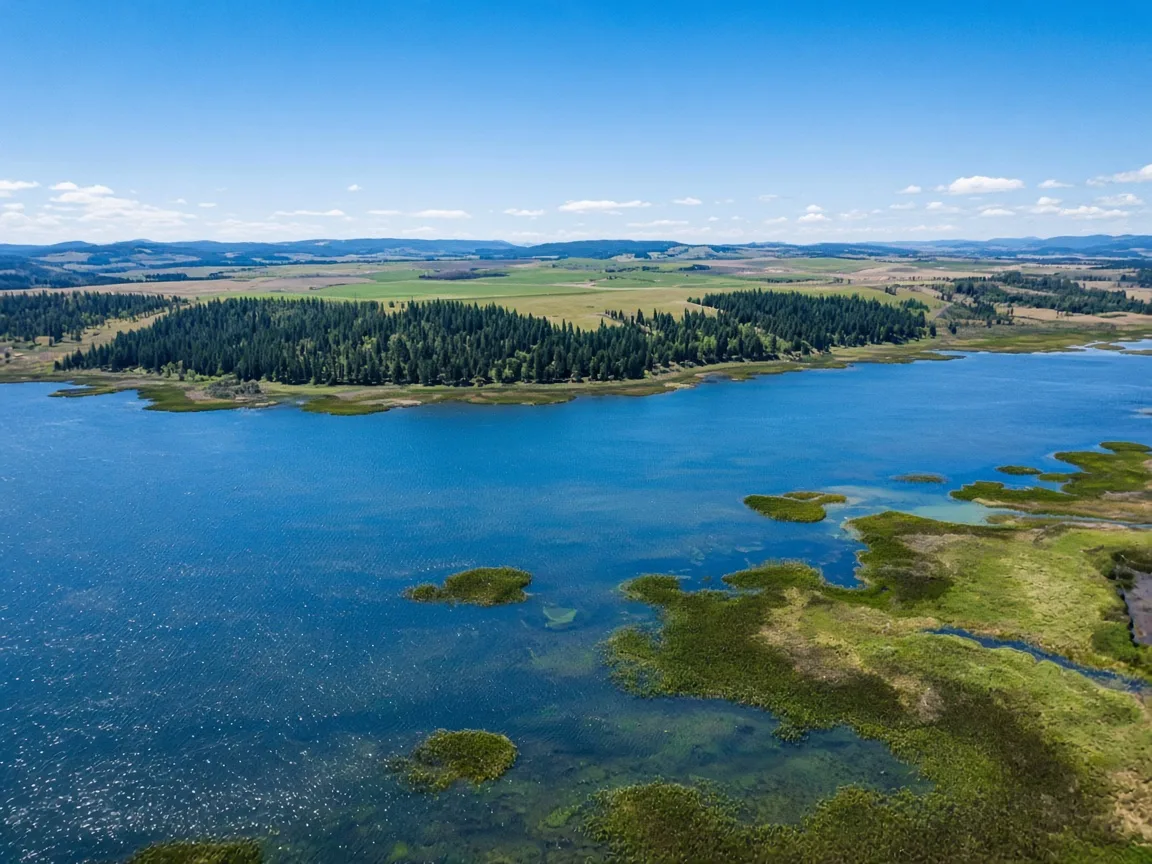
American white pelicans use suitable lakes, wetlands, and other aquatic habitats in the Klamath Basin.
Upper Klamath Lake and regional refuge wetlands are logical places to look when seasonal conditions support their presence.
The birds' locations can change with water levels, food availability, and migration.
How Pelicans Feed
American white pelicans often feed cooperatively.
Groups may swim together and help concentrate fish in shallow water, allowing birds to scoop prey with their bills.
Watching this behavior from a respectful distance can be fascinating.
Their large throat pouches are used in feeding, not as permanent storage bags for transporting enormous quantities of fish.
Why Pelicans Need Healthy Aquatic Ecosystems
Pelicans depend on suitable fish populations and aquatic habitat.
Changes in water availability, water quality, and food resources can influence where they feed and how successfully they reproduce.
Their presence provides an opportunity to think about the larger ecological relationships between birds, fish, wetlands, and human water use.
Photographing Pelicans
Their size makes pelicans appealing subjects, but that doesn't justify approaching them closely.
Look for birds feeding naturally, flying over open water, or resting in areas visible from public viewpoints.
Photographs that include the surrounding lake or marsh can help communicate the scale of the landscape.
Lake-Area Living
Upper Klamath Lake and surrounding natural areas contribute to the recreational appeal of the region.
Learn about local communities and the practical considerations of lake-area property ownership through Lincoln Home.
Frequently Asked Questions
Are there pelicans near Klamath Falls?
Yes. American white pelicans use suitable aquatic habitat in the Klamath Basin.
Do white pelicans dive for fish?
They generally feed from the water's surface rather than plunge-diving like brown pelicans.
When is the best time to see them?
Seasonal presence varies, with warmer months often offering opportunities in suitable habitat.
Sources and Further Reading
Conditions, access, weather, water quality, fees, and regulations can change. Verify current information with the managing agency and the official sources above before traveling.
Related reading
Learn about local communities and the practical considerations of lake-area property ownership through Lincoln Home.
Lincoln Home never implies a property offers guaranteed wildlife sightings, hunting access, water rights, development rights, or public-land access. Verify each of these independently for any specific parcel.