
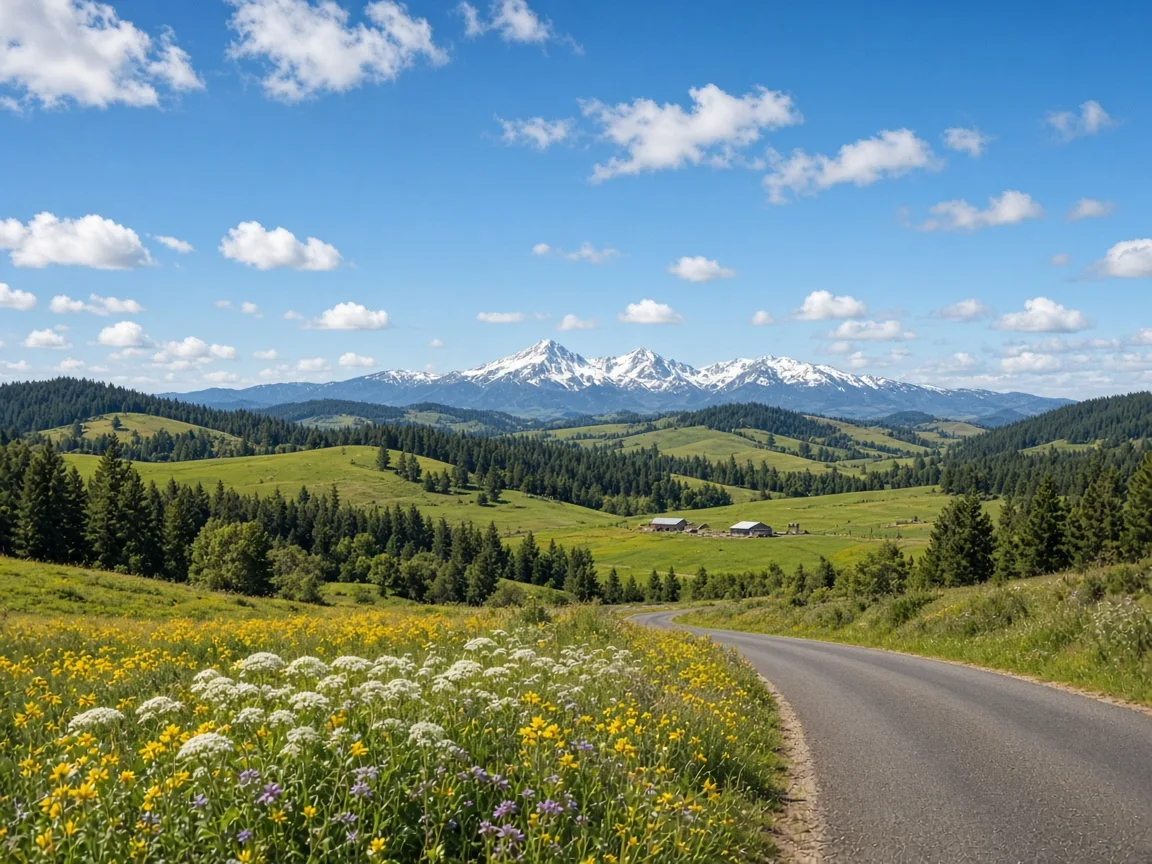
An autumn wetland meadow in the Klamath Basin, similar to habitat sandhill cranes use.
You may hear a sandhill crane before you see one.
Its rolling, rattling call can carry an impressive distance across open country.
Once you recognize the sound, it becomes one of those unmistakable reminders that the landscape around you is alive.
Sandhill cranes are tall, long-legged birds associated with wetlands, meadows, and open agricultural landscapes.
Their behavior is fascinating, particularly during courtship.
What Do Sandhill Cranes Look Like?
Sandhill cranes are generally gray birds with long necks, long legs, and a distinctive red patch on the head.
Their plumage can sometimes appear rusty because of iron-rich mud used during preening.
In flight, cranes extend both their necks and legs, distinguishing them from herons, which typically fly with their necks folded.
The Famous Crane Dance
Sandhill cranes are known for elaborate displays involving bowing, jumping, wing spreading, and tossing vegetation.
These behaviors can occur in courtship and other social contexts.
Watching cranes interact can be entertaining, but observers should never attempt to provoke a display.
The best wildlife behavior is behavior that occurs without human interference.
Where to Look in the Klamath Basin
Suitable wet meadows, marshes, and agricultural landscapes may provide opportunities to observe cranes.
Klamath Marsh and other northern basin habitats are particularly relevant to understanding crane habitat in the region.
Exact locations and seasonal concentrations vary.
Use recent bird observations and official access information rather than relying on outdated directions.
Why Cranes Need Space
Cranes are sensitive to disturbance, especially during nesting.
Approaching too closely can interrupt feeding, courtship, or parental care.
Keep dogs away from nesting habitat, use binoculars, and never enter private fields without permission.
A distant view of a crane behaving naturally is far better than a close photograph of a frightened bird.
Wetlands, Ranching, and Conservation
Cranes illustrate how wildlife may use both natural wetlands and working agricultural landscapes.
The relationship is not always simple.
Agricultural practices, water management, habitat availability, and disturbance can influence whether a location benefits cranes.
Thoughtful land management can create opportunities for coexistence.
Rural Living and Wildlife Habitat
Open meadows and wetlands contribute to the character of rural Klamath County.
Buyers should investigate permitted land uses and habitat considerations before altering rural acreage.
Frequently Asked Questions
Do sandhill cranes live in Southern Oregon?
Sandhill cranes occur in suitable habitats in the region, including during migration and breeding periods.
Why are cranes so loud?
Their calls serve communication and social functions and can carry long distances.
Can I approach a nesting crane?
No. Keep a respectful distance and avoid disturbing nesting birds.
Sources and Further Reading
- Cornell Lab of Ornithology — Sandhill Crane
- U.S. Fish and Wildlife Service
- Oregon Department of Fish and Wildlife
Conditions, access, weather, water quality, fees, and regulations can change. Verify current information with the managing agency and the official sources above before traveling.
Related reading
Open meadows and wetlands contribute to the character of rural Klamath County. Lincoln Home's rural-property guides can help you investigate permitted land uses before altering rural acreage.
Lincoln Home never implies a property offers guaranteed wildlife sightings, hunting access, water rights, development rights, or public-land access. Verify each of these independently for any specific parcel.