
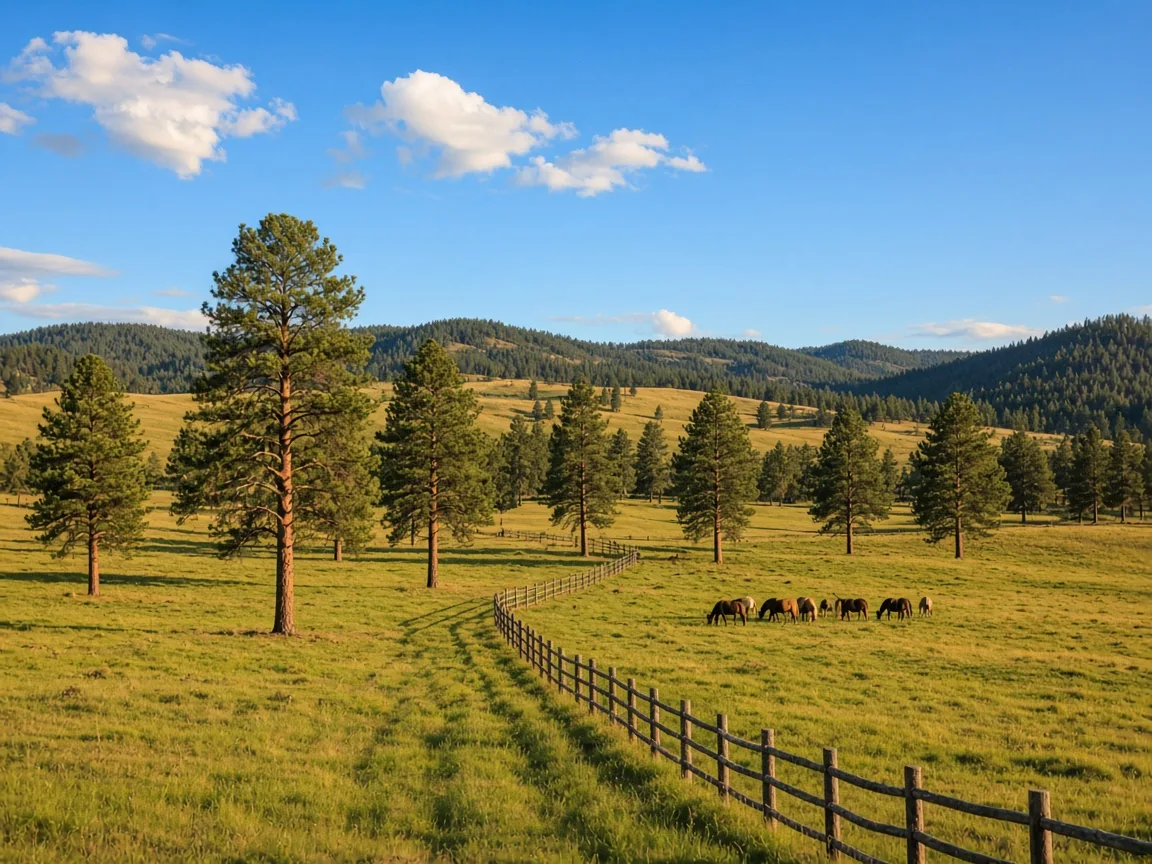
Open high-desert country in Southern Oregon, where red-tailed hawks and other raptors perch and hunt.
There's a moment familiar to anyone who enjoys driving through rural Oregon.
You notice a large bird sitting on a fence post or utility pole.
It looks remarkably serious, as though it's supervising the entire county.
Chances are, you've spotted a raptor.
The Klamath Basin's mixture of open country, forests, wetlands, and agricultural fields provides hunting and resting habitat for several kinds of birds of prey.

What Is a Raptor?
Raptors are birds adapted for capturing prey, typically possessing sharp talons, hooked bills, and excellent vision.
Eagles, hawks, falcons, and owls are familiar examples, although they differ considerably in anatomy and hunting behavior.
Some hunt primarily by day, while many owls are most active during evening or nighttime hours.
Bald Eagles and Golden Eagles
Bald eagles are strongly associated with aquatic environments and may feed on fish, waterfowl, and carrion.
Golden eagles generally favor more open or rugged landscapes and hunt mammals and other prey.
Identification requires care, particularly because immature bald eagles lack the familiar white head and tail of adults.
Hawks of Open Country
Red-tailed hawks are among the more recognizable raptors in western North America.
They frequently perch where they can survey open ground for rodents and other prey.
Other hawks use different hunting strategies, including rapid flight through wooded habitat or low movement over open fields.
Falcons: Built for Speed
Falcons have pointed wings and powerful flight capabilities.
American kestrels, among the smaller falcons, may be observed hunting insects and small vertebrates in open habitat.
Larger falcons can pursue birds in flight.
Watching the difference between a hovering kestrel and a soaring hawk is a useful introduction to raptor identification.
Owls and the Quieter Side of the Landscape
Owls are especially interesting because many are more often heard than seen.
Their camouflage, specialized hearing, and often nocturnal habits make observation challenging.
Avoid using repeated playback calls to lure owls, especially during breeding periods.
Do not disclose sensitive nesting locations.
Why Raptors Matter
Raptors help regulate prey populations and are part of complex food webs.
Their survival depends on suitable habitat, food availability, and protection from unnecessary disturbance.
Collisions, poisoning, habitat changes, and human activity can affect different species.
Living Near Birds of Prey
Rural properties can provide excellent opportunities to observe birds of prey.
Property owners should use wildlife-conscious pest management and avoid disturbing nesting habitat.
Frequently Asked Questions
What is the easiest raptor to identify?
Red-tailed hawks and adult bald eagles are recognizable starting points, although individual variation can complicate identification.
Are all owls nocturnal?
No. Some owl species are active during daylight or twilight.
Can raptors nest near homes?
Some species use trees or structures near developed areas. Active nests should not be disturbed.
Sources and Further Reading
Conditions, access, weather, water quality, fees, and regulations can change. Verify current information with the managing agency and the official sources above before traveling.
Related reading
Rural properties can provide excellent opportunities to observe birds of prey. Lincoln Home can help you evaluate property that fits that lifestyle.
Lincoln Home never implies a property offers guaranteed wildlife sightings, hunting access, water rights, development rights, or public-land access. Verify each of these independently for any specific parcel.