
A Different Kind of Treasure Hunt
There's a moment on a spring hike when you realize the landscape has changed almost overnight.
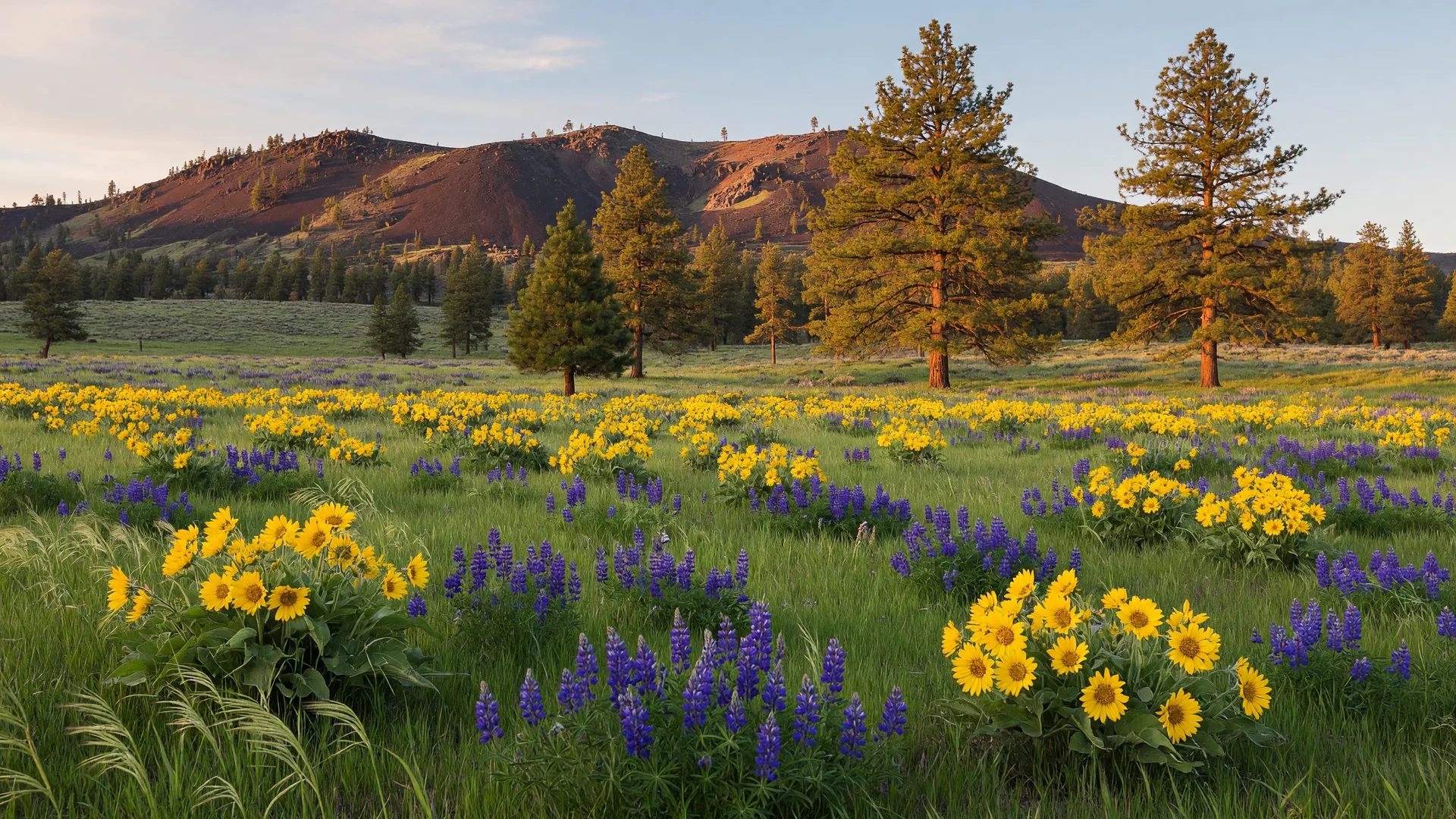
A hillside that looked brown and quiet a few weeks earlier suddenly has patches of yellow, purple, white, and blue. Tiny flowers appear between rocks. Meadows begin to brighten. Even familiar trails feel new.
Wildflower season is one of the most rewarding reasons to explore Southern Oregon on foot.
And the Klamath Basin is an especially interesting place to watch the seasons unfold because its landscapes range from lower-elevation valleys and wetlands to high-elevation forests and volcanic mountains.
That variation means wildflowers don't all bloom at once.
You can encounter early-season flowers in one area while higher-elevation locations remain covered in snow.
Understanding the Wildflower Calendar
Spring arrives at different times across the region.
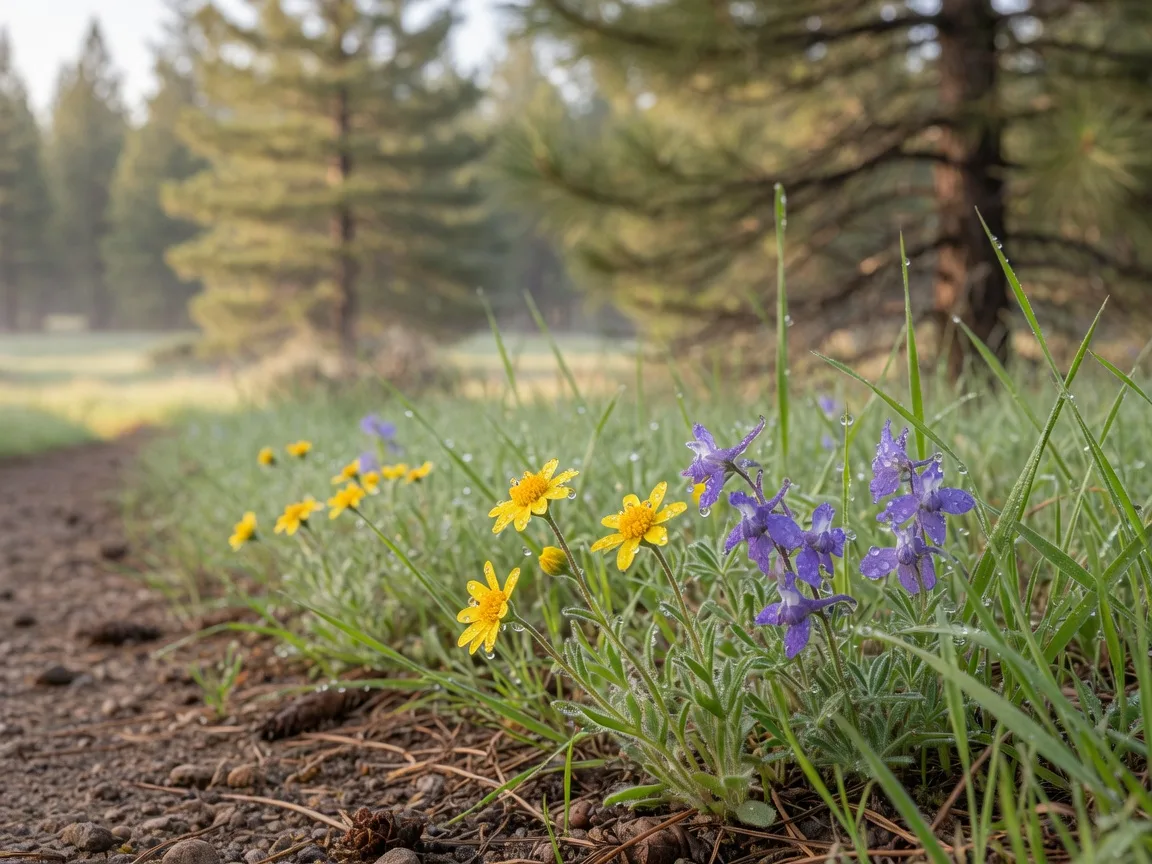
Lower elevations generally warm first. As temperatures rise and snow melts, flowering activity gradually progresses into higher country.
In some years, wildflowers begin appearing in lower-elevation areas during spring. Higher-elevation meadows near Crater Lake may not reach their peak until summer.
Weather makes a substantial difference.
A warm spring can accelerate blooming. A cold, snowy year may delay access to mountain trails.
Rather than planning around a guaranteed bloom date, check current conditions and remain flexible.
Where to Explore
Lower-Elevation Trails Around Klamath Falls
Local trails and natural areas can offer early opportunities to observe seasonal plants.
Moore Park and the surrounding trail system provide convenient access to forested and lakeside environments.
Look for flowers along established trail edges and open areas, but stay on designated routes.
Crater Lake National Park
Crater Lake's higher elevation produces a different growing season.
As snow retreats, wildflowers appear in suitable meadows and forest openings.
The National Park Service provides current information about trail access, snow conditions, and resource protection.
Official website: https://www.nps.gov/crla/
Fremont-Winema National Forest
The Fremont-Winema National Forest encompasses diverse landscapes, from dry forest environments to mountain meadows.
Different elevations and habitats support different plant communities.
Use Forest Service trail information and current alerts when selecting a route.
Official website: https://www.fs.usda.gov/
How to Photograph Wildflowers Without Damaging Them
Wildflower photography is a wonderful hobby because it encourages hikers to notice small details.
You don't need expensive equipment. A smartphone can produce beautiful images.
Try photographing flowers in soft morning or evening light.
Move the camera closer to the flower rather than relying entirely on digital zoom.
Include the surrounding landscape in some photographs to show the habitat.
Avoid stepping into fragile vegetation to reach a particular composition.
Never pull flowers out of the ground for a photograph.
A beautiful picture isn't worth damaging the plant community that made it possible.
Why Picking Wildflowers Is a Problem
Wildflowers contribute to local ecosystems.
They provide food and habitat for pollinators and other wildlife.
Removing flowers can interfere with seed production, and repeated trampling can damage delicate vegetation.
Collection rules vary by land manager and location.
In protected areas, removing plants may be prohibited.
The best souvenir is a photograph and a memory.
Hiking Safely During Wildflower Season
Spring weather can change quickly.
Trails may be muddy, partially snow-covered, or affected by runoff.
Wear shoes with dependable traction, carry water, and bring layers.
Check weather forecasts and trail conditions before leaving.
Remember that wildlife becomes increasingly active as temperatures warm.
Observe animals from a distance and never approach or feed them.
Wildflowers and the Experience of Living Here
For people considering a move to Klamath Falls, wildflower season offers a glimpse of how much the landscape changes throughout the year.
A favorite trail in March can feel entirely different in June.
That seasonal variety is one of the pleasures of living near forests, mountains, wetlands, and public lands.
If easy trail access is important to your lifestyle, Lincoln Home can help you explore communities and properties while you independently verify access, easements, and nearby recreation opportunities.
Frequently Asked Questions
When is wildflower season near Klamath Falls?
Blooming varies by elevation and weather. Lower areas generally bloom earlier, while high-elevation locations may bloom into summer.
Can I pick wildflowers?
Rules depend on the land manager and location. Leaving flowers undisturbed is the best general practice.
Where can beginners start?
Established lower-elevation trails near Klamath Falls are a practical starting point when conditions are suitable.
Are wildflowers safe for pets?
Some plants can be harmful if eaten. Keep pets from consuming unfamiliar vegetation.
Continue Exploring
Read our Hiking Resource Collection, Crater Lake Resources, and Relocation Guides.
Sources and Further Reading
Regulatory and access information reviewed as of October 18, 2026, with the agencies linked above. Trail access, fire restrictions, and pet rules can change. Always confirm current conditions with the managing agency before heading out.