
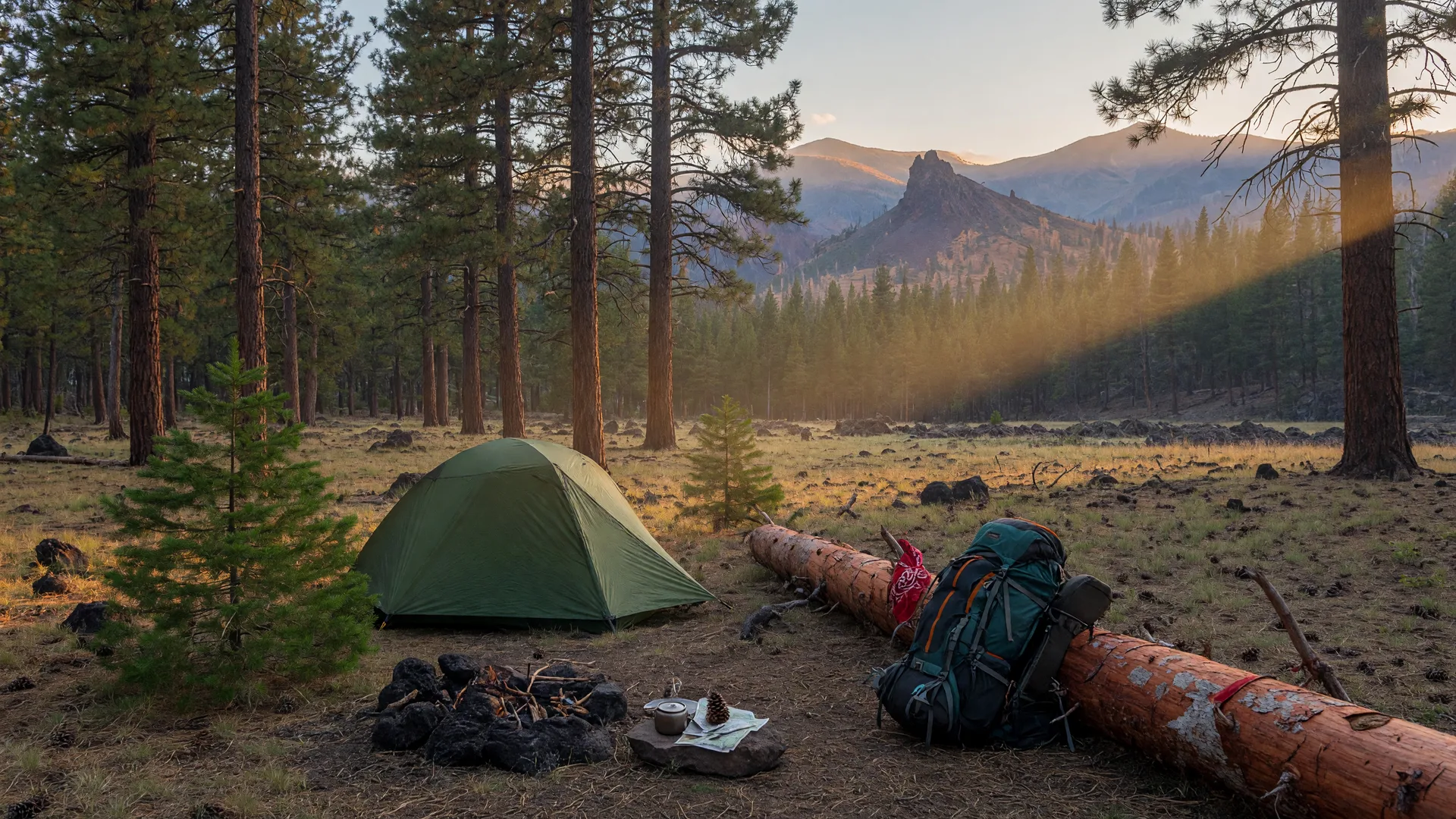
What Happens When the Trail Becomes Your Home for the Night?
Day hiking is wonderful, but backpacking offers something different.
Instead of returning to your vehicle after a few hours, you carry the equipment needed to spend the night outdoors.
Your campsite becomes your temporary home.
Dinner tastes better after a long walk. The stars feel brighter away from city lights. And the experience of carrying everything you need can be surprisingly satisfying.
Southern Oregon offers forests, mountains, and public lands where backpacking may be possible, subject to local rules and access conditions.
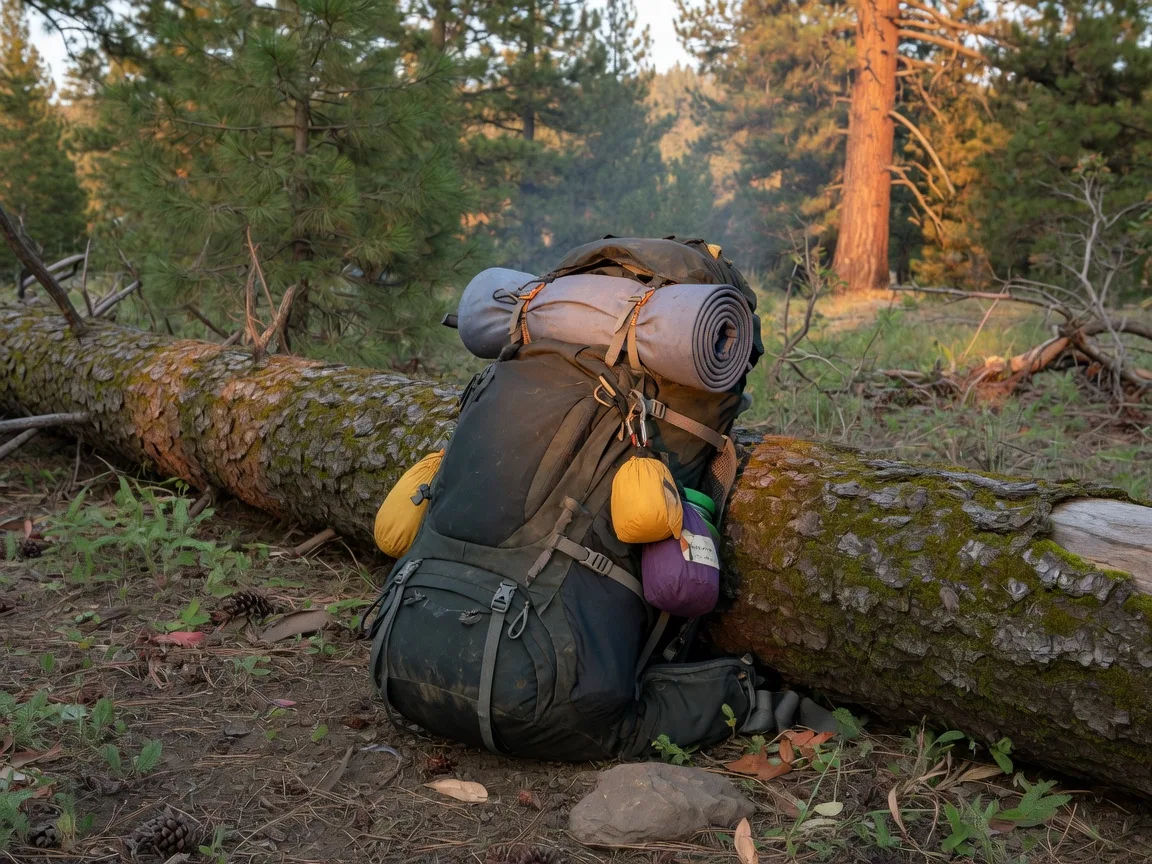
Begin With One Night
Your first backpacking trip doesn't need to involve a remote wilderness expedition.
Choose a manageable route and a legal campsite within a reasonable distance of your starting point.
A shorter first trip allows you to learn how your equipment works without committing to a demanding itinerary.
Avoid choosing a route solely because it looks impressive in photographs.
Consider distance, elevation gain, water availability, weather, and emergency access.
Choosing a Backpack
A backpack should fit your torso and hips comfortably.
Most of the load should be supported by the hip belt rather than hanging entirely from your shoulders.
Pack heavier items close to your back.
Test your loaded backpack on shorter walks before an overnight trip.
Unnecessary equipment adds weight and fatigue.
Shelter and Sleep
Your shelter should suit expected conditions.
A tent, sleeping bag or quilt, and sleeping pad form the foundation of most backpacking sleep systems.
Temperature ratings should be appropriate for nighttime conditions, not just daytime forecasts.
Remember that high-elevation Southern Oregon can experience cold nights even during summer.
Food and Water
Plan meals that provide adequate energy without excessive weight.
Carry enough water to reach reliable sources.
Never assume that a stream shown on a map will be flowing.
Treat water from natural sources using an appropriate filtration, purification, or treatment method.
Learn the limitations of your equipment before traveling.
Food Storage and Wildlife
Food and scented items can attract wildlife.
Follow the land manager's food-storage requirements.
Use appropriate bear-resistant containers or other approved methods where required.
Keep food away from sleeping areas.
Never feed wildlife.
Permits and Campsite Rules
Rules vary by destination.
Some wilderness areas, trailheads, and overnight destinations require permits or have seasonal restrictions.
Campfire regulations can change rapidly during wildfire season.
Check the relevant Forest Service, National Park Service, or other land manager's official information.
Never assume that dispersed camping is permitted everywhere.
Leave No Trace
Choose durable surfaces for camping.
Pack out trash.
Dispose of human waste according to the specific land manager's rules.
Protect water sources from contamination.
Respect other visitors and wildlife.
A responsible backpacker leaves the landscape ready for the next person to enjoy.
Frequently Asked Questions
How far should my first backpacking trip be?
Choose a manageable distance based on fitness, terrain, and pack weight. A short overnight trip is a good introduction.
Can I camp anywhere in a national forest?
No. Restrictions, closures, and campsite rules vary.
Do I need to treat stream water?
Yes. Untreated natural water can contain disease-causing organisms.
Are campfires always allowed?
No. Restrictions vary by season, location, and fire danger.
Continue Exploring
Read Camping Resources, Hiking Resources, and Southern Oregon Relocation.
Sources and Further Reading
Regulatory and access information reviewed as of October 18, 2026, with the agencies linked above. Trail access, fire restrictions, and pet rules can change. Always confirm current conditions with the managing agency before heading out.