
Rules change. Check current conditions before you go.
Fishing seasons, limits, permitted gear, closures, water levels, access, and boat-ramp availability can change. Always verify the current Oregon Department of Fish and Wildlife regulations and the conditions at the exact water you plan to fish.
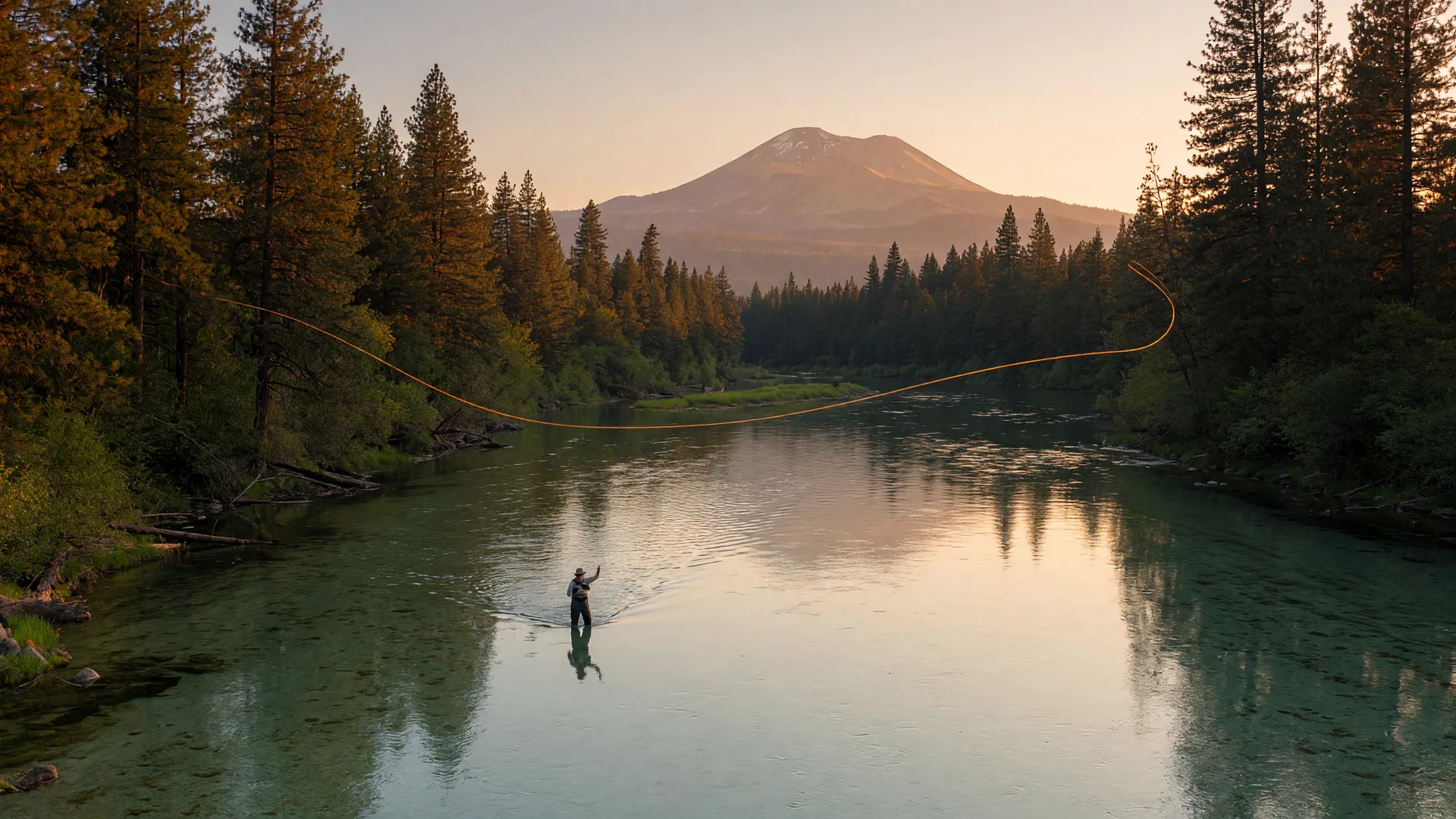
Fly fishing looks almost effortless when someone experienced is doing it.
The line moves through the air in a graceful loop, the fly settles onto the water, and everything seems perfectly coordinated.
Then you try it yourself.
Your line lands behind you. Your fly catches a bush. You discover that casting with a fly rod is nothing like casting with a conventional spinning rod.
Welcome to fly fishing. Almost everyone starts there.
What Is Fly Fishing?
Conventional fishing equipment generally uses the weight of a lure or sinker to carry the line during a cast.
Fly fishing works differently. The specialized fly line provides the weight needed to deliver a lightweight artificial fly.
These flies imitate insects, small fish, and other organisms that fish may eat.
Fly fishing can be practiced on rivers, lakes, and other waters, but the equipment and techniques require some practice.
What Does a Beginner Need?
You do not need to purchase an elaborate collection of expensive equipment.
ODFW identifies a nine-foot, five-weight fly rod with matching reel and weight-forward line as a useful general beginner setup.
Add appropriate leaders, tippet, a modest selection of flies, forceps, a landing net, eye protection, and suitable footwear.
For a first lesson, borrowing or renting equipment can be a sensible way to learn before investing.
Your First Fly-Fishing Lesson
Begin in an open grassy area without nearby people, overhead wires, or obstacles.
Practice a basic overhead cast with a yarn substitute or hookless practice fly.
Move the rod smoothly backward, pause briefly to allow the line to straighten, and then accelerate forward to deliver the line.
Avoid trying to cast too far. Accuracy and control matter more than distance.
Once comfortable, practice on appropriate water where access is lawful.
Learning to Read Water
Fish often position themselves where food passes nearby without requiring excessive energy.
Look for current seams, changes in depth, and areas offering cover.
But remember that not every promising location contains fish. Seasonal movement, temperature, and habitat conditions influence fish behavior.
Understanding Flies
Dry flies generally imitate insects on or near the surface.
Nymphs imitate immature aquatic insects beneath the surface.
Streamers often imitate small fish or other swimming prey.
A beginner does not need hundreds of patterns. A local fly shop or instructor can recommend a manageable selection appropriate to current conditions.
Where to Learn in the Klamath Basin
The Williamson and Wood rivers are important regional fly-fishing destinations, although their special regulations and access considerations make preparation essential.
New anglers may prefer beginning with casting lessons or a less demanding, legally accessible lake fishery before attempting technical river fishing.
Where to Find Instruction
Start with ODFW's Angler Education Program, which offers fishing education and information about workshops.
ODFW's Easy Angling introduction also explains beginner fly-fishing equipment.
For additional casting instruction and demonstrations, explore educational resources from established fly-fishing organizations and retailers such as Orvis and Fly Fishers International. Check current lesson availability directly with providers.
Fly-Fishing Etiquette
Never step directly into water another angler is fishing.
Give people room to cast. Ask before entering an occupied stretch of river.
Avoid disturbing spawning areas, respect private property, and remove discarded line.
Safety for New Fly Anglers
Wear protective glasses when casting. Hooks can travel unexpectedly, particularly in wind.
Do not wade into water deeper or faster than your experience allows.
Use a wading belt when appropriate, and consider a wading staff.
Why People Fall in Love With Fly Fishing
The appeal is not always the catch.
It is the process of learning to read a river, improving a cast, recognizing insects, and becoming more observant.
For many anglers, fly fishing becomes a lifelong pursuit.
Frequently Asked Questions
Is fly fishing difficult to learn?
The basics can be learned with practice, but mastering presentation takes time.
Do I need waders?
Not necessarily. Some fishing can be done from shore or other lawful access areas.
What is a good first fly rod?
A nine-foot, five-weight outfit is a commonly recommended general starting point.
Can beginners fish the Williamson River?
Yes, with appropriate preparation, legal access, and attention to regulations.
Safety on the water
Wear a properly fitted personal flotation device whenever boating and around water where a fall could be dangerous. Check the weather, and never push a small craft into conditions it was not built for. Cold water can be dangerous even when the air feels pleasant. Assess shoreline access and current conditions before wading or stepping onto ice; a frozen appearance never proves that ice is safe.