
Rules change. Check current conditions before you go.
Fishing seasons, limits, permitted gear, closures, water levels, access, and boat-ramp availability can change. Always verify the current Oregon Department of Fish and Wildlife regulations and the conditions at the exact water you plan to fish.
If you have never been fishing, walking into a sporting goods store can feel like entering a world where everyone speaks a different language.
Rods have actions. Reels have sizes. Lines have strengths. Lures come in thousands of shapes and colors.
The good news is that you do not need to understand all of it to enjoy your first fishing trip.
Start With a Simple Goal
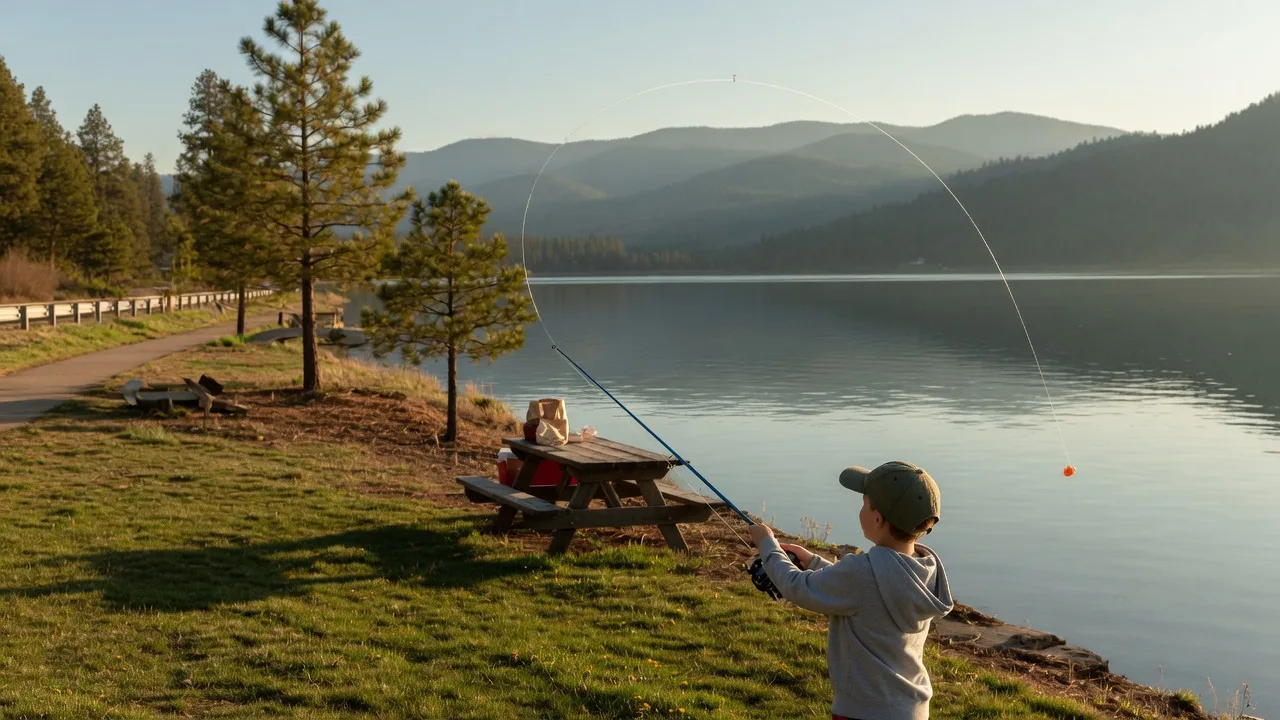
For your first outing, the goal should be learning how to cast safely, recognize a bite, and enjoy time outdoors.
Catching a fish is a bonus.
Choose a developed lake or pond with lawful public access, safe shoreline conditions, and facilities appropriate to your needs.
Choosing Your First Rod
A basic spinning or spincasting combination is a practical beginner choice.
Spincasting reels have enclosed designs that can be especially approachable for children.
Spinning reels offer versatility and can remain useful as skills develop.
Ask a knowledgeable retailer to help match the rod, reel, and line.
Essential Equipment
Begin with a small tackle selection suited to your intended species.
You may need hooks, bobbers, sinkers, or artificial lures, depending on the regulations.
Bring needle-nose pliers, sunscreen, drinking water, appropriate shoes, a small first-aid kit, and a container for collecting litter.
Get Licensed
Oregon generally requires anglers age 12 and older to have a fishing license.
Purchase through ODFW or an authorized vendor.
Then check the rules for the specific water you intend to fish.
Learning to Cast
Find a safe area with no one behind or beside you.
Check for trees, power lines, and other obstacles.
Practice releasing the line smoothly and directing the rod toward your target.
Distance is less important than control.
What Happens When You Catch a Fish?
Remain calm and reel steadily.
Use a landing net when appropriate, and keep your hands away from sharp hooks.
Before deciding whether to keep the fish, confirm that the species and size are legal to retain.
If releasing it, minimize handling and return it carefully to the water.
Making the Day Enjoyable
Bring snacks. Wear layers. Take breaks.
Do not turn a first fishing trip into an exhausting marathon.
Many people become lifelong anglers because their first experience was relaxed, encouraging, and memorable.
Frequently Asked Questions
How much equipment do I need?
A basic rod-and-reel combination and a small selection of legal tackle are enough to begin.
Can I learn without owning a boat?
Yes. Shore fishing is an excellent starting point.
Where can I find lessons?
ODFW offers angler education resources and information about fishing workshops.
Safety on the water
Wear a properly fitted personal flotation device whenever boating and around water where a fall could be dangerous. Check the weather, and never push a small craft into conditions it was not built for. Cold water can be dangerous even when the air feels pleasant. Assess shoreline access and current conditions before wading or stepping onto ice; a frozen appearance never proves that ice is safe.