
Rules change. Check current conditions before you go.
Fishing seasons, limits, permitted gear, closures, water levels, access, and boat-ramp availability can change. Always verify the current Oregon Department of Fish and Wildlife regulations and the conditions at the exact water you plan to fish.
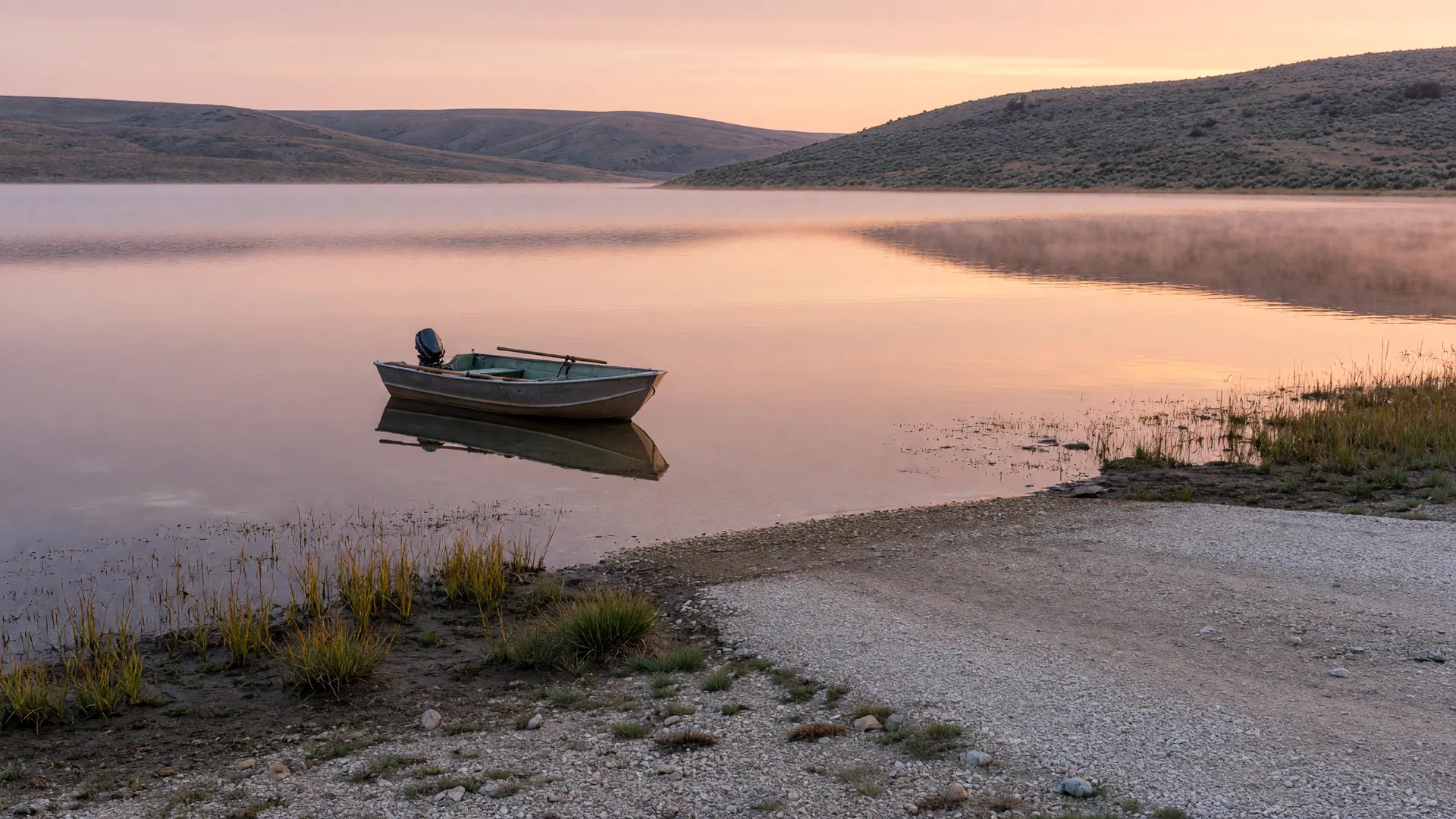
Should you fish from shore or take a boat?
It sounds like a simple question, but the answer depends on where you want to fish, what species you hope to catch, your budget, and your experience.
Both approaches have advantages.
The Case for Shore Fishing
Shore fishing is generally less expensive and easier to organize.
You do not need to maintain a boat, arrange a trailer, or navigate a launch ramp.
For beginners, it also provides an opportunity to concentrate on casting and fish behavior without simultaneously operating a vessel.
However, shoreline access may be limited, and some promising fishing areas may be difficult to reach on foot.
The Case for Boat Fishing
A boat can expand the amount of water available to explore.
Anglers may be able to reach deeper areas, troll appropriate lures, or move between fishing locations more efficiently.
But boats introduce additional costs and responsibilities, including maintenance, transportation, registration where applicable, and safety equipment.
Choosing a Suitable Boat
A boat appropriate for a sheltered pond may not be suitable for a large, wind-exposed lake.
Upper Klamath Lake, for example, demands careful attention to weather and water conditions.
Never assume that a small craft is safe simply because other boats are operating nearby.
Life Jackets Are Essential
Every person aboard should wear a properly fitted, appropriate life jacket.
Children require particular attention to fit and applicable legal requirements.
Inflatable life jackets are not suitable for every person or activity, so verify their approved use.
Before Launching
Check the weather forecast, expected wind, water conditions, and ramp availability.
Inspect the boat, propulsion system, fuel or battery, required equipment, and communications.
Tell someone your intended location and return time.
Cold-Water Danger
Cold-water immersion can quickly affect breathing, movement, and judgment.
Even strong swimmers can experience serious difficulty after unexpectedly entering cold water.
Wear a life jacket and avoid situations where a capsize or fall overboard is more likely.
Responsible Boating Etiquette
Slow down near docks and other boats.
Respect no-wake zones and fishing areas.
Do not cut across another angler's lines or crowd a boat already fishing a location.
What About Kayaks?
Fishing kayaks can be enjoyable, but they require appropriate training, flotation equipment, and an understanding of weather and water conditions.
A kayak is not automatically a safer or simpler alternative to a motorboat.
Frequently Asked Questions
Is shore fishing cheaper?
Usually, because it avoids the purchase and operating costs of a boat.
Do I need a life jacket on a boat?
Applicable laws vary by vessel and activity, but wearing a properly fitted life jacket is the safest practice.
Is Upper Klamath Lake suitable for every boat?
No. Weather, wind, and vessel capability must be evaluated.
Safety on the water
Wear a properly fitted personal flotation device whenever boating and around water where a fall could be dangerous. Check the weather, and never push a small craft into conditions it was not built for. Cold water can be dangerous even when the air feels pleasant. Assess shoreline access and current conditions before wading or stepping onto ice; a frozen appearance never proves that ice is safe.