
Rules change. Check current conditions before you go.
Fishing seasons, limits, permitted gear, closures, water levels, access, and boat-ramp availability can change. Always verify the current Oregon Department of Fish and Wildlife regulations and the conditions at the exact water you plan to fish.
When people imagine fishing in Oregon, they often picture rivers, forested lakes, and anglers casting from boats.
Ice fishing may not be the first activity that comes to mind.
Yet it is a genuine winter fishing opportunity in parts of the state, including selected Southern Oregon waters when conditions are suitable.
Where Can You Ice Fish?
ODFW identifies Lake of the Woods as a destination where ice fishing for yellow perch is popular during appropriate winter conditions.
ODFW also discusses ice fishing at Gerber Reservoir.
These examples do not mean that either location is safe every winter or throughout an entire season.
Ice formation depends on temperature, weather, water movement, and other conditions.
What About Upper Klamath Lake?
Do not assume Upper Klamath Lake is suitable for ice fishing.
Its size, variable conditions, and complex water environment make generalized advice particularly inappropriate.
No one should venture onto ice simply because a section of the lake appears frozen.
Understanding Ice Safety
Ice is never guaranteed safe.
Thickness can vary significantly over short distances, and changing weather can weaken a surface that appeared stable earlier.
Current conditions must be assessed locally. Published thickness guidelines are not a guarantee of safety.
Avoid ice near inlets, outlets, moving water, vegetation, or other areas where conditions may be less predictable.
Never Fish Alone
Use the buddy system and let someone know where you are going.
Carry appropriate rescue equipment, including ice picks and a throw rope, and know how to use it.
Wear suitable flotation equipment and clothing designed for cold conditions.
Consider learning ice-rescue techniques before attempting the activity.
Cold-Water Immersion
Falling through ice is a life-threatening emergency.
Cold water can quickly interfere with breathing and movement, making self-rescue extremely difficult.
If conditions are uncertain, do not go onto the ice.
No fish is worth the risk.
Basic Ice-Fishing Equipment
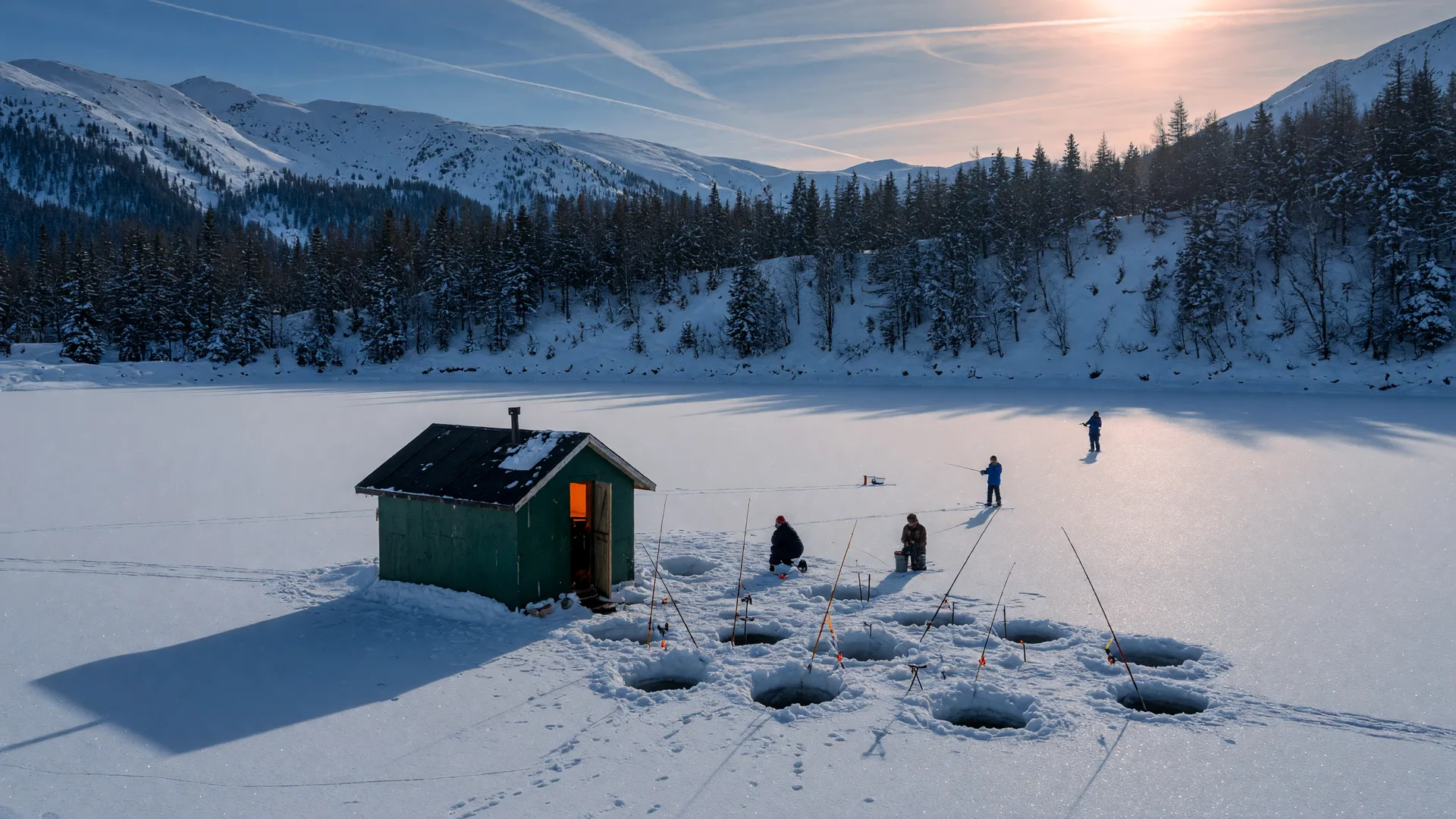
Ice fishing generally involves a shorter rod, suitable line and tackle, an appropriate method of creating a fishing hole, and equipment for clearing ice.
Dress in insulating layers with waterproof outerwear.
Carry dry clothing, warm beverages, and emergency supplies.
Beginners should learn from experienced, safety-conscious anglers rather than attempt their first outing alone.
Fishing Regulations Still Apply
Winter does not suspend fishing laws.
Confirm that the water is open to fishing and that your equipment and intended species comply with current rules.
Frequently Asked Questions
Does Southern Oregon have ice fishing?
Yes, in suitable winter conditions at selected waters.
Is Lake of the Woods an ice-fishing destination?
ODFW identifies it as one.
Is frozen-looking ice safe?
No. Appearance alone cannot establish safety.
Should beginners ice fish alone?
No. Learn with experienced companions and prioritize current safety assessments.
Safety on the water
Wear a properly fitted personal flotation device whenever boating and around water where a fall could be dangerous. Check the weather, and never push a small craft into conditions it was not built for. Cold water can be dangerous even when the air feels pleasant. Assess shoreline access and current conditions before wading or stepping onto ice; a frozen appearance never proves that ice is safe.