
Rules change. Check current conditions before you go.
Fishing seasons, limits, permitted gear, closures, water levels, access, and boat-ramp availability can change. Always verify the current Oregon Department of Fish and Wildlife regulations and the conditions at the exact water you plan to fish.
An angler can return to the same lake twice and experience what feels like two completely different places.
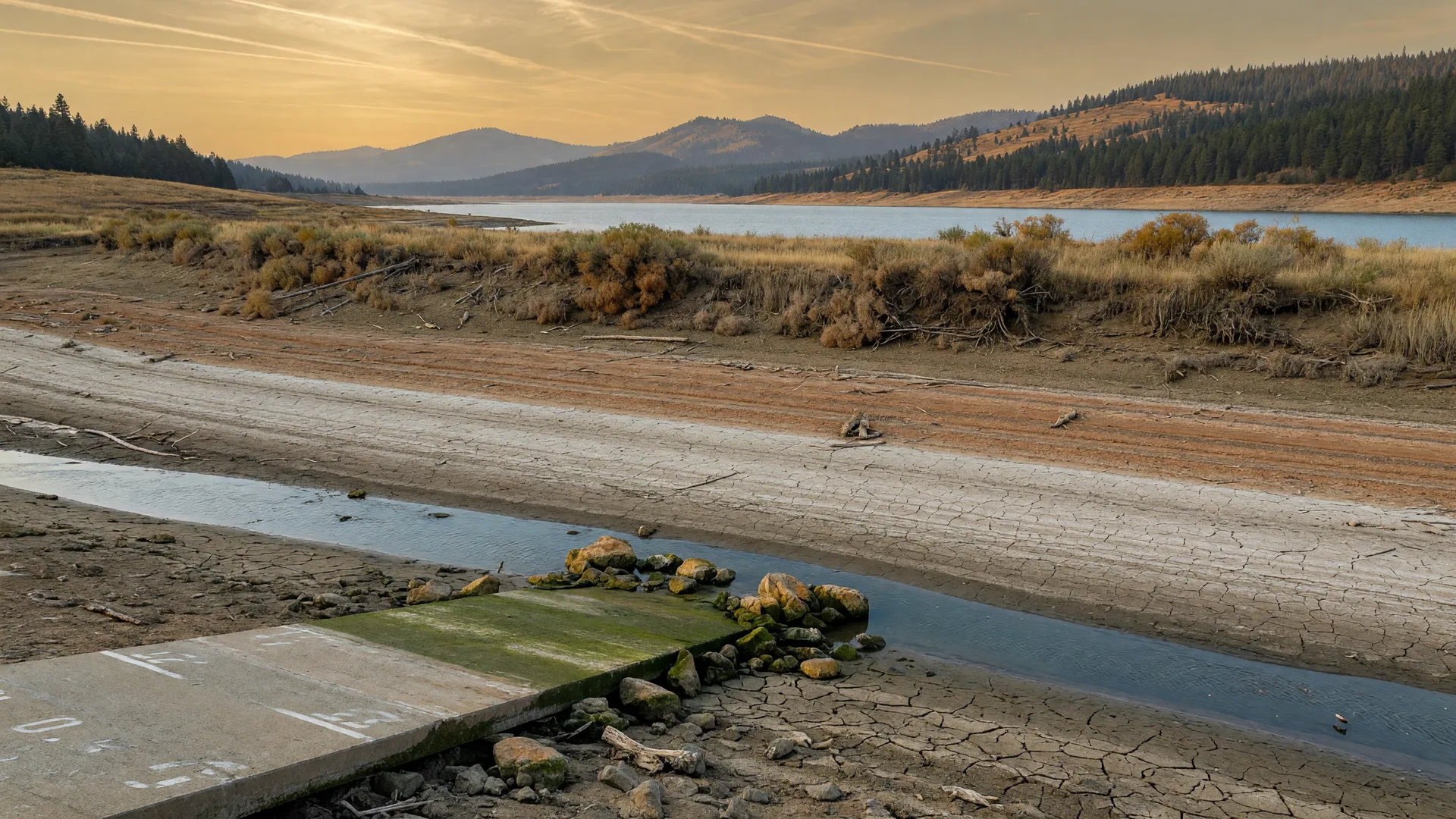
The shoreline has moved. A boat ramp is harder to use. The water is warmer. Fish are holding in different areas.
Water conditions shape fishing opportunities in ways that are easy to overlook.
Why Water Levels Change
Lakes, rivers, and reservoirs respond to precipitation, snowmelt, evaporation, groundwater, and water-management activities.
Reservoirs may experience especially noticeable changes because stored water serves multiple purposes.
These changes can influence shoreline access, navigation, fish habitat, and recreational facilities.
How Water Levels Affect Fishing
Lower water may expose obstacles and reduce access to certain areas.
Higher water can alter shoreline habitat and make familiar fishing locations less recognizable.
Fish may move in response to changes in depth, temperature, cover, and food availability.
There is no universal rule that higher or lower water automatically produces better fishing.
Water Temperature and Trout
Trout depend on suitable temperature and oxygen conditions.
As water warms, fish may move toward cooler areas where available.
Warm conditions can also increase stress associated with capture and release.
Anglers should consider fish welfare before fishing during extreme heat.
Wind and Large Lakes
Wind is a major consideration on large, exposed lakes.
Conditions that are comfortable near shore can become dangerous farther out.
Boaters should monitor forecasts and return before deteriorating conditions create an emergency.
Rivers After Storms
Heavy precipitation can increase flow, change water clarity, and create unstable banks.
Floating debris and strong current can make boating or wading hazardous.
Do not enter unfamiliar moving water without assessing conditions.
Finding Reliable Information
ODFW's recreation reports provide fishery information.
The U.S. Geological Survey and relevant water-management agencies may provide useful hydrological data for particular locations.
Always confirm that a monitoring station actually represents the waterbody or river section you plan to visit.
Why Homebuyers Should Care
People purchasing waterfront or recreation-oriented property should understand that water levels and access can vary.
A listing photograph taken during high water does not establish year-round shoreline conditions.
Investigate historical conditions, legal access, and property-specific rights before buying.
Frequently Asked Questions
Do low water levels affect boat ramps?
Yes. Some ramps may become difficult or unusable.
Can warm water affect trout survival?
Yes. High temperatures can increase stress.
Are water levels important when buying waterfront property?
Absolutely. Seasonal variation and legal rights should be investigated.
Safety on the water
Wear a properly fitted personal flotation device whenever boating and around water where a fall could be dangerous. Check the weather, and never push a small craft into conditions it was not built for. Cold water can be dangerous even when the air feels pleasant. Assess shoreline access and current conditions before wading or stepping onto ice; a frozen appearance never proves that ice is safe.