
Rules change. Check current conditions before you go.
Fishing seasons, limits, permitted gear, closures, water levels, access, and boat-ramp availability can change. Always verify the current Oregon Department of Fish and Wildlife regulations and the conditions at the exact water you plan to fish.
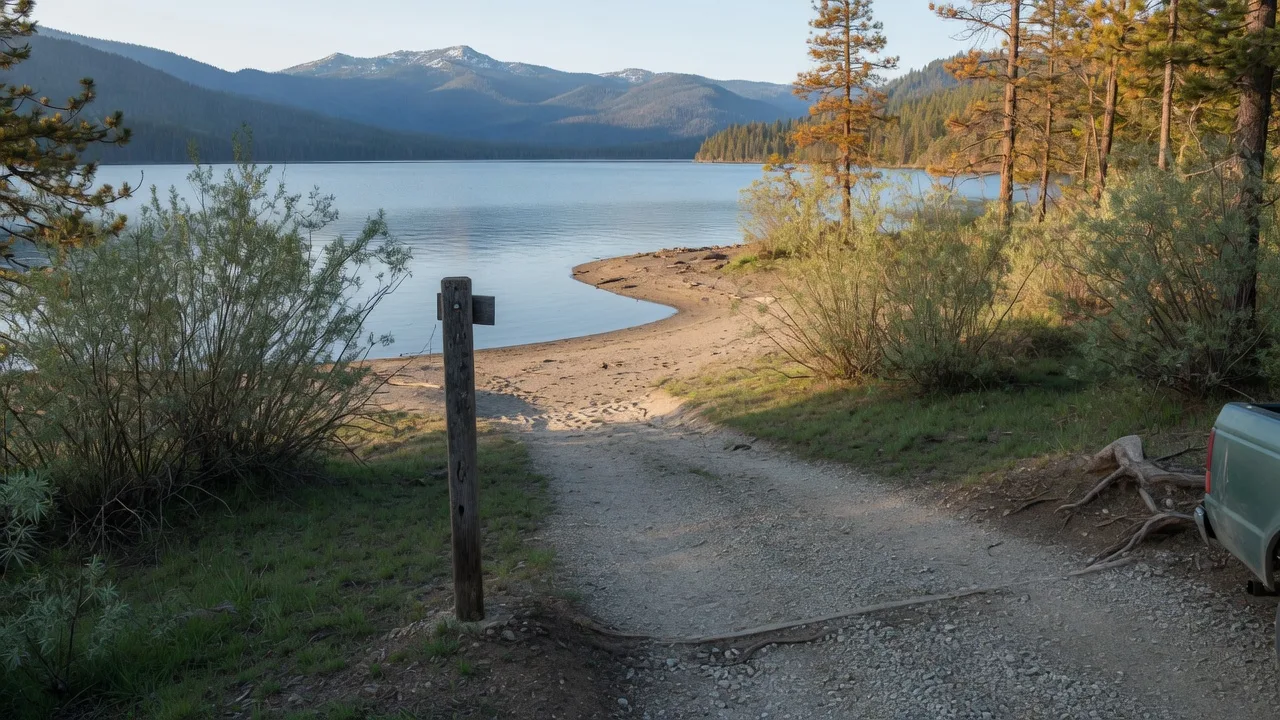
A river can look inviting from the road. A lakeshore may appear completely open. A trail might lead directly toward the water.
None of those things automatically means you have permission to fish there.
Understanding access is one of the most important responsibilities of fishing in Southern Oregon.
A Fishing License Is Not a Property Access Permit
An Oregon fishing license allows lawful fishing under applicable regulations.
It does not authorize crossing private land, entering a closed area, or using facilities without permission.
Access and fishing regulations are separate issues.
Public Land and Public Access
Some fishing opportunities are associated with federal, state, county, or other publicly managed lands.
However, public ownership does not necessarily mean every location is accessible or open to every activity.
Closures, seasonal restrictions, fees, and special rules may apply.
Use official maps and agency information when planning.
Private Property Along Rivers
Some rivers flow through landscapes containing substantial private ownership.
Do not cross fences, driveways, fields, or private roads without authorization.
Even where legal principles concerning waterways may permit certain activities, the rules can be complex and fact-specific.
Do not assume that navigability or the presence of water gives you unrestricted rights to enter surrounding land.
Fishing From Bridges and Roads
A bridge or public road does not automatically create a safe or legal fishing location.
Traffic hazards, parking restrictions, property boundaries, and other rules may limit access.
Never obstruct roadways or emergency access.
Respecting Landowners
Ask permission where required and respect the answer.
Do not leave gates open, disturb livestock, damage fences, or leave litter.
Positive relationships between anglers and landowners help protect future recreational opportunities.
Fishing Etiquette
Give other anglers adequate space.
Do not cast across someone else's line or crowd a person already fishing a location.
Keep noise reasonable and leave the area cleaner than you found it.
Safety at Remote Access Points
Remote access can involve steep terrain, unstable banks, poor cellular reception, and changing weather.
Carry navigation tools, tell someone your plans, and avoid taking unnecessary risks to reach the water.
What Property Buyers Should Know
Buying land near a river or lake does not automatically provide unlimited fishing rights.
Investigate recorded easements, public access, ownership boundaries, water rights, and any applicable restrictions.
For property-specific questions, obtain appropriate title, survey, legal, or regulatory guidance.
Frequently Asked Questions
Does a fishing license let me cross private land?
No.
Can I fish anywhere on public land?
Not necessarily. Check access and activity restrictions.
Does waterfront ownership guarantee exclusive fishing access?
No. Rights depend on property-specific facts and applicable law.
Safety on the water
Wear a properly fitted personal flotation device whenever boating and around water where a fall could be dangerous. Check the weather, and never push a small craft into conditions it was not built for. Cold water can be dangerous even when the air feels pleasant. Assess shoreline access and current conditions before wading or stepping onto ice; a frozen appearance never proves that ice is safe.