
Rules change. Check current conditions before you go.
Fishing seasons, limits, permitted gear, closures, water levels, access, and boat-ramp availability can change. Always verify the current Oregon Department of Fish and Wildlife regulations and the conditions at the exact water you plan to fish.
There are few moments in fishing quite like feeling a trout take a lure or fly.
One second, the line is moving through the water. The next, it comes alive.
Klamath County offers trout fishing experiences ranging from accessible mountain lakes to technically demanding river fisheries.
Understanding Trout Species
Rainbow trout are familiar to many Oregon anglers. They can be found in a variety of lakes and streams, including stocked recreational fisheries.
Redband trout are native inland rainbow trout associated with the Klamath Basin. These fish have important conservation significance and may be subject to restrictive management.
Brown trout are another species encountered in some Southern Oregon waters, including Lake of the Woods.
Understanding which fish you have caught matters because species identification can affect whether it may legally be kept.
Lake Fishing Versus River Fishing
Lake trout fishing often involves casting from shore, trolling from a boat, or presenting bait and lures at different depths where permitted.
River fishing introduces current, drifting presentations, and the challenge of identifying likely fish-holding locations.
A beginner might start with a lake before moving into specialized river techniques.
Choosing Equipment
For general trout fishing, a light spinning rod can provide versatility.
Fly anglers may choose equipment designed for small artificial flies, nymphs, or streamers.
Use only tackle permitted for the specific water. Some Klamath Basin fisheries prohibit bait or require catch-and-release.
Catch-and-Release Techniques
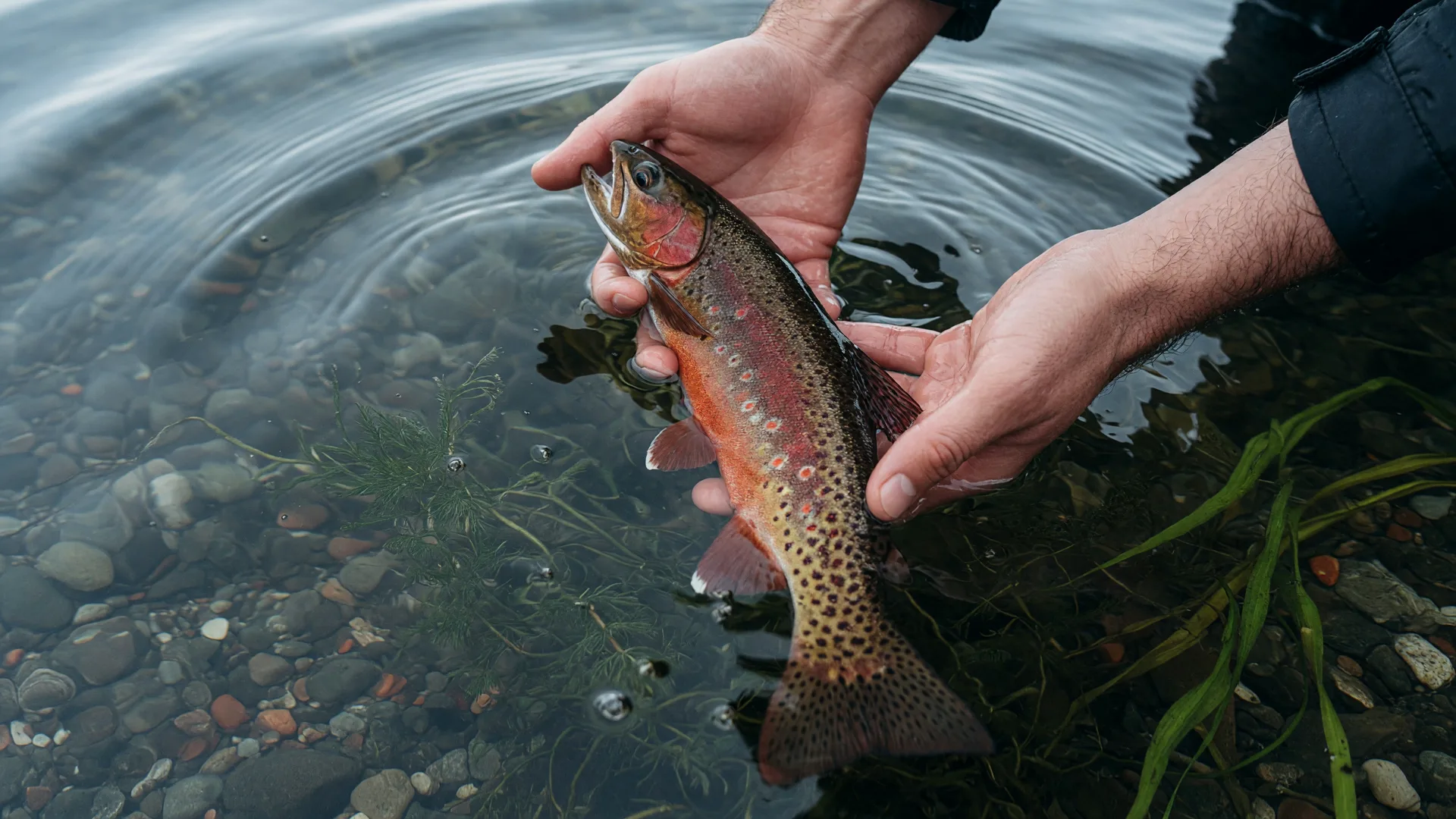
Responsible fish handling is especially important when fishing for native trout.
Prepare your net and tools before landing the fish. Wet your hands, minimize air exposure, and avoid squeezing the fish.
If the fish is deeply hooked, follow established fish-handling guidance rather than causing unnecessary injury.
Release the fish gently into suitable water and allow it to recover without forcing it into strong current.
Warm Water and Fish Stress
Trout depend on suitable water temperatures and oxygen conditions.
During periods of elevated water temperature, catch-and-release fishing can place additional stress on fish.
Consider fishing during cooler conditions or choosing another activity when water temperatures are unsuitable.
Personal Safety
River anglers should be cautious when wading. Wear footwear with appropriate traction and avoid crossing unfamiliar currents.
Boat anglers should wear life jackets and monitor wind conditions.
Carry water, sunscreen, weather-appropriate clothing, and a first-aid kit.
Frequently Asked Questions
Are redband trout the same as rainbow trout?
Redband trout are a native inland form of rainbow trout.
Can I keep trout caught in Klamath County?
Rules depend on the water, species, and date.
Is fly fishing required for trout?
Not everywhere. Some waters allow other methods, while certain fisheries have artificial-gear restrictions.
Safety on the water
Wear a properly fitted personal flotation device whenever boating and around water where a fall could be dangerous. Check the weather, and never push a small craft into conditions it was not built for. Cold water can be dangerous even when the air feels pleasant. Assess shoreline access and current conditions before wading or stepping onto ice; a frozen appearance never proves that ice is safe.