
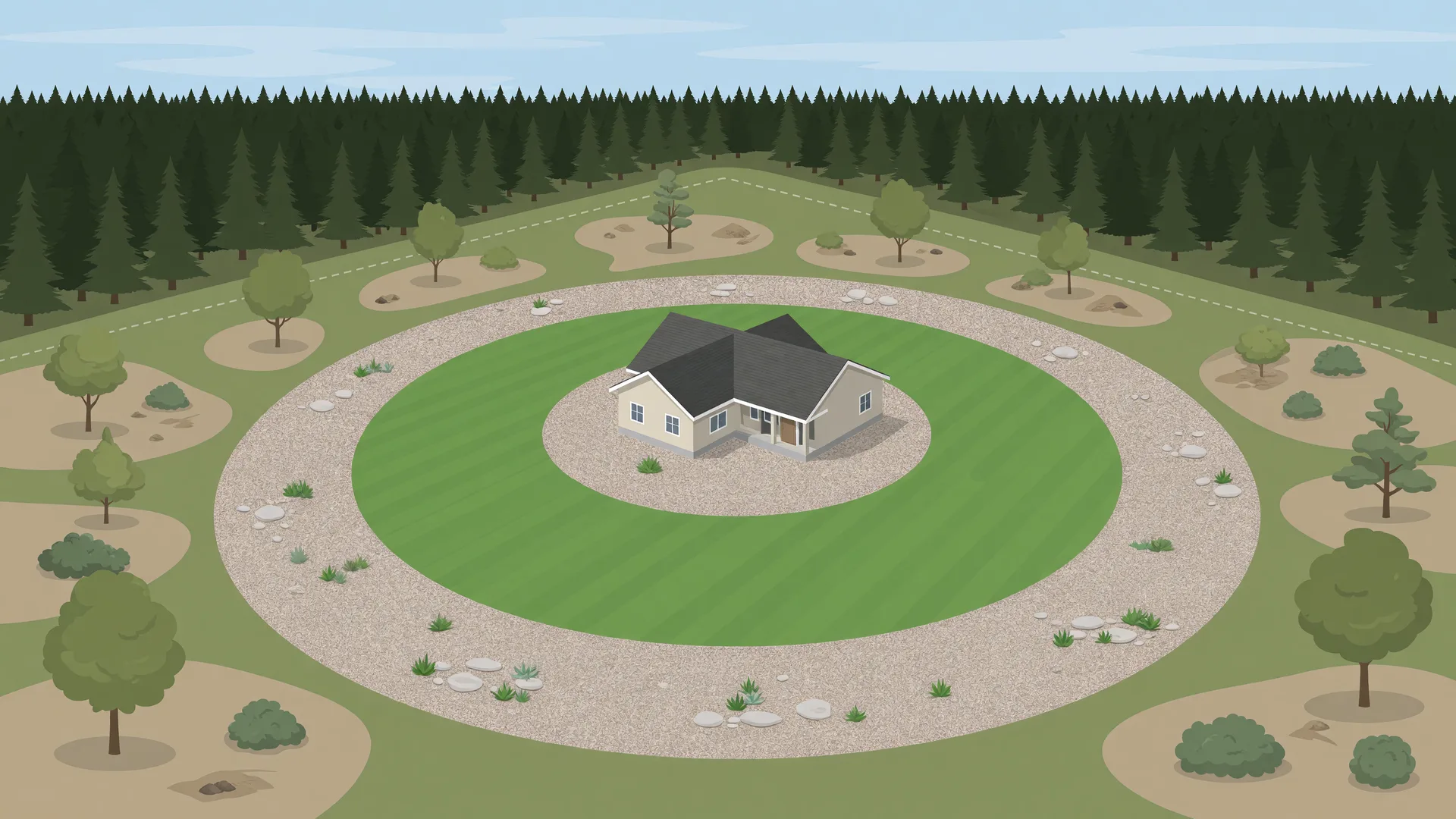
A Beautiful Landscape Requires Responsible Preparation
Forests, open grasslands, and rural landscapes are part of what makes Southern Oregon attractive.
They also make wildfire preparedness an important aspect of homeownership.
Wildfire risk is not limited to cabins deep in the woods.
Wind-driven embers, dry vegetation, structures, and changing conditions can create hazards in a variety of settings.
Buyers should understand a property's exposure, while existing homeowners should develop practical maintenance and emergency plans.
Understand the Property, Not Just a Map
Wildfire hazard information can help identify broader conditions, but an individual property's vulnerabilities depend on many factors.
Vegetation, building materials, topography, neighboring structures, access, and maintenance all matter.
A hazard designation does not by itself determine whether a particular house will survive a fire.
Professional assessments can help identify opportunities to reduce risk.
Defensible Space Begins Near the Home
The Oregon State Fire Marshal emphasizes reducing combustible materials close to structures, particularly within the first five feet.
Practical actions include removing dry leaves and needles, cleaning gutters, moving firewood away from buildings, and replacing highly combustible materials immediately adjacent to the house.
Farther from the structure, vegetation management can reduce pathways that carry flames into trees or toward buildings.
The goal is not necessarily to remove every tree. It is to manage fuels intelligently.
Home Hardening
Home hardening focuses on the structure itself.
Potential improvements include maintaining roofing and siding, protecting vulnerable vents, reducing debris beneath decks, and addressing places where embers could enter.
A property with well-managed vegetation can still be vulnerable if the building has exposed combustible materials.
Preventing Accidental Ignitions
Wildfire prevention is a shared responsibility.
Equipment sparks, escaped debris burns, improperly extinguished campfires, and other human activities can start fires.
Before mowing dry vegetation, burning debris, or using spark-producing equipment, check current restrictions and conditions.
Never assume that burning is permitted because it was allowed earlier in the season.
Evacuation Planning
Every household should know how to receive local emergency alerts.
Prepare a plan for people, pets, medications, documents, and transportation.
Rural property owners should identify primary and alternative evacuation routes where available.
Horse and livestock owners need additional planning because moving large animals takes time and equipment.
Insurance Considerations
Wildfire exposure may influence insurance underwriting and pricing.
Buyers should obtain property-specific insurance information early.
Ask about replacement-cost coverage, detached structures, deductibles, and any relevant exclusions.
Do not assume that an insurer will provide coverage simply because the property was insured previously.
Buying a Home in a Fire-Prone Setting
During due diligence, evaluate roof condition, siding, decks, surrounding vegetation, access, water availability, and nearby fuel conditions.
Consider the cost of ongoing maintenance.
A beautiful wooded property may still be a good lifestyle choice, but it should be purchased with an understanding of its responsibilities.
Interactive checklist
Defensible Space Checklist
Work from the structure outward, then build your household's emergency plan. The right approach depends on the property, vegetation, terrain, and current professional guidance.
If any item is still unresolved, work through it with the seller, the responsible authorities, and the professionals who will help you close before you buy.
Frequently Asked Questions
Does defensible space eliminate wildfire risk?
No. It reduces certain vulnerabilities but cannot guarantee survival.
Is Oregon's defensible space model code automatically mandatory everywhere?
No. The state finalized a model code in 2026 for voluntary adoption by local jurisdictions. Property owners should verify locally applicable requirements.
Can a homeowner reduce wildfire risk without removing every tree?
Yes. Appropriate spacing, maintenance, debris removal, and building improvements can make meaningful differences.
Should buyers get insurance quotes before closing?
Yes. Early quotes help identify availability and affordability concerns.
Protect the Lifestyle You Love
Lincoln Home encourages buyers and homeowners to approach wildfire preparedness as part of responsible property ownership.
Explore rural homes, forested acreage, and Southern Oregon communities through Lincoln Home.
Contact Lincoln Home to discuss property searches and the practical considerations of owning in different settings.
The Lincoln Home property search portal covers active Klamath Basin MLS listings across the whole region. Use the broad search to compare rural, forested, and community properties, then evaluate vegetation, building materials, access, and water availability for any property you consider.
Continue Exploring
Wildfire preparedness connects to forested ownership, defensible space, insurance, cabins, and winter access. Continue with the guides below.
- Buying Forested Property in Southern Oregon Timber rights, tree cutting, and forest management.
- Wildfire Risk and Defensible Space for Rural Klamath County Homes Defensible space, vegetation management, and evacuation.
- Homeowners Insurance for Rural, Forested, and High-Fire-Risk Properties Replacement cost, outbuildings, and wildfire underwriting.
- Mountain Cabins and Recreational Properties in Southern Oregon: What Buyers Need to Know Forest recreation residences and seasonal ownership.
- Winter in Klamath Falls: What Homebuyers Should Know About Snow, Heating, Roads, and Maintenance Year-round maintenance and emergency preparedness.
Official Resources and Further Reading
These official resources are the starting point for verifying rules for a specific property. Lincoln Home presents general educational content, not property-specific legal approval. Confirm current requirements with the responsible agency before relying on any development claim.