
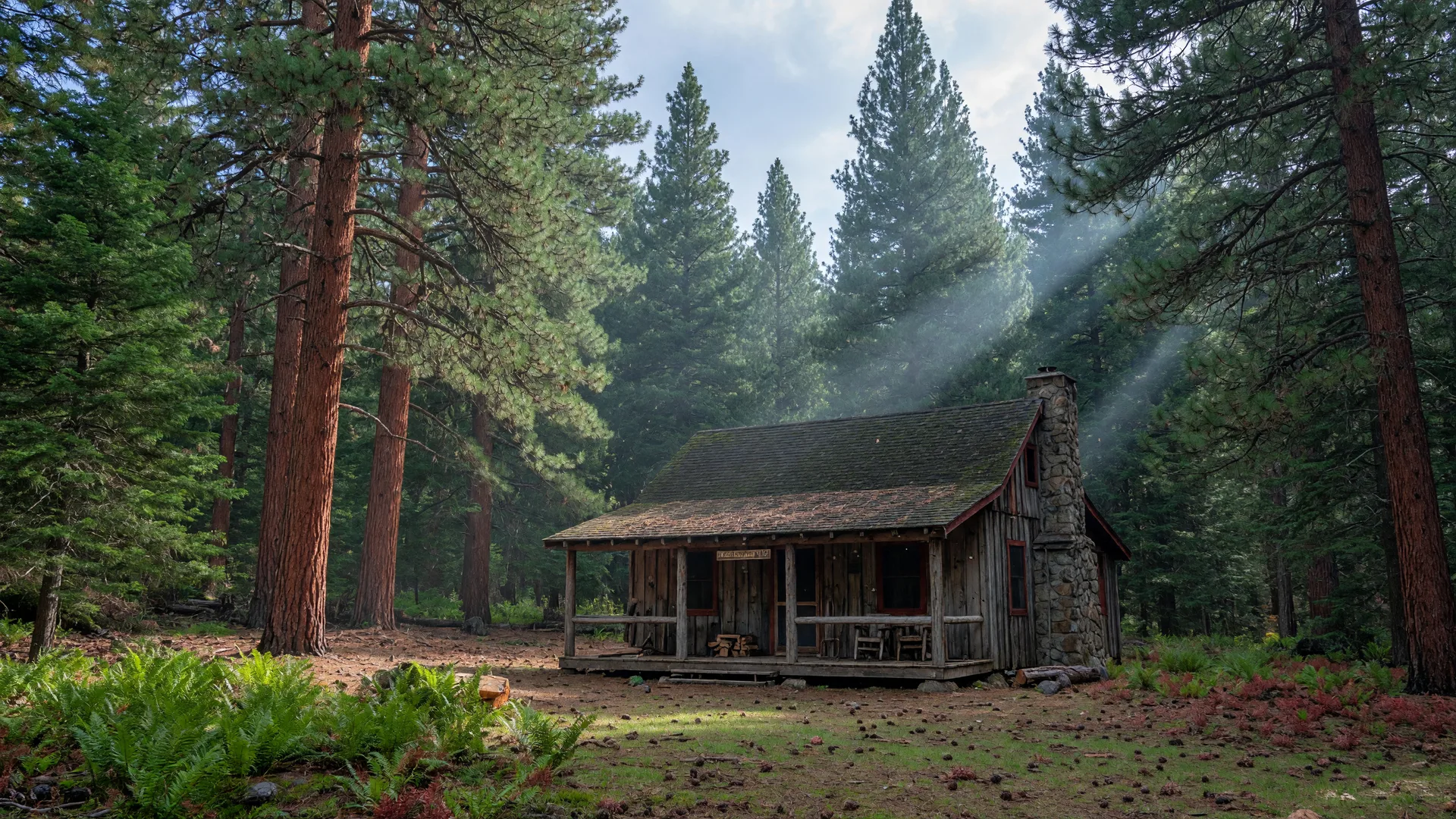
A Cabin Can Be a Dream Come True—If You Understand What You're Buying
Picture a quiet mountain morning, coffee on the porch, tall trees surrounding your cabin, and an afternoon spent fishing, hiking, or exploring the outdoors.
For many buyers, a mountain cabin represents a place to escape a busy schedule and reconnect with nature.
Southern Oregon offers an appealing variety of recreational settings, including forested areas, mountain communities, and destinations near lakes and outdoor recreation.
But purchasing a cabin can involve issues that rarely arise in an ordinary residential transaction.
Some cabins are suitable for year-round occupancy. Others are designed primarily for seasonal recreation. Some sit on privately owned land, while certain recreational residences may occupy federally managed land under special-use authorizations.
Those differences can affect ownership, financing, insurance, maintenance, and resale.
First, Understand Whether You Own the Land
This may be the single most important question in a recreational cabin purchase.
A cabin on privately owned land can involve conventional real property ownership, subject to applicable restrictions.
A recreational residence on National Forest System land may instead involve ownership of the structure with permission to occupy federal land under a special-use authorization.
These are fundamentally different arrangements.
A federal recreational residence authorization is not the same as owning the underlying land. It may involve annual fees, maintenance obligations, occupancy limitations, transfer procedures, and restrictions on improvements.
For properties around Lake of the Woods or other forest recreation areas, verify the exact ownership and authorization structure rather than assuming all cabins are fee-simple real estate.
A prospective buyer should obtain and review the relevant authorization documents and contact the responsible U.S. Forest Service office before committing.
Can You Live in the Cabin Year-Round?
A cabin advertised as a vacation retreat is not automatically approved or practical for permanent residence.
Year-round occupancy may be affected by land-use restrictions, permit conditions, water systems, wastewater facilities, insulation, heating, and road access.
Seasonal cabins may have water systems that are shut down during freezing weather.
Others may be accessible only when roads are open or maintained.
If you intend to use the cabin as a primary residence, verify that the legal and physical conditions support that plan.
Winter Access Can Change Everything
A mountain road that feels easy in August may become difficult during snow season.
Ask whether the road is maintained, whether snow removal is available, and whether the cabin can be reached safely throughout the year.
Consider how emergency responders, fuel deliveries, contractors, and guests would reach the property.
A buyer should also investigate parking arrangements, driveway grades, and whether snow storage is available.
Water and Wastewater
Cabins may rely on wells, shared water systems, holding arrangements, or other approved infrastructure.
A seasonal water system can require winterization.
Septic systems deserve evaluation, particularly when an older cabin has been remodeled or expanded.
Do not assume that a small cabin can accommodate unlimited guests simply because it has a bathroom.
Heating and Power
Mountain cabins may use electric heat, propane, wood stoves, or a combination of systems.
Have heating equipment inspected and confirm that installations comply with applicable requirements.
Wood-burning systems require chimney maintenance, proper clearances, and attention to wildfire safety.
If the cabin experiences frequent power interruptions, evaluate backup arrangements.
Insurance and Financing
Not every recreational cabin qualifies for ordinary residential mortgage financing.
Lenders may consider whether the property is permanently habitable, whether the land is owned, whether access is year-round, and whether the property meets their program requirements.
Insurance availability can also depend on wildfire exposure, construction type, location, and seasonal occupancy.
Obtain financing and insurance guidance early.
Cabin Maintenance Is Different
Mountain properties may experience heavy snow accumulation, freeze-thaw cycles, falling branches, moisture intrusion, and wildlife activity.
Roof condition, insulation, plumbing protection, drainage, and ventilation deserve careful inspection.
If you cannot visit regularly, consider how the property will be monitored and maintained during your absence.
Can You Rent Out Your Cabin?
Do not assume short-term rental income is permitted.
Rental activity may be restricted by zoning, recorded covenants, community rules, or special-use authorization terms.
A recreational residence permit may impose restrictions different from those applicable to privately owned vacation homes.
Verify the intended use before relying on rental income to support the purchase.
Compare the two ownership structures
Fee-Simple Land vs. Special-Use Occupancy
Cabin ownership takes two very different forms in forest recreation areas. Use this comparison as a starting point, then verify the exact structure for the specific property.
| Fee-simple land ownership | Special-use occupancy | |
|---|---|---|
| Land | You own the parcel as real property, subject to applicable restrictions. | The structure is owned, but the land is federally managed under a special-use authorization. |
| Ongoing obligations | Property taxes and ownership costs on the owned parcel. | Annual fees, maintenance obligations, and occupancy limitations under the authorization. |
| Improvements | Subject to zoning, building, and recorded restrictions. | Restricted by authorization terms; improvements may require land manager approval. |
| Financing | May qualify for conventional residential financing, subject to lender requirements. | Often falls outside ordinary residential mortgage programs; verify options early. |
| Resale and transfer | Resale follows ordinary real property rules. | Transfer procedures and conditions under the authorization apply. |
Educational comparison for explanation only. Verify the exact ownership and authorization structure with the responsible U.S. Forest Service office and the recorded documents for each property before purchasing.
Frequently Asked Questions
Can I get a mortgage on a cabin?
Potentially. Financing depends on the property's legal ownership, condition, occupancy characteristics, and lender requirements.
Are cabins near Lake of the Woods all privately owned land?
Do not assume that. Verify the ownership structure for each property, including whether federal recreational residence authorization is involved.
Can I renovate a forest recreation cabin?
Possibly, but improvements may require authorization from the responsible land manager and compliance with applicable requirements.
Is a cabin a good investment?
It depends on purchase price, ownership restrictions, carrying costs, maintenance, financing, and your intended use. Recreational enjoyment should not be confused with guaranteed financial return.
Should I inspect a cabin in winter?
A winter visit can reveal access and heating considerations, although inspection opportunities depend on weather and safety.
Find Your Southern Oregon Retreat
Whether you're interested in a weekend cabin, a recreational getaway, or a mountain home suitable for more frequent use, Lincoln Home can help you explore available opportunities.
Search cabins, mountain properties, and recreational homes around Klamath County.
If you're selling a cabin, Lincoln Home can help you organize the information buyers need about access, utilities, ownership, and property condition.
The Lincoln Home property search portal covers active Klamath Basin MLS listings across the whole region. The search does not offer a separate cabin or recreational-property filter, so use the broad search to browse cabin, mountain, and recreational inventory, then verify the ownership and access details for any property you consider.
Continue Exploring
Cabin purchases connect to winter access, waterfront property, outdoor recreation, winter living, and wildfire preparedness. Continue with the guides below.
- Snow, Winter Access, Private Roads, and Easements in Rural Klamath County Access and emergency response in seasonal conditions.
- Waterfront Living in Klamath County: Buying Homes Near Lakes and Rivers Lakeside ownership and water access considerations.
- Buying a Home for Hunting, Fishing, and Outdoor Recreation Near Klamath Falls Matching a home to your outdoor activities.
- Winter in Klamath Falls: What Homebuyers Should Know About Snow, Heating, Roads, and Maintenance Roofs, heating, plumbing, and winter access.
- Wildfire Risk and Homeownership in Southern Oregon: Preparing, Protecting, and Buying Wisely Defensible space and insurance in forest settings.
Official Resources and Further Reading
These official resources are the starting point for verifying rules for a specific property. Lincoln Home presents general educational content, not property-specific legal approval. Confirm current requirements with the responsible agency before relying on any development claim.