
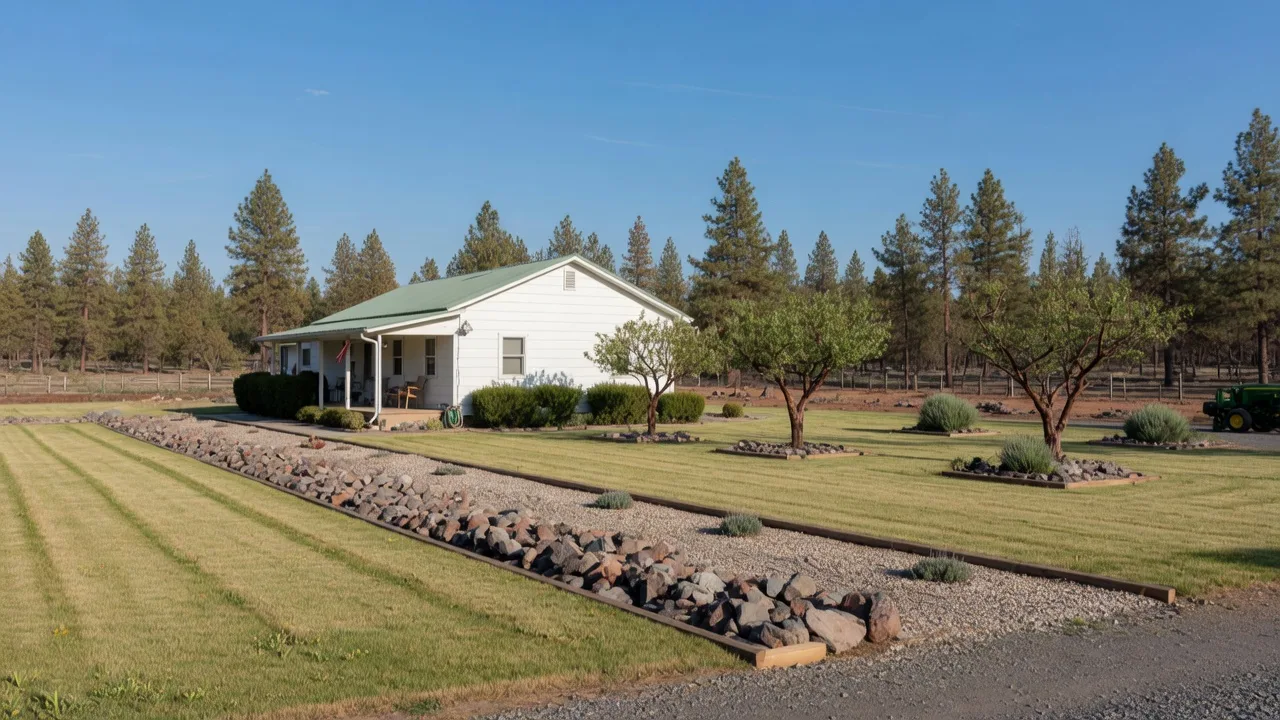
Living With Fire Awareness in Southern Oregon
Wildfire is a serious consideration for people buying or owning rural property in the Klamath Basin.
Dry vegetation, wind, seasonal weather, terrain, and human activity can contribute to dangerous conditions.
Wildfire preparedness is not simply a matter of protecting a house. It involves maintaining the surrounding property, understanding evacuation routes, and reducing activities that could start a fire.
What Is Defensible Space?
Defensible space is the managed area around a structure intended to reduce wildfire exposure and improve conditions for emergency response.
It does not mean removing every tree or eliminating all vegetation.
Instead, the goal is to reduce combustible materials, manage vegetation, and limit pathways that could carry flames or embers toward a building.
Start Closest to the House
Remove accumulated leaves, pine needles, and other combustible debris from roofs, gutters, decks, and areas immediately adjacent to structures.
Avoid storing firewood or other combustible materials against the home.
Inspect vents, roofing, siding, and other building components for vulnerabilities.
Embers can travel ahead of a wildfire and ignite vulnerable materials.
Manage Vegetation
Appropriate vegetation management may include pruning, thinning, removing dead material, and maintaining separation between combustible plants and structures.
The correct approach depends on the property, vegetation type, terrain, and current professional guidance.
Avoid indiscriminate clearing that could create erosion or other environmental problems.
How Rural Property Owners Accidentally Start Wildfires
Common ignition risks include poorly controlled debris burning, equipment sparks, unattended campfires, hot exhaust systems, and activities that produce sparks during dry conditions.
Mowing or operating machinery over dry vegetation can create ignition hazards.
Before using equipment, check current fire restrictions and weather conditions.
Maintain spark arresters where required, keep equipment in good repair, and avoid risky operations during extreme conditions.
Never assume that a small outdoor fire is harmless.
Burning and Permits
Burn restrictions and permit requirements vary by location, season, land classification, and responsible authority.
A burn that is allowed during one period may be prohibited during another.
Always check current restrictions with the appropriate fire district, Oregon Department of Forestry, or other land-management agency before burning.
Prepare for Evacuation
Know more than one route out when possible.
Keep important documents accessible, prepare emergency supplies, and plan for pets and livestock.
Horse owners should have transportation and evacuation arrangements established before an emergency.
Sign up for applicable local emergency alerts.
Defensible Space, Layer by Layer
A diagram of the areas discussed above. The right approach depends on the property, vegetation, terrain, and current professional guidance.
-
Structure and immediate surroundings
Remove leaves, pine needles, and other debris from roofs, gutters, decks, and areas right next to the building. Keep firewood away from the home and inspect vents, roofing, siding, and other components.
-
Managed vegetation
Prune, thin, and remove dead material, and maintain separation between combustible plants and structures. Avoid indiscriminate clearing that could create erosion or other problems.
-
Surrounding property and planning
Consider evacuation routes, emergency access, water availability, and how the surrounding land and neighboring vegetation affect exposure and response.
Check current conditions, not old notices
Burn restrictions and permit requirements vary by location, season, land classification, and responsible authority. Always verify current conditions with the appropriate fire district, Oregon Department of Forestry, or other land-management agency before burning or operating equipment in dry conditions.
Emergency preparedness resources: know more than one route out when possible, keep important documents accessible, prepare emergency supplies, and plan for pets and livestock.
Frequently Asked Questions
Does defensible space guarantee that my house will survive a wildfire?
No. It is a risk-reduction strategy, not a guarantee.
Can I burn branches and yard debris whenever I want?
No. Current restrictions, permits, weather conditions, and local rules must be checked.
Should wildfire preparation affect a home purchase?
Yes. Buyers should evaluate vegetation, building materials, access, water availability, insurance, and ongoing maintenance responsibilities.
Find a Rural Home and Plan for Responsible Ownership
Lincoln Home can help buyers explore country properties while encouraging careful evaluation of wildfire-related conditions.
The Lincoln Home property search portal covers active Klamath Basin MLS listings across the whole region. Use the broad search to browse rural and forested inventory, then evaluate vegetation, building materials, access, and water availability on any property you consider.
More From the Rural Living & Acreage Series
Wildfire preparation connects to forested ownership, insurance, and winter access. Continue with the guides below.
- Buying Forested Property in Southern Oregon Timber rights, tree cutting, and forest management.
- Homeowners Insurance for Rural, Forested, and High-Fire-Risk Properties How wildfire exposure can affect coverage.
- Snow, Winter Access, Private Roads, and Easements in Rural Klamath County Access and emergency response in seasonal conditions.
Official Resources and Further Reading
These official resources are the starting point for verifying rules for a specific property. Lincoln Home presents general educational content, not property-specific legal approval. Confirm current requirements with the responsible agency before relying on any development claim.