
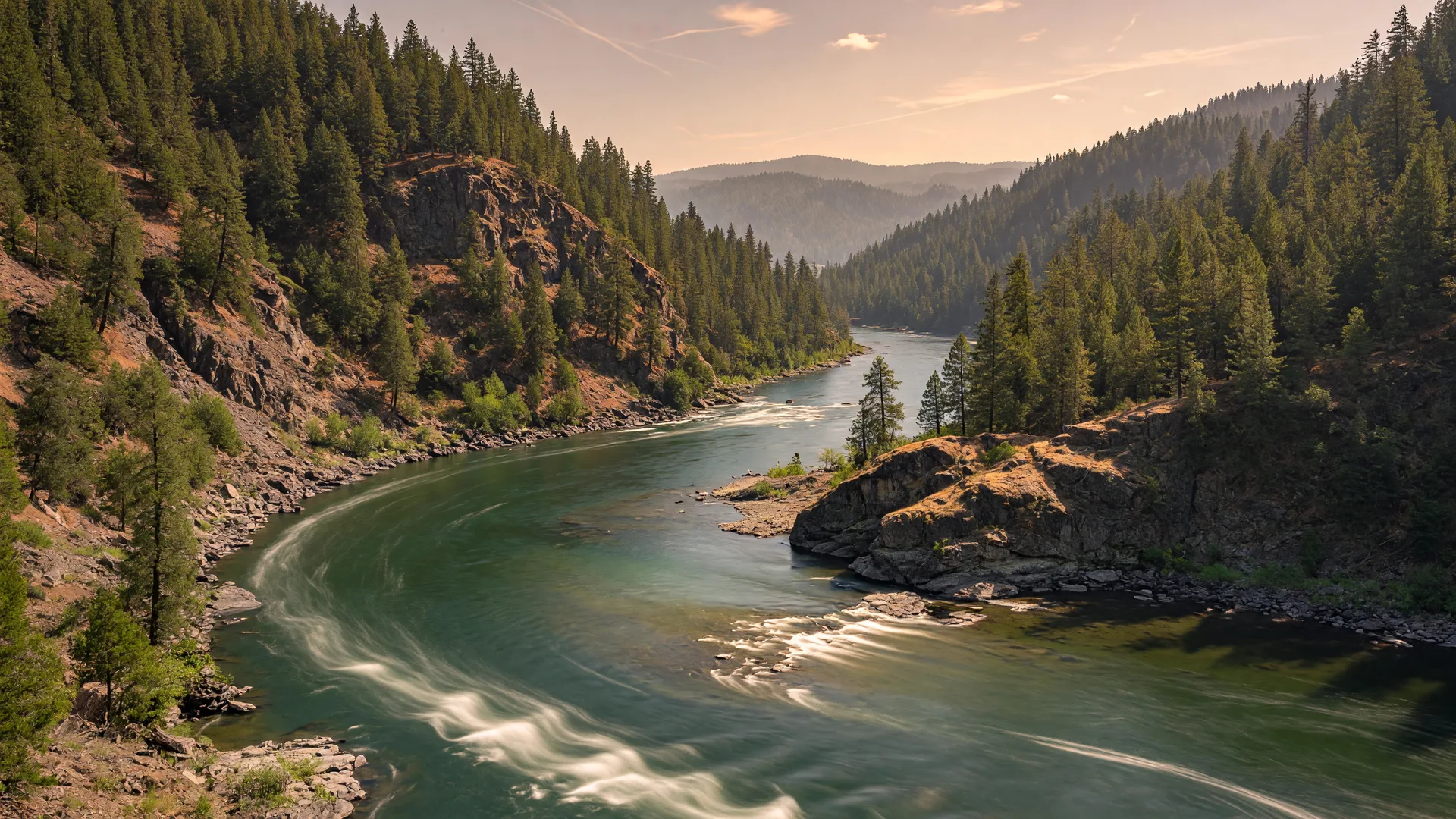
A River That Connects Two States and Thousands of Years of History
The Klamath River is one of the most important waterways in the Pacific Northwest.
Its waters connect the lakes and wetlands of Southern Oregon with the mountains and forests of Northern California.
Eventually, the river reaches the Pacific Ocean.
Along the way, it passes through landscapes shaped by volcanic activity, geological uplift, erosion and centuries of human activity.
But the Klamath River is far more than a geographic feature.
It is central to Indigenous cultures, salmon ecosystems, agricultural development and some of the most significant modern river-restoration efforts in the United States.
Understanding the river helps explain much of the Klamath Basin's history.
Where Does the Klamath River Begin?
The Klamath River's upper watershed includes a network of springs, rivers, lakes and wetlands.
Water from the Williamson and Sprague Rivers contributes to Upper Klamath Lake.
The Wood River system also supplies water through Agency Lake.
Water leaves Upper Klamath Lake through the Link River and continues toward Lake Ewauna.
From there, it enters the Klamath River.
The river travels southwest through Southern Oregon and Northern California before reaching the Pacific Ocean.
Its entire watershed covers an enormous and geographically diverse region.
A River With Many Different Landscapes
The upper watershed contains shallow lakes, wetlands and broad valleys.
Farther downstream, the river moves through more rugged terrain.
Tributaries enter from mountainous and forested areas.
The landscape changes substantially along the river's course.
These differences influence water temperature, sediment movement, fish habitat and river ecology.
A river system this large cannot be understood by looking at only one location.
Indigenous History Along the Klamath
Indigenous peoples have lived along the Klamath River and its tributaries for thousands of years.
The Klamath, Modoc, Yurok, Karuk, Hupa and other peoples maintain distinct cultural relationships with portions of the watershed.
Fish, water, plants and surrounding landscapes are connected with food systems, ceremonies and cultural traditions.
These relationships continue today.
The river's Indigenous history is not simply a prelude to later settlement.
It is an essential part of the river's continuing identity.
Salmon and the Klamath River
The Klamath River historically supported major salmon runs.
Salmon begin life in freshwater, migrate to the ocean and later return to reproduce.
Their life cycle depends upon suitable river habitat and access between freshwater and marine environments.
Dams, water-quality changes, habitat alteration and other pressures affected salmon populations.
These challenges became central to the river's modern conservation history.
Hydroelectric Development
During the twentieth century, hydroelectric dams were constructed along portions of the Klamath River.
The dams generated electricity and altered river conditions.
They also blocked salmon access to extensive upstream habitat.
Reservoirs changed water movement and sediment conditions.
Over time, concerns about fish passage, water quality and ecological impacts contributed to discussions about dam removal.
The Historic Dam Removals of 2024
In 2024, four major hydroelectric dams were removed from the Klamath River system.
The project reopened hundreds of miles of potential habitat for migratory fish.
It became the largest completed dam-removal effort of its kind in United States history.
The effort involved years of planning, negotiations, engineering and cooperation among tribes, conservation organizations, agencies and other participants.
It represented a major change in the river's modern history.
What Happens After Dam Removal?
Removing dams is not the same as instantly restoring an ecosystem.
Sediment moves.
Vegetation changes.
Fish respond to newly accessible habitat.
Water-quality conditions evolve.
Researchers monitor these processes over time.
The long-term ecological effects will continue to be studied.
The project represents an important restoration milestone, but the watershed's broader challenges remain.
Agriculture and Water Management
The Upper Klamath Basin contains extensive agricultural communities.
Irrigation systems support farms and ranches.
Water management involves agricultural needs, tribal rights, fish habitat, wetlands and other considerations.
Drought and climate variability can make these relationships especially difficult.
An accurate explanation must recognize that the river supports multiple communities and ecological systems.
Why the Klamath River Matters to Klamath Falls
Even residents who rarely visit the river's lower reaches live within its watershed.
Upper Klamath Lake and its tributaries connect directly to the larger river system.
That relationship influences local conversations about water, agriculture, fish and conservation.
For rural property buyers, it also reinforces the importance of understanding water rights and land conditions.
A River Still Changing
The Klamath River's history continues to unfold.
Restoration efforts are ongoing.
Scientific understanding continues to develop.
Communities throughout the watershed remain connected by the water flowing between them.
The river is a reminder that geography, ecology and human history cannot always be separated.
Frequently Asked Questions
Where does the Klamath River begin?
Its upper watershed includes rivers, springs, wetlands and Upper Klamath Lake in Southern Oregon.
Where does the Klamath River end?
It reaches the Pacific Ocean in Northern California.
Why is the Klamath River important for salmon?
It provides freshwater habitat and migration routes connecting the ocean with inland spawning environments.
Were Klamath River dams removed?
Yes. Four major hydroelectric dams were removed in 2024.
Is the Klamath River fully restored?
No. Ecological recovery and watershed management remain ongoing.
Why is water management complicated in the Klamath Basin?
Agriculture, tribal rights, fish habitat, wildlife and communities all depend upon water within a variable climate.
Continue Exploring
Read Article 085 on the Lost River, Article 086 on the Williamson River and Article 098 on Klamath Basin water-management history.
Explore Lincoln Home's Water Rights and Rural Property Guides.
Sources and Further Reading
- Oregon Encyclopedia
- Klamath River Renewal Corporation
- Oregon Water Resources Department
- The Klamath Tribes
The linked references are editorial starting points. Lincoln Home verifies source availability and relevance before publication.