
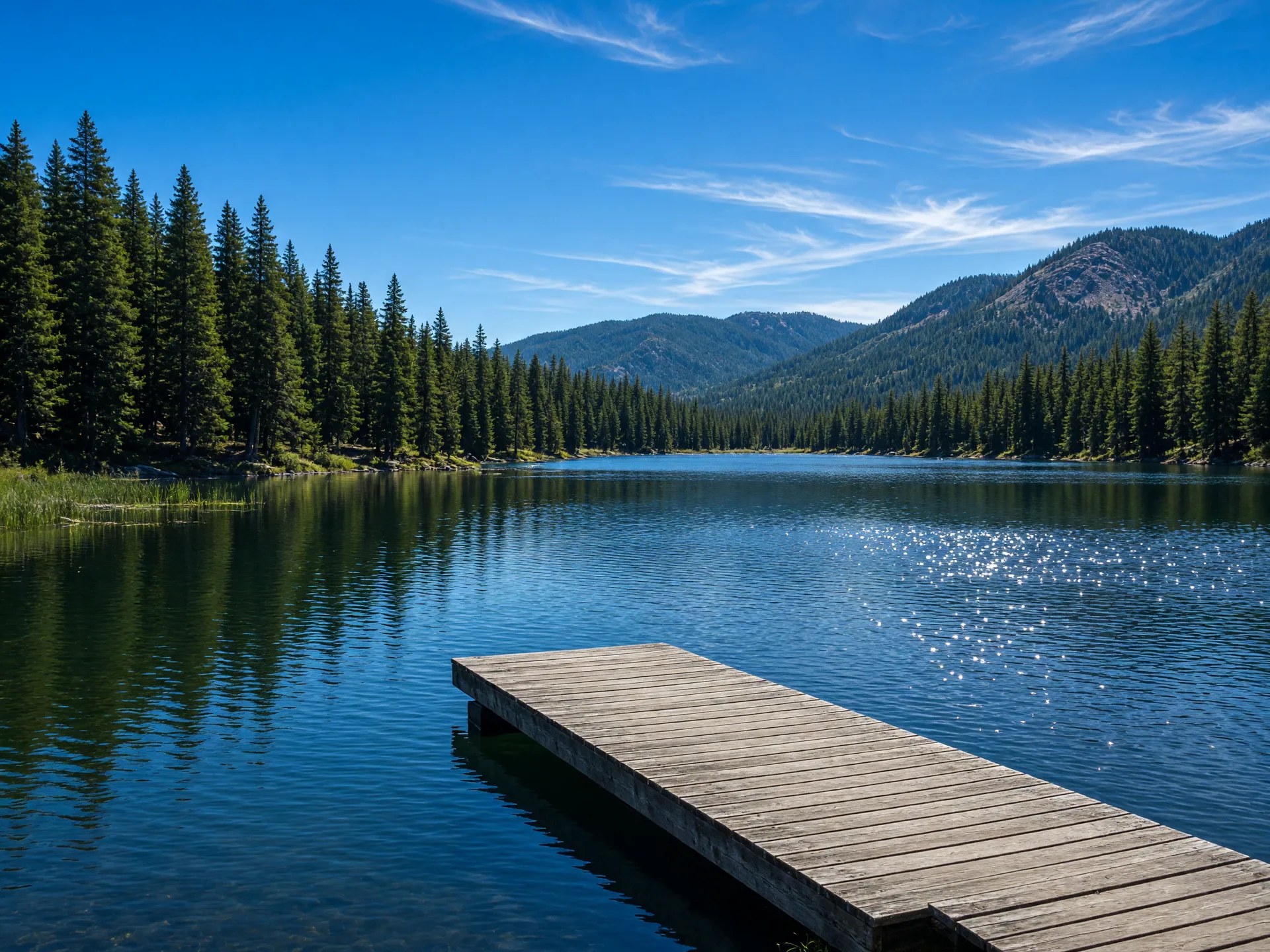
A Mountain Lake That Feels Like Another World
One of the most remarkable things about the Klamath Falls region is how dramatically the scenery changes when you travel west.
The open valleys gradually give way to forested hills.
The elevation rises.
The air becomes cooler.
And eventually, surrounded by conifer forests and framed by Mount McLoughlin, Lake of the Woods comes into view.
For generations, this mountain lake has been a favorite destination for Southern Oregon residents.
Families return for summer vacations.
Anglers come for the fishing.
Boaters enjoy the water.
And people seeking a peaceful mountain setting find something special in the surrounding forest.
But Lake of the Woods is more than a recreation destination.
Its geography, natural history and seasonal environment offer an excellent example of the diversity found within Klamath County.
Where Is Lake of the Woods?
Lake of the Woods lies west of Klamath Falls in the southern Cascade Mountains.
It sits at an elevation of approximately 4,900 feet.
The lake is surrounded by forested terrain and lies near Mount McLoughlin, one of the region's most recognizable volcanic peaks.
Its mountain setting creates a very different environment from the broad, shallow lakes east of the Cascades.
Upper Klamath Lake spreads across an open basin.
Lake of the Woods occupies a more enclosed forest landscape.
That contrast is part of what makes the region so interesting.
The Geological Setting
Lake of the Woods lies within a landscape shaped by volcanic activity, erosion and other long-term geological processes.
The surrounding Cascade terrain contains volcanic rock formations and landforms developed over thousands and millions of years.
Mount McLoughlin dominates the nearby skyline.
Its volcanic origins are part of the broader geological history of the Cascade Range.
The lake's setting reflects the interaction of geological structure, drainage and mountain climate.
Summer Recreation
Summer is the season most closely associated with Lake of the Woods.
Boating is popular.
Visitors enjoy kayaking, paddleboarding, fishing and other water activities.
Families gather along the shoreline.
Campers and cabin visitors spend weekends beneath the trees.
The lake offers a refreshing contrast with the warmer, drier conditions experienced in portions of the Klamath Basin.
For residents of Klamath Falls, it provides an opportunity to enjoy a mountain environment without leaving the broader region.
Fishing at Lake of the Woods
Lake of the Woods is a popular fishing destination.
Anglers may encounter several fish species, depending on current management and conditions.
Fishing regulations can change.
Seasons, limits and permitted methods should always be verified through the Oregon Department of Fish and Wildlife.
Visitors should also understand that fishing conditions vary with water temperature, weather and time of year.
Hiking and Exploring the Forest
The surrounding Cascade landscape offers opportunities for hiking and outdoor exploration.
Forest trails provide access to different environments and scenic viewpoints.
Some routes are suitable for casual outings.
Others require more preparation.
Weather conditions can change quickly in mountain terrain.
Hikers should carry appropriate supplies and understand trail conditions before departing.
Winter at Lake of the Woods
The lake's character changes dramatically during winter.
Snow accumulates in the surrounding mountains.
Forests become quiet and white.
Road access and recreation conditions may differ substantially from summer.
The broader mountain region offers opportunities for winter activities, depending on conditions.
Visitors should check current weather and road information before traveling.
A sunny day in Klamath Falls does not guarantee easy travel in the Cascades.
Wildlife and Forest Ecology
The surrounding forest supports birds, mammals and other wildlife.
Vegetation changes with elevation and moisture.
The lake itself provides aquatic habitat.
Together, these environments create a rich mountain ecosystem.
Visitors should respect wildlife and follow appropriate practices for protecting water quality and natural habitats.
What Is It Like to Own a Cabin Near Lake of the Woods?
For some buyers, a mountain cabin represents an ideal lifestyle.
Summer mornings near the water.
Evenings beneath the trees.
Family gatherings and outdoor recreation.
But mountain property ownership requires careful planning.
Some properties may involve special ownership arrangements or use restrictions.
Road access can change seasonally.
Snow removal may be necessary.
Utilities and wastewater systems deserve investigation.
Insurance and wildfire exposure are also important considerations.
A property that is convenient during July may require additional preparation during January.
The Importance of Understanding Access
Buyers should never assume that a property near the lake includes legal lake access.
Property boundaries, easements and ownership arrangements must be verified.
Seasonal road conditions should also be considered.
For recreational property, the practical details of access can strongly influence how often owners are able to use the property.
Why Lake of the Woods Matters to Klamath County
Lake of the Woods demonstrates the extraordinary geographic variety available to residents of the Klamath Falls region.
A relatively sunny, dry interior city lies within reach of a forested mountain lake.
The same region offers wetlands, rivers, high desert and volcanic landscapes.
That variety supports many different lifestyles.
For people considering relocation, access to outdoor recreation can be a meaningful part of choosing Southern Oregon.
Frequently Asked Questions
Where is Lake of the Woods?
It lies west of Klamath Falls in the southern Cascade Mountains.
Is Lake of the Woods a natural lake?
Yes. It is a natural mountain lake.
Can you fish at Lake of the Woods?
Yes, subject to current Oregon fishing regulations.
Does Lake of the Woods get snow?
Yes. Its mountain location experiences substantial winter conditions.
Are there cabins near Lake of the Woods?
Yes. Buyers should investigate ownership arrangements, utilities, access and restrictions before purchasing.
Is Lake of the Woods close to Klamath Falls?
It is a regional mountain recreation destination west of the city, with travel conditions varying by season.
Continue Exploring
Read Article 089 on the Cascade Mountains, Article 096 on Klamath Falls climate and Article 100 on the region's natural wonders.
Explore Lincoln Home's Mountain Property, Vacation Homes and Southern Oregon Lifestyle Guides.
Sources and Further Reading
- Travel Oregon
- Discover Klamath
- Oregon Department of Fish and Wildlife
- Oregon Department of Transportation
The linked references are editorial starting points. Lincoln Home verifies source availability and relevance before publication.