
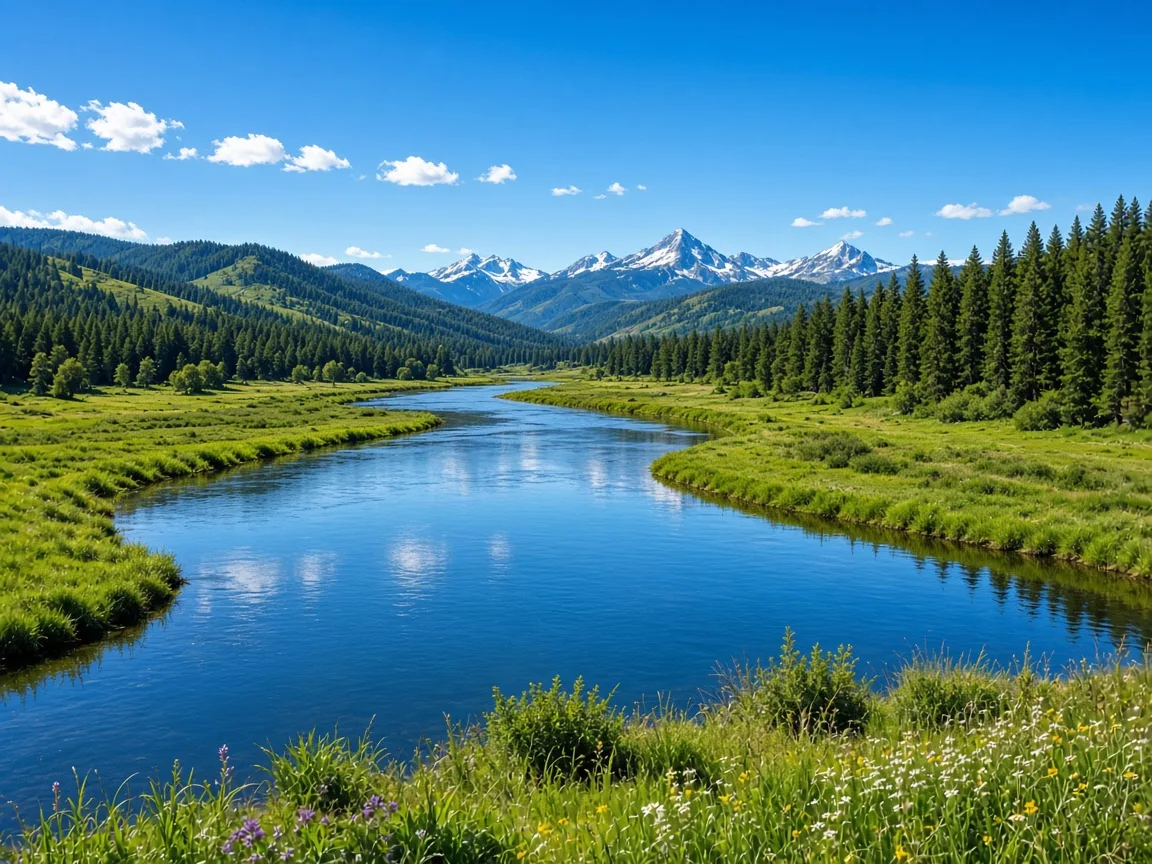
A River That Connects the Northern Basin to Upper Klamath Lake
The Williamson River is one of the most important waterways in the Upper Klamath Basin.
It travels through a landscape of forests, wetlands, open valleys and spring-influenced waterways before reaching Upper Klamath Lake.
For anglers, the river is famous for native redband trout.
For scientists, it is an important part of the region's aquatic ecosystem.
For the communities around Chiloquin, it is part of the local landscape and history.
And for anyone interested in understanding Klamath County, the Williamson River reveals how interconnected the Basin's waterways really are.
Where Does the Williamson River Flow?
The Williamson River drains a substantial watershed in south-central Oregon.
It flows through the northern Upper Basin toward Chiloquin.
Near Chiloquin, the Sprague River joins the Williamson.
The combined waters then continue toward Upper Klamath Lake.
This makes the Williamson one of the lake's major inflows.
It also connects the Sprague and Sycan watersheds with the larger Klamath River system.
Why Springs Matter
Portions of the Williamson River system are influenced by springs and groundwater.
Groundwater can emerge at relatively stable temperatures compared with surface water exposed to summer heat.
These spring-influenced environments provide important habitat.
They can be especially valuable to fish seeking cooler water during warm periods.
This relationship is important because Upper Klamath Lake is relatively shallow and can experience elevated summer water temperatures.
Connected river habitats provide different environmental conditions.
The Williamson River's Famous Trout
The Williamson River is widely known for its native redband trout.
Some of these fish move between Upper Klamath Lake and cooler river environments.
The river has developed a reputation among anglers for its remarkable trout.
But fishing conditions vary with seasons, water levels and regulations.
Visitors should check current Oregon Department of Fish and Wildlife rules before fishing.
Access should also be verified, particularly where private property borders the river.
Indigenous History
The Williamson River flows through a region with deep Indigenous history.
The Klamath Tribes maintain longstanding cultural relationships with the waterways, fish and surrounding lands of the Upper Basin.
These relationships extend far beyond modern recreational fishing.
The river has supported people, ecosystems and cultural practices across generations.
Understanding its history requires acknowledging those continuing connections.
Wildlife Along the River
Riparian vegetation supports a variety of birds and other wildlife.
Wetlands and floodplain areas provide additional habitat.
The river also supports aquatic organisms that contribute to the broader food web.
Because it connects multiple watersheds, conditions in the Williamson can influence downstream environments.
Water quality, temperature and habitat connectivity are therefore important ecological considerations.
The Relationship With the Sprague River
The Sprague River joins the Williamson near Chiloquin.
This confluence brings together water from a large portion of eastern Klamath County.
The combined river then flows toward Upper Klamath Lake.
Changes within the Sprague watershed can influence the Williamson and downstream lake conditions.
This is one reason watershed management considers tributaries together rather than treating them as unrelated waterways.
Riverfront Property Considerations
The Williamson River's scenic character can make nearby properties appealing.
But riverfront ownership requires careful investigation.
Buyers should verify legal frontage and access.
Flood zones, erosion, wetlands and septic feasibility may affect property use.
Water rights should be evaluated separately.
A river visible from a property does not automatically establish a right to withdraw water from it.
Why the Williamson River Matters
The Williamson River connects geography, wildlife, recreation and cultural history.
It provides important aquatic habitat.
It carries water from a large watershed toward Upper Klamath Lake.
And it contributes to the distinctive landscape surrounding Chiloquin.
For residents and visitors, it is one of the region's natural features worth understanding in depth.
Frequently Asked Questions
Where does the Williamson River end?
It flows into Upper Klamath Lake.
Does the Sprague River join the Williamson?
Yes. The rivers meet near Chiloquin.
Why is the Williamson River famous for fishing?
It is known for its native redband trout.
Is the Williamson River spring-fed?
Portions of the river system are strongly influenced by springs and groundwater.
Can you buy riverfront property near the Williamson?
Yes, but buyers should verify actual frontage, legal access, water rights and property-specific restrictions.
Why is the Williamson River important to Upper Klamath Lake?
It is one of the lake's major inflows and contributes to its water and aquatic habitat.
Continue Exploring
Read Article 087 on the Sprague River, Article 081 on Upper Klamath Lake and Article 098 on water management.
Explore Lincoln Home's Chiloquin Community and Waterfront Property Guides.
Sources and Further Reading
- Oregon Department of Fish and Wildlife
- Oregon Water Resources Department
- OSU Extension Service
- The Klamath Tribes
The linked references are editorial starting points. Lincoln Home verifies source availability and relevance before publication.