
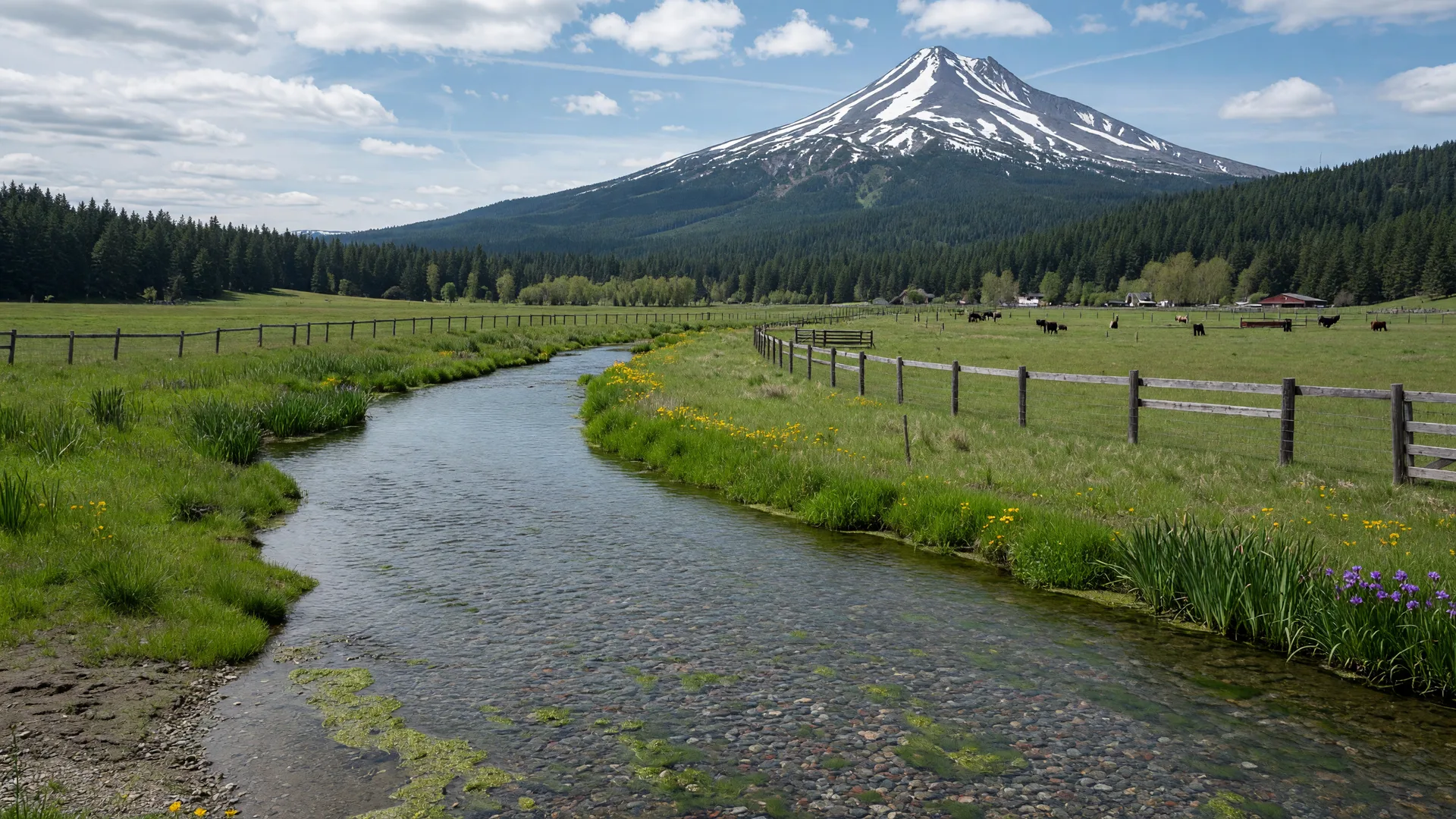
Where Water Emerges From the Landscape
Some of Southern Oregon's most remarkable places announce themselves dramatically.
Crater Lake has towering cliffs and extraordinary blue water.
Mount McLoughlin rises above the Cascade landscape.
Lava Beds contains rugged volcanic formations and underground caves.
The Wood River Valley is different.
Its beauty is quieter.
Water moves through open meadows.
Wetlands spread across lowlands.
Ranches occupy portions of the valley.
And distant mountains provide a backdrop to one of the Upper Klamath Basin's most interesting landscapes.
Where Is the Wood River Valley?
The Wood River Valley lies north of Agency Lake near the Fort Klamath area.
It occupies a landscape east of the southern Cascades.
The Wood River system is influenced by springs and groundwater.
Water flows through the valley toward Agency Lake.
Agency Lake connects with Upper Klamath Lake.
That makes the Wood River an important part of the larger Klamath watershed.
The Importance of Springs
The Wood River system is known for its spring-influenced water.
Groundwater moves through geological formations and emerges at the surface.
These springs can contribute relatively consistent flows and cooler water.
That is important for aquatic habitat.
Spring-fed streams can provide conditions that differ from warmer shallow lakes during summer.
The Wood River's groundwater connection helps explain its ecological significance.
A Valley With a Wetland History
Historically, the Wood River Valley contained extensive wetlands and meadows.
Water moved through shallow channels and low-lying areas.
Wetland vegetation supported wildlife.
As agricultural development expanded, portions of the landscape were drained or modified.
Ranching and other land uses became important.
These changes altered water movement and habitat.
The Wood River Wetland Restoration
The Wood River Wetland is a notable example of restoration in the region.
Former agricultural land was reconnected with wetland processes.
The resulting landscape supports wildlife and provides opportunities for recreation.
But restoration requires more than allowing water to return.
Water levels must be managed.
Vegetation changes over time.
Soil conditions matter.
Fish and birds respond to seasonal habitat conditions.
Restoration projects therefore require ongoing monitoring and management.
Wildlife in the Wood River Valley
Wetlands and riparian habitats support birds, fish and other wildlife.
Waterfowl use marshes and open water.
Other birds depend upon meadows and shoreline vegetation.
Aquatic organisms benefit from the river's spring-influenced conditions.
The valley also contributes to the broader Pacific Flyway landscape.
For birdwatchers, the area offers opportunities to experience wildlife in a beautiful rural setting.
Ranching and Agriculture
Ranching is an important part of the valley's identity.
Open fields, fencing, agricultural roads and irrigation infrastructure contribute to the landscape.
These are working lands.
Their history reflects generations of agricultural activity.
The relationship between agriculture and wetlands is complicated.
Both depend upon water.
Both influence the landscape.
Understanding the valley requires recognizing those connections.
Mount McLoughlin and the Scenic Setting
The Wood River Valley's scenery is especially appealing because of the contrast between open meadows and surrounding mountains.
Mount McLoughlin rises in the broader Cascade landscape.
The valley's relatively flat terrain creates expansive views.
Changing seasons bring different colors and conditions.
Spring and summer emphasize green meadows and flowing water.
Autumn brings cooler temperatures and changing vegetation.
Winter can transform the surrounding landscape with snow.
What Rural Property Buyers Should Know
The valley may appeal to buyers seeking acreage, ranchland or scenic rural surroundings.
But property investigation is essential.
Seasonal groundwater can affect land use.
Wetlands may influence development.
Flood considerations and drainage conditions matter.
Private wells and septic systems should be evaluated.
Water rights require independent verification.
Zoning and legal access must also be confirmed.
A beautiful rural property can have characteristics that require specialized knowledge.
Why the Wood River Valley Matters
The Wood River Valley demonstrates how interconnected the Klamath Basin really is.
Groundwater emerges as springs.
Springs feed rivers.
Rivers move through wetlands.
Wetlands support wildlife.
Water eventually reaches Agency Lake and Upper Klamath Lake.
Agriculture and communities exist within that same system.
The valley is a living example of the natural processes that sustain Southern Oregon.
Frequently Asked Questions
Where is the Wood River Valley?
It lies north of Agency Lake near Fort Klamath in Klamath County.
Where does the Wood River flow?
It flows toward Agency Lake, which connects with Upper Klamath Lake.
Is the Wood River spring-fed?
Yes. Springs and groundwater are important influences on the river system.
What is the Wood River Wetland?
It is a restored wetland area north of Agency Lake that supports wildlife and recreation.
Is the Wood River Valley agricultural?
Yes. Ranching and agriculture are important features of the surrounding landscape.
Can wetlands affect property development?
Yes. Wetlands, seasonal water conditions and applicable regulations may influence development.
Continue Exploring
Read Article 082 on Agency Lake, Article 093 on Klamath Basin wetlands and Article 094 on migratory birds.
Explore Lincoln Home's Fort Klamath Community, Rural Acreage and Water Rights Guides.
Sources and Further Reading
- Discover Klamath
- Oregon Department of Fish and Wildlife
- Oregon Water Resources Department
- OSU Extension Service
The linked references are editorial starting points. Lincoln Home verifies source availability and relevance before publication.