
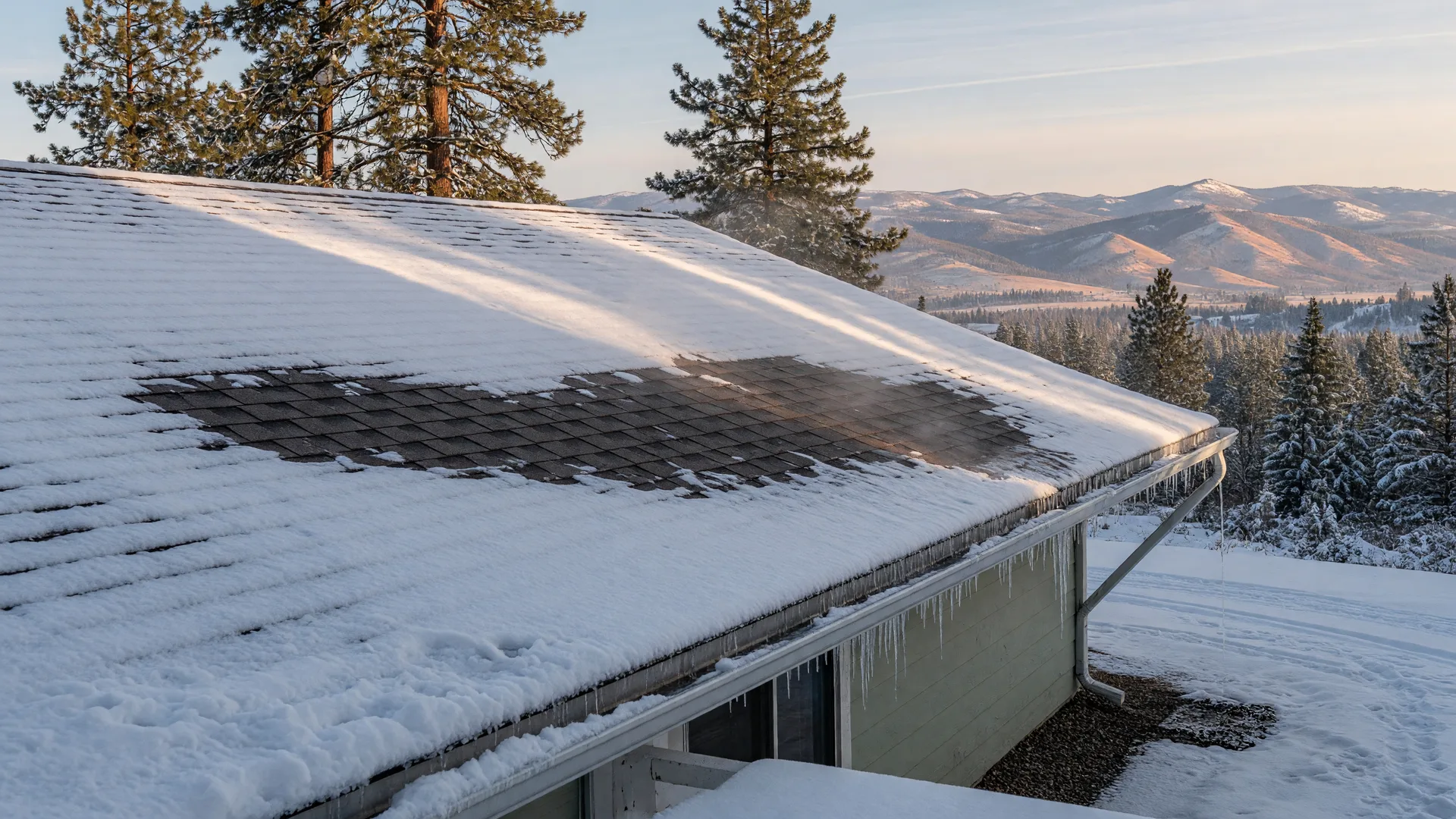
A roof is part of a larger water-management system
Roofing, flashing, gutters, grading and attic ventilation work together. A small leak at a vent penetration can resemble a larger roofing failure. Start by documenting the location and conditions of stains rather than assuming the entire roof must be replaced.
Know when to call a professional
Do not walk on a snowy or icy roof. Heavy or uneven snow accumulation, sagging, unusual noises or water intrusion can require prompt professional assessment. Snow-load capacity varies by structure and location; do not apply a universal depth rule. Hire qualified contractors with appropriate safety equipment.
Prevent water from gathering near the house
Clear accessible gutters and drain outlets, confirm that soil slopes and drainage features are functioning, and inspect crawl spaces for dampness. On rural parcels, evaluate driveways, culverts and seasonal runoff as well as the roof itself. Redirecting water may require permits or careful coordination where drainage easements exist.
What buyers should ask
Find out roof age if known, warranty status, repair history and whether permits were required for major work. A home inspector can provide a condition assessment, while a roofing specialist can quote repairs. For an older cabin, evaluate tree exposure and access for future replacement.
What owners should document
Save dated photographs, invoices, inspection reports and any insurance correspondence. A claim decision depends on the policy and cause of damage; routine wear is not necessarily covered. Contact the insurer before assuming an event qualifies.
Frequently Asked Questions
Where should I verify rules or property-specific requirements?
Contact the relevant city or county department, state regulator, utility provider or licensed specialist. Requirements can vary by parcel and change over time.
Can Lincoln Home help me evaluate a property?
Yes. Use the existing property search, contact the team for real estate questions and request a Property DNA report for available background information. The report is not a substitute for an inspection, title examination or professional advice.
Next steps with Lincoln Home
Explore available homes in Klamath Falls and Klamath County, use the relevant Lincoln Home calculators, or request a Property DNA report before making a major property decision. Ask the team to connect this topic to the specific home or parcel you are considering.
The Lincoln Home property search portal covers active Klamath Basin MLS listings across the whole region. Use the broad search to browse current inventory, then ask Lincoln Home for a saved search targeted to your area and criteria.
Property DNA reports provide background information about a property and are not a substitute for an inspection, title examination, or professional advice.
Related Reading
Roof and drainage care connects to seasonal maintenance, winterizing, winter access, and year-round property protection. Continue with the related guides below.
- A Seasonal Home Maintenance Calendar for Klamath Falls Roof, gutter, and drainage checks within a seasonal schedule.
- Winterizing a Klamath Falls Home Without Missing the Expensive Details Roof, gutters, and site drainage before cold weather.
- Snow, Winter Access, Private Roads, and Easements in Rural Klamath County Runoff, culverts, and seasonal access on rural parcels.
- Winter in Klamath Falls: What Homebuyers Should Know About Snow, Heating, Roads, and Maintenance Roof snow loads and ice for buyers and owners.
- Wildfire Safety and Defensible Space for Rural Klamath County Homes Clearing debris from roofs, gutters, and decks.
Official Resources and Further Reading
These official resources are the starting point for verifying current rules and programs for a specific property. Lincoln Home presents general educational content, not property-specific legal, regulatory, or tax approval. Confirm current requirements with the responsible agency or a qualified professional before relying on any claim.