
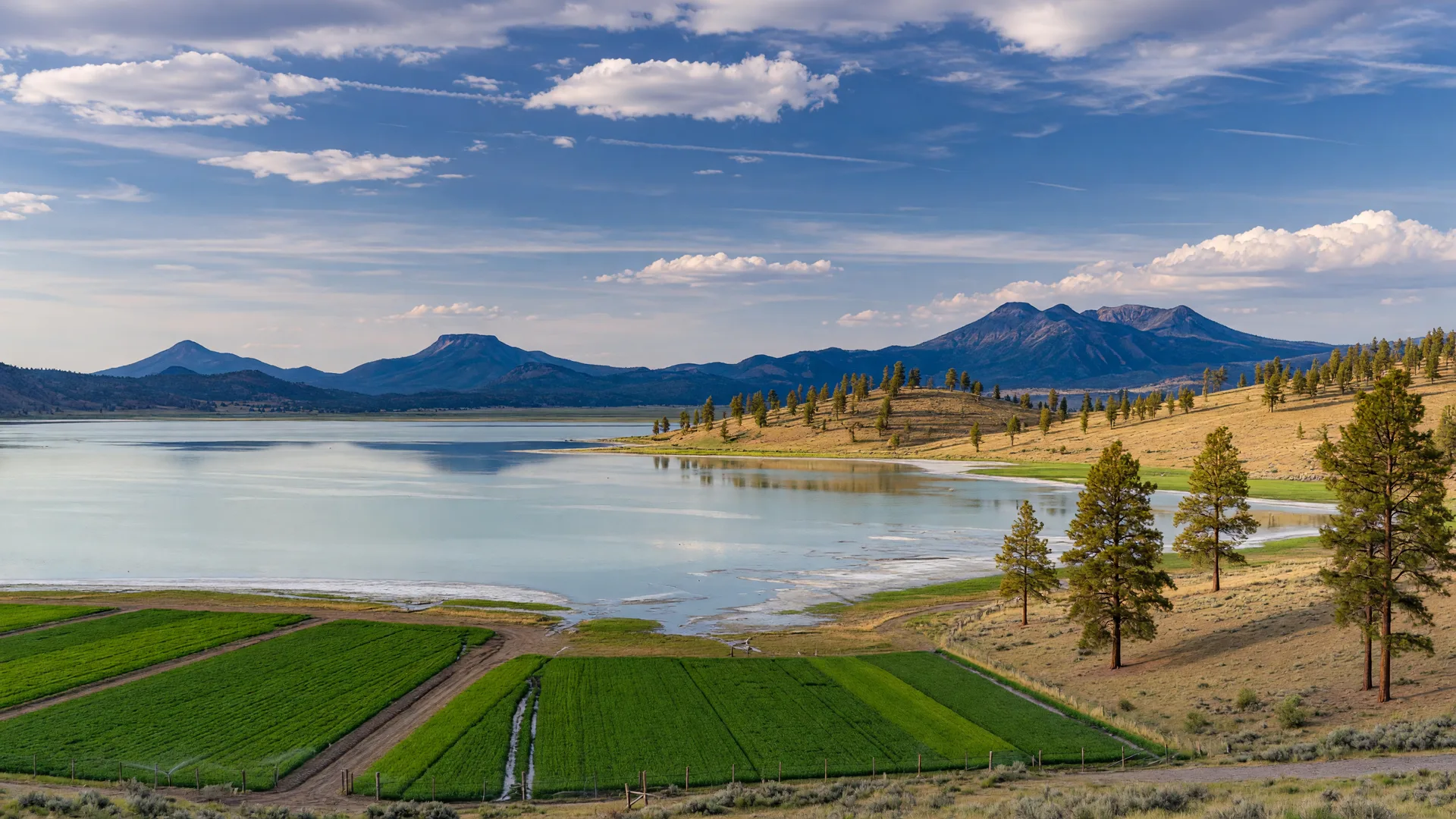
A wide view across the Klamath Basin high desert in early summer: green fields, a shallow lake, ponderosa pine foothills, and blue mountains under a big sky.
One of the most appealing things about Klamath Falls is something many people take for granted until they have lived somewhere without it: four recognizable seasons.
If you are moving from Las Vegas, Phoenix, or another hot desert city, you may be accustomed to a long, intensely hot summer followed by a relatively mild winter.
Klamath Falls offers a different experience.
Spring brings changing landscapes and migrating birds. Summer brings warm days and outdoor recreation. Autumn introduces cooler temperatures and seasonal color. Winter can transform the surrounding mountains and occasionally the city itself with snow.
For people who enjoy watching the year change around them, that seasonal variety can be a major attraction.
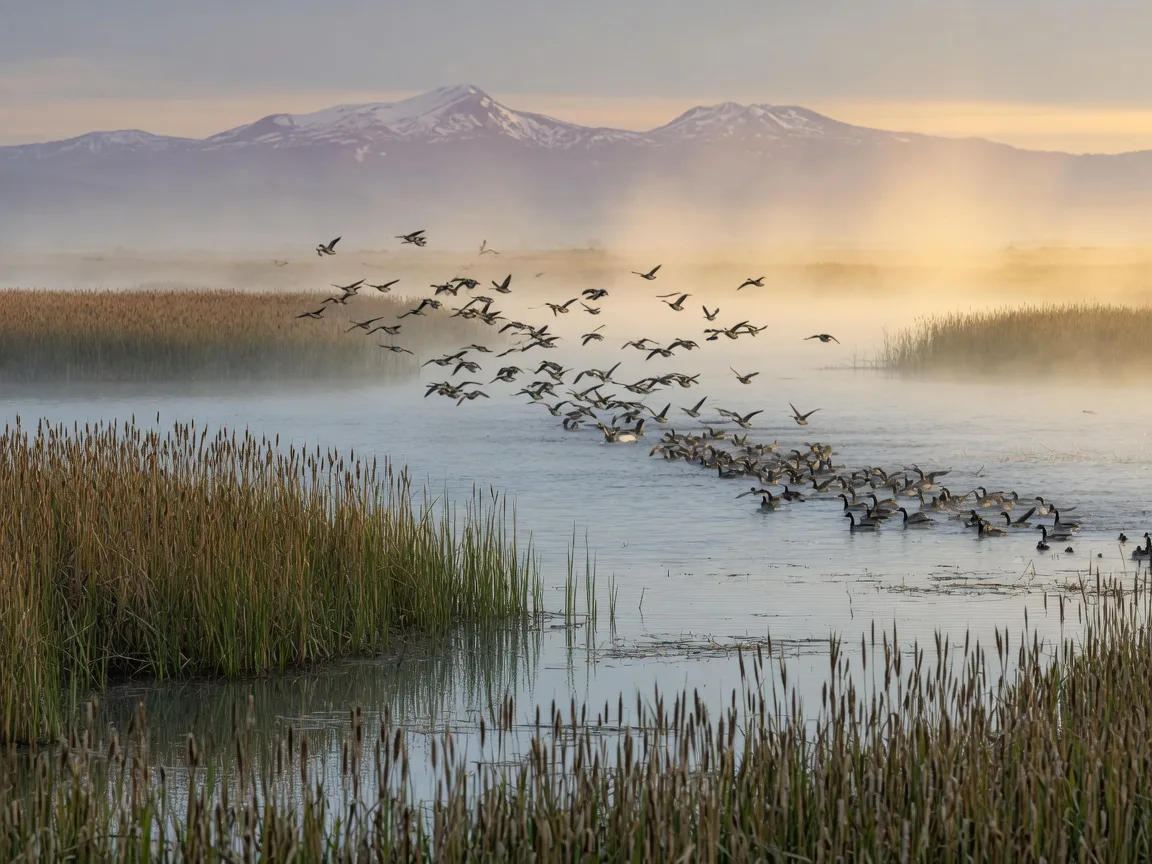
Spring
Migrating birds, changing landscapes, and unpredictable weather.
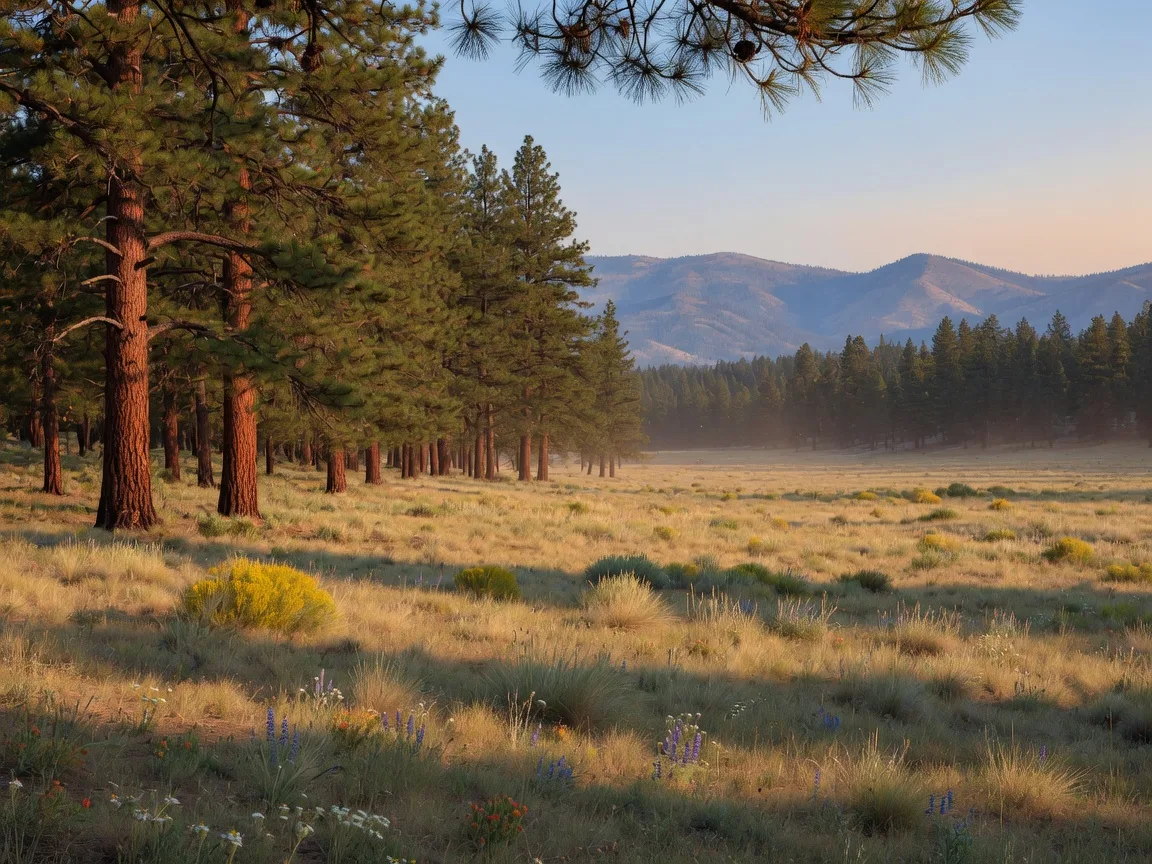
Summer
Warm, mostly dry days made for hiking, camping, fishing, and golf.
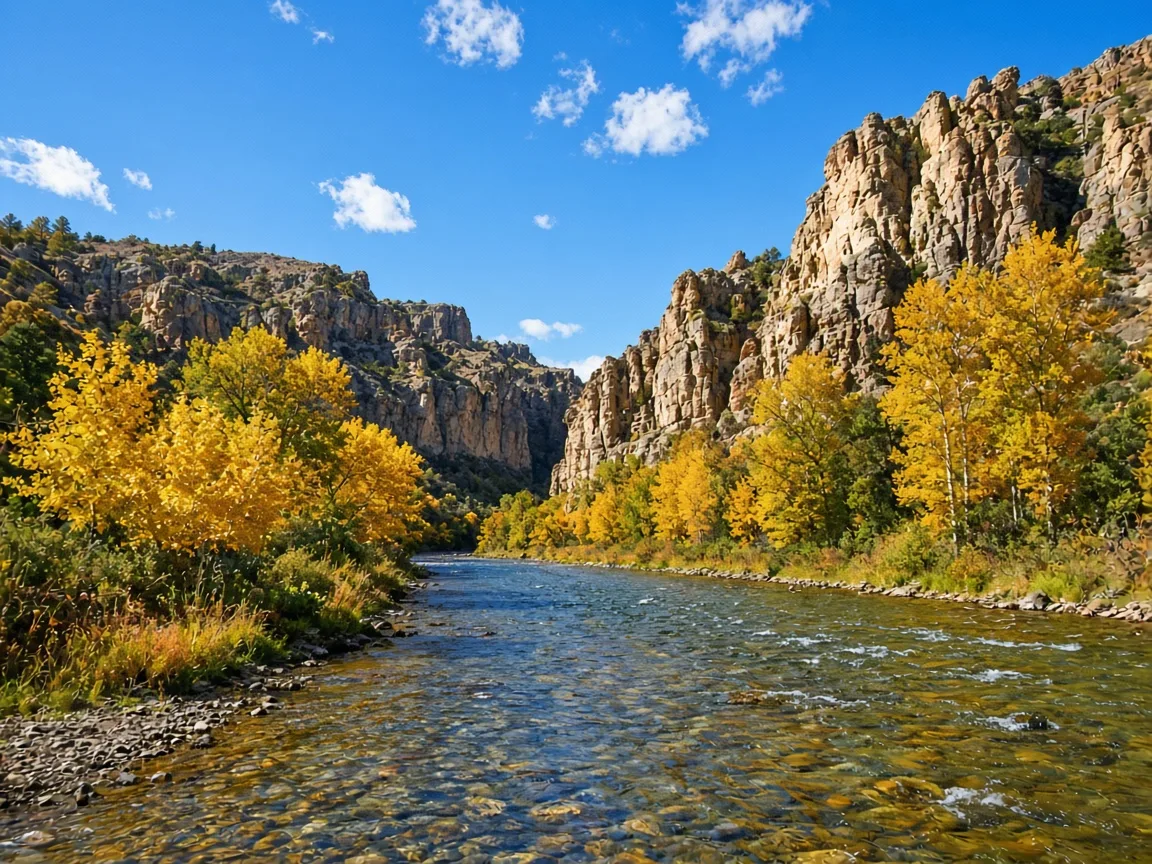
Autumn
Cooler hikes, seasonal color, and migration moving through the basin.
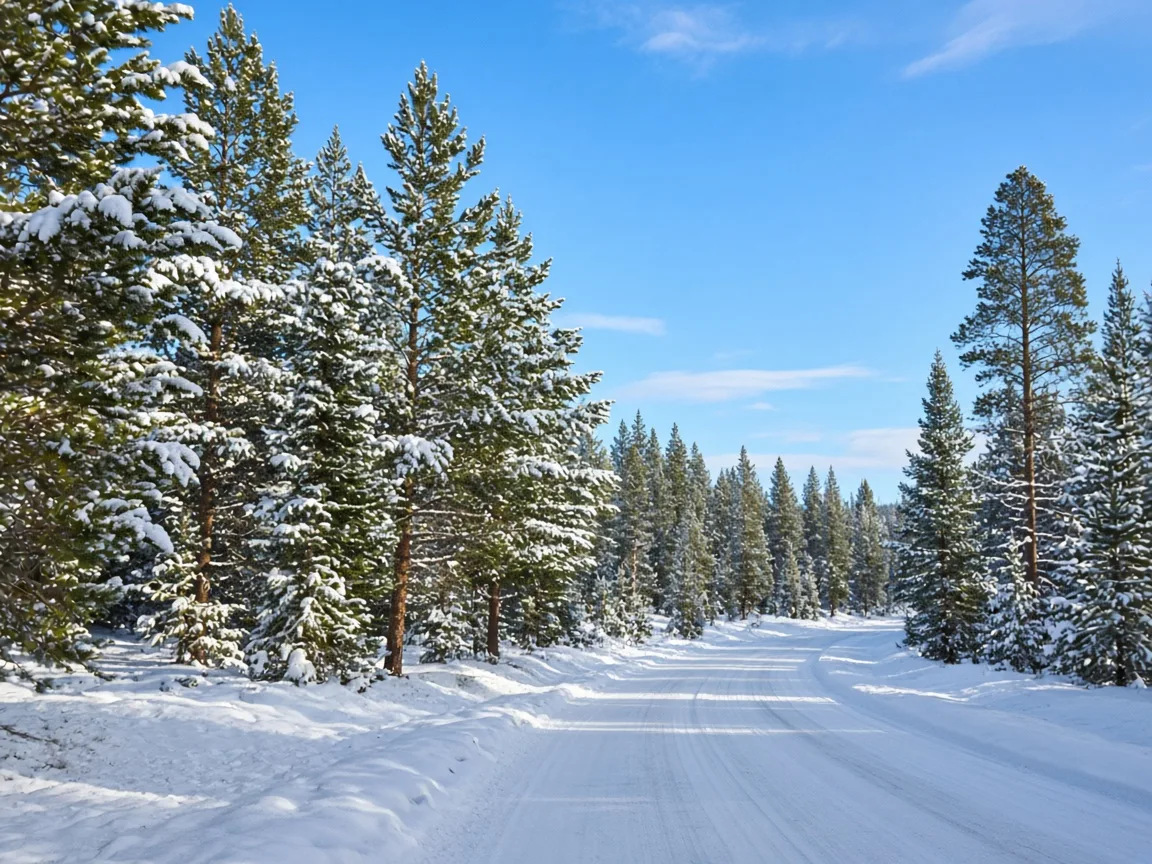
Winter
Snow, ice, and cold weather, with more snow at higher elevations.
Spring: Wildlife, Renewal, and Changing Weather
Spring in the Klamath Basin can be especially rewarding for wildlife enthusiasts.
The region lies along the Pacific Flyway, an important migration corridor used by numerous bird species.
Wetlands, agricultural fields, lakes, and wildlife refuges provide opportunities to observe seasonal bird movements.
Spring weather can be unpredictable. Sunshine, cold mornings, wind, rain, and occasional snow are all possible depending on location and timing.
For homeowners, spring is also a useful time to inspect drainage, landscaping, roofs, and any damage caused by winter conditions.
Summer: Sunshine, Lakes, and Outdoor Adventures
Summer brings warm, generally dry conditions and opportunities for hiking, camping, fishing, golf, and exploring nearby forests.
Longer daylight hours make it easier to enjoy outdoor activities after work.
Mountain lakes such as Lake of the Woods provide a different recreational experience from Upper Klamath Lake.
Upper Klamath Lake is an important ecological and wildlife resource, but its seasonal water conditions mean it should not be promoted as a conventional clear-water swimming destination.
Residents seeking swimming or mountain-lake recreation should investigate suitable locations and check current water-quality advisories.
Summer also brings wildfire considerations.
Smoke from regional fires can occasionally affect air quality, and residents should monitor official alerts and prepare their homes appropriately.
Autumn: Cooler Weather and Seasonal Color
Fall can be one of the most enjoyable times to explore the region.
Cooler temperatures make many hikes more comfortable, and changing foliage adds color to parks, neighborhoods, and surrounding landscapes.
For birdwatchers, fall migration provides additional opportunities to observe wildlife.
Autumn is also a practical time for homeowners to prepare heating systems, inspect weather seals, clean gutters where appropriate, and plan for winter access.
Winter: Snow, Mountains, and Cold-Weather Living
Winter in Klamath Falls can include freezing temperatures, snow, and icy roads.
The amount of snow varies from year to year and between elevations.
The nearby mountains generally experience more substantial snow conditions than the city.
Depending on weather and access, residents can explore snowshoeing, cross-country skiing, snowmobiling in designated areas, and other winter recreation.
Crater Lake National Park offers winter recreation opportunities, although roads, facilities, and access are subject to seasonal restrictions.
Winter homeowners should understand heating expenses, pipe protection, roof maintenance, and snow removal.
How the Seasons Affect Homeownership
Climate is not just a lifestyle consideration.
A property's insulation, heating system, roof condition, drainage, landscaping, and road access can all affect ownership costs.
Someone purchasing a cabin or rural acreage should also consider snow load, access during storms, and seasonal maintenance.
Before buying, investigate how the property performs throughout the year. Rural property guides cover the practical details of acreage ownership, and the winter access guide explains snow-season realities for country properties.
Check current weather and road conditions
Conditions change quickly in the Klamath Basin, especially in winter and during fire season. The National Weather Service Medford office publishes forecasts, watches, and warnings for the region, and Oregon TripCheck reports current road and pass conditions.
Frequently Asked Questions
Does Klamath Falls have four seasons?
Yes. The area experiences distinct seasonal changes, including warm summers, colder winters, and recognizable spring and fall transitions.
Does it snow in Klamath Falls?
Yes, although snowfall varies by year and location. Higher elevations generally receive more snow.
Is Klamath Falls sunny?
The region is known for its sunshine, particularly compared with wetter areas west of the Cascades. Actual conditions vary seasonally.
Is wildfire smoke a concern?
It can be during some fire seasons. Residents should monitor air-quality information and official wildfire alerts.
Official Sources
Conditions, access, closures, and regulations change. Always verify current information with the official sources above and the managing agencies before you travel or make decisions.
Related reading
Find a Home for Every Season
Whether you imagine a cozy winter retreat, a home near hiking trails, or a property with room for outdoor hobbies, Lincoln Home can help you explore the Klamath Basin's housing options.