
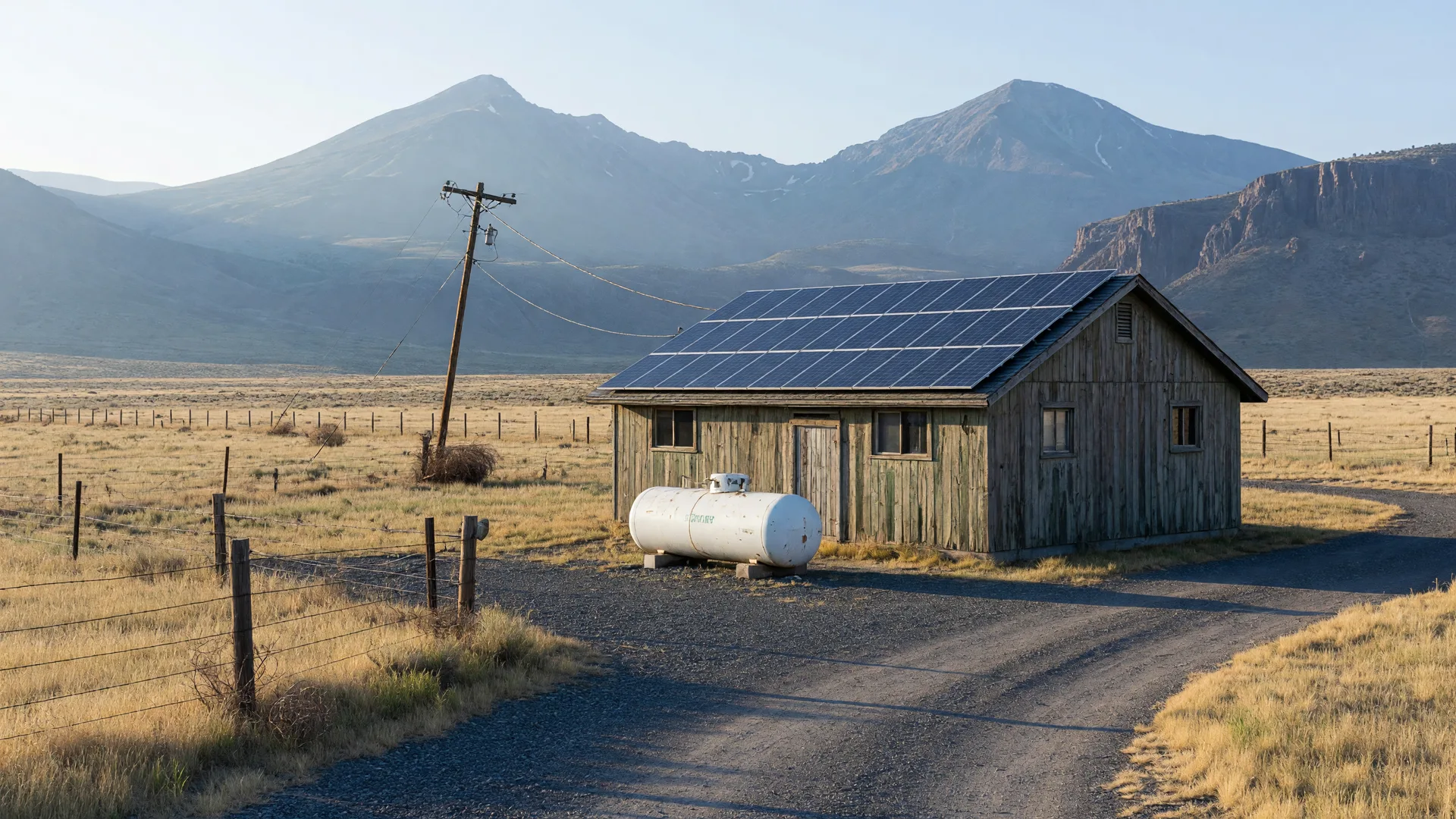
Keeping a Rural Home Comfortable and Functional
Living outside town often means thinking more carefully about energy.
Electricity may power your well pump, heating equipment, refrigeration, communications, and workshop.
Propane may provide heat, hot water, cooking, or generator fuel.
Solar panels and batteries can supplement conventional service or support an appropriately designed off-grid system.
Start With the Existing Electrical System
Before purchasing, ask about the electrical panel, service capacity, condition of wiring, and whether existing outbuildings have properly installed circuits.
A large workshop or agricultural operation may need more capacity than an ordinary residence.
Understanding Propane
Some rural homes use propane for furnaces, water heaters, ranges, or fireplaces.
Determine whether the tank is owned or leased and whether the supply arrangement can transfer to a new owner.
Ask about delivery access during winter and historic fuel consumption.
Solar Power and Battery Storage
Solar can be attractive for certain rural properties, but its performance depends on sunlight, shading, system design, energy consumption, and equipment condition.
A grid-connected solar system does not necessarily provide electricity during an outage unless it includes suitable backup capabilities.
Generators and Safety
Backup generators can help keep essential systems operating, but they must be installed and used safely.
Never operate a portable generator indoors or near openings where exhaust could enter the home.
Improper electrical connections can endanger occupants and utility workers.
Energy Sources Compared
A comparison of the options discussed above so you can ask a seller and your contractors the right questions.
| Source | What it may power | What to investigate |
|---|---|---|
| Electric service | Well pump, heating equipment, refrigeration, communications, and workshop. | Electrical panel, service capacity, wiring condition, and properly installed outbuilding circuits. |
| Propane | Heat, hot water, cooking, or generator fuel. | Whether the tank is owned or leased, transfer of the supply arrangement, winter delivery access, and historic fuel use. |
| Solar and batteries | Supplement conventional service or support an appropriately designed off-grid system. | Sunlight, shading, system design, energy consumption, equipment condition, and backup capability for outages. |
| Backup generator | Keep essential systems operating when utility power is unavailable. | Proper sizing and connection for the loads, including a well pump, and safe installation and operation. |
Safety note: never operate a portable generator indoors or near openings where exhaust could enter the home, and improper electrical connections can endanger occupants and utility workers.
Frequently Asked Questions
Will a generator operate my well pump?
Possibly, if it is properly sized and connected for the pump's electrical requirements.
Can I use solar as my only electricity source?
An appropriately engineered off-grid system may be feasible, subject to site conditions and applicable requirements.
Find a Home That Supports Your Lifestyle
Lincoln Home can help you explore rural homes with existing utility infrastructure.
The Lincoln Home property search portal covers active Klamath Basin MLS listings across the whole region. Use the broad search to browse current inventory, then ask Lincoln Home about a property's utility infrastructure, tanks, and service arrangements.
More From the Rural Living & Acreage Series
Energy choices connect to vacant-land development, connectivity, and winter access. Continue with the guides below.
- Buying Land With No Utilities: What Does It Take to Develop It? Investigating power, water, septic, roads, and feasibility.
- Internet and Cell Service When Buying Rural Property Around Klamath Falls Connectivity as a rural home utility.
- Snow, Winter Access, Private Roads, and Easements in Rural Klamath County How winter conditions affect rural systems and access.