
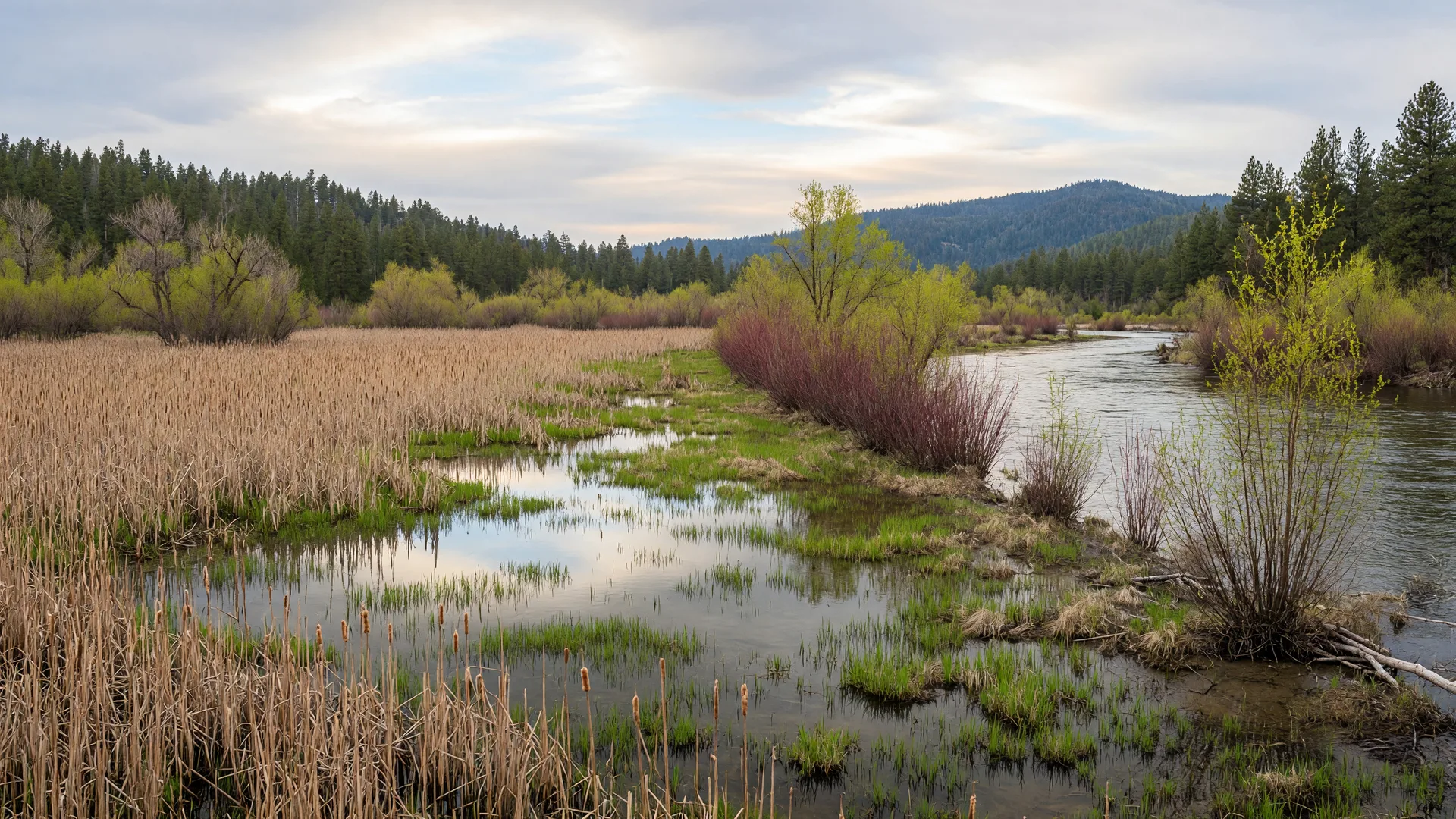
A Beautiful Parcel Can Have Hidden Water Challenges
A home near a lake, river, or open meadow may offer remarkable scenery.
But buyers should understand how water moves through the land.
Flooding, wetlands, seasonal drainage, groundwater, and erosion can influence where you can build, what improvements are practical, and how much property ownership may cost.
These issues are not limited to waterfront homes.
Even land that appears dry during a summer showing can experience seasonal saturation or runoff.
What Is a Flood Zone?
FEMA flood maps identify areas associated with different levels of mapped flood hazard.
These maps help inform floodplain management and insurance decisions.
However, they are not a guarantee that flooding will or will not occur.
A property outside a mapped high-risk flood area may still experience flooding from drainage failures, intense precipitation, snowmelt, or other conditions.
Buyers should review official maps and investigate the property's actual history.
Flood Insurance and Mortgage Financing
Certain federally regulated or insured mortgage situations require flood insurance when a building is located in a designated Special Flood Hazard Area.
Requirements depend on the lender, loan, property, and flood designation.
A buyer may also consider flood insurance even when it is not mandatory.
Standard homeowners insurance generally excludes flooding from the coverage ordinarily provided for other types of water damage.
Consult an insurance professional for the property's actual coverage options.
Wetlands Are Not Always Obvious
A wetland does not have to resemble a permanent pond.
Some wetlands are seasonally saturated or support vegetation and soils associated with wet conditions.
Oregon's Department of State Lands maintains a Statewide Wetlands Inventory that can help buyers begin their research.
The inventory is a screening tool, not a definitive boundary survey.
Unmapped wetlands may exist.
Can You Build on Property With Wetlands?
Possibly, but development may be restricted or require additional approvals.
Projects involving filling, excavation, grading, or other work in protected wetlands or waters may require state removal-fill authorization and potentially federal permits.
A qualified wetland consultant may need to delineate the affected area.
Before buying land for a home, shop, road, or agricultural improvement, investigate whether the proposed work can be legally approved.
Drainage Problems on Existing Homes
Look for standing water, erosion channels, saturated crawlspaces, foundation staining, damaged retaining walls, and signs of past water intrusion.
Ask sellers about known drainage problems and previous repairs.
A home inspector may identify visible concerns, but specialized drainage or engineering evaluation may be appropriate.
Septic Systems and Wet Conditions
Septic suitability depends partly on soil and site conditions.
Seasonally high groundwater, poor drainage, and other factors can limit conventional wastewater options.
A parcel should not be assumed septic-ready merely because it is large.
Irrigation and Flooding Are Different Issues
A property may have irrigation infrastructure, seasonal water delivery, natural drainage, or flood exposure.
These are distinct matters.
Water rights do not automatically establish building suitability, and a green field does not prove a reliable water supply.
Compare the research layers
Maps, Inventories, and Site Investigation
Flood maps, wetland inventories, and property-specific investigation answer different questions. Use all three in the right order.
| FEMA flood maps | Statewide Wetlands Inventory | Property-specific investigation | |
|---|---|---|---|
| What it shows | Areas associated with different levels of mapped flood hazard. | Screening inventory of probable wetlands maintained by Oregon's Department of State Lands. | The actual parcel's history, drainage, site conditions, and where needed a wetland delineation. |
| Limits | Not a guarantee flooding will or will not occur. | Not a definitive boundary survey; unmapped wetlands may exist. | Depends on the scope of the investigation and the professionals involved. |
| Best use | Check the property's mapped flood designation and insurance context. | Begin wetland research on the property. | Resolve specific questions before planning improvements. |
Educational comparison for explanation only. Official maps and inventories are screening tools, not guarantees. Verify the specific parcel with the responsible agencies and qualified professionals.
Frequently Asked Questions
Does being outside a FEMA flood zone mean a property cannot flood?
No. Flood maps do not identify every possible source of flooding.
Can I fill a wet area to create a building pad?
Not without first investigating whether protected wetlands or waters are present and whether permits are required.
Do wetlands make land worthless?
No. Wetlands can provide important environmental benefits, and a property may still have lawful uses. Development potential must be evaluated individually.
Should I order a survey or wetland delineation?
That depends on the property and intended use. A professional survey addresses boundaries; a wetland delineation addresses aquatic resource boundaries.
Understand the Land Before You Buy
Lincoln Home can help buyers explore properties and identify when specialized investigation may be appropriate.
Search homes, acreage, and vacant land throughout Klamath County.
If you're considering selling land with waterways or wetland features, accurate disclosure and documentation can help buyers understand its characteristics.
The Lincoln Home property search portal covers active Klamath Basin MLS listings across the whole region. Use the broad search to explore homes, acreage, and vacant land, then investigate flood mapping, wetlands, drainage, and site conditions for any parcel you consider.
Continue Exploring
Flood zones and wetlands connect to building on vacant land, waterfront property, and property taxes. Continue with the guides below.
- Building a Home on Vacant Land in Klamath County: From Property Search to Move-In Verifying building rights, wells, septic, and utilities.
- Waterfront Living in Klamath County: Buying Homes Near Lakes and Rivers Flood exposure and shorelines on waterfront parcels.
- Property Taxes in Klamath County, Oregon: What Homebuyers and Homeowners Should Understand Assessment, districts, and budgeting for ownership.
Official Resources and Further Reading
These official resources are the starting point for verifying rules for a specific property. Lincoln Home presents general educational content, not property-specific legal approval. Confirm current requirements with the responsible agency before relying on any development claim.