
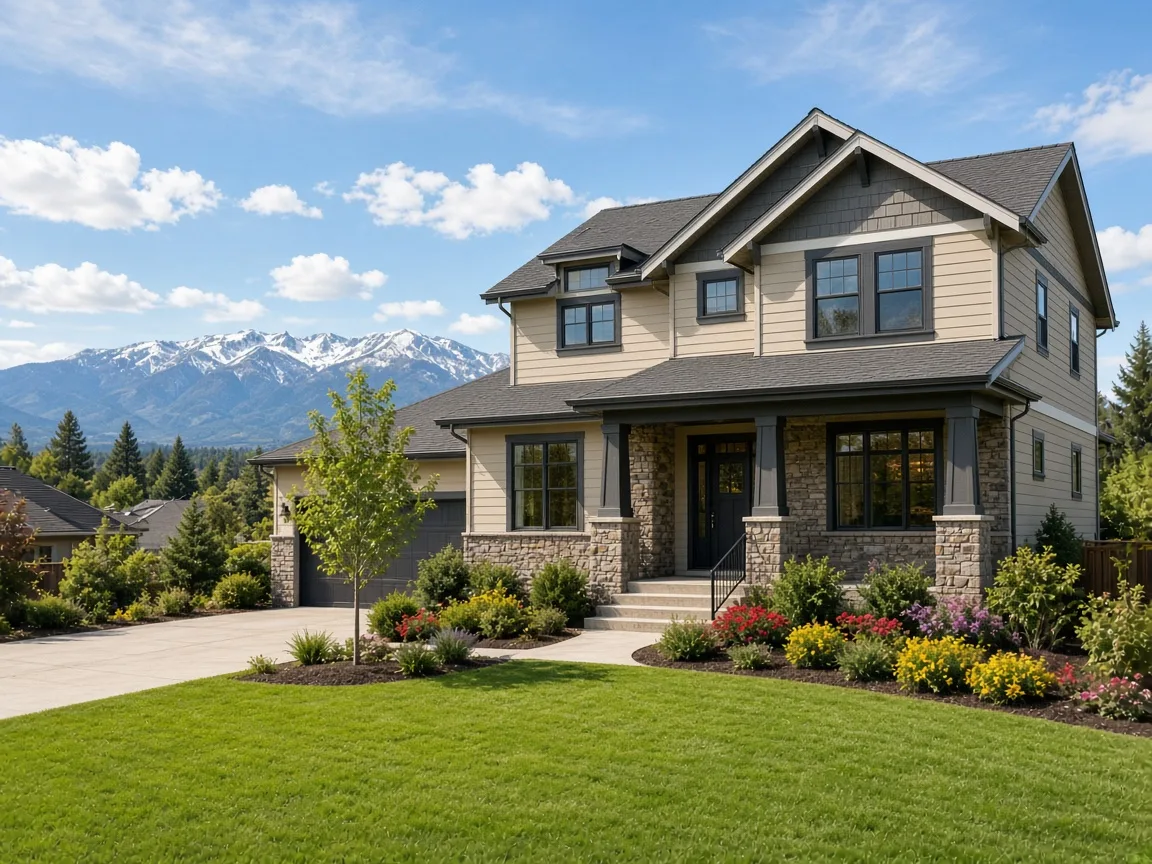
Well-kept residential street in a Southern Oregon community with a fairway between houses
Buying a home is a major financial decision, and every real estate market has characteristics worth understanding.
In Klamath Falls, buyers may encounter established residential homes, golf-oriented properties, rural acreage, cabins, and homes with private infrastructure.
The purchase process involves familiar steps such as financing, inspections, title review, and closing.
But local property conditions can create additional questions.
The goal is to understand those questions before committing to a property.
Start With Financing and a Realistic Budget
Before touring homes seriously, speak with a qualified lender about your financing options.
Ask about down payment requirements, closing costs, interest rates, mortgage insurance, and the documentation needed for approval.
Your monthly budget should account for property taxes, insurance, utilities, maintenance, and any applicable association fees.
Lincoln Home's mortgage, affordability, and debt-to-income calculators can help you explore scenarios.
Calculator results are estimates and do not replace lender underwriting.
Compare the Property, Not Just the Listing Price
Two homes with similar asking prices may have very different ownership costs.
One might have a newer roof and updated heating system.
Another could require substantial repairs or have higher insurance expenses.
A rural property may include land and outbuildings but also involve a well, septic system, private road, or additional maintenance responsibilities.
Evaluate the full property rather than focusing only on the purchase price.
Home Inspections and Property Condition
A professional home inspection can help identify concerns with visible and accessible systems.
Depending on the property, additional evaluations may be appropriate.
These could include roof, electrical, plumbing, heating, pest, structural, or other specialist inspections.
For older homes, investigate the age and condition of major systems.
For rural homes, additional due diligence may be especially important.
Discuss appropriate inspections and contractual deadlines with your real estate professional.
Wells, Septic Systems, and Rural Infrastructure
Properties outside established utility service areas may rely on private wells and on-site wastewater systems.
Buyers should verify the water source, available records, water quality, system condition, and applicable testing or transfer requirements.
For septic systems, investigate permits, maintenance history, and any recommended inspection.
Oregon has property-transfer requirements concerning domestic well water testing in certain circumstances. Confirm current rules and procedures through the Oregon Health Authority and relevant professionals.
Do not assume that a property has sufficient water for every intended use merely because a well exists.
Access, Easements, and Private Roads
Legal access is critical.
A driveway visible on a map does not necessarily establish the full legal rights needed to use or maintain it.
For properties on private roads, review recorded easements, maintenance agreements, and responsibilities.
Ask who maintains the road during winter and whether access is suitable for ordinary vehicles, deliveries, and emergency services.
Zoning and Permitted Uses
Acreage does not automatically permit every activity.
Before buying land for livestock, additional dwellings, vacation rentals, agricultural operations, or commercial purposes, confirm applicable zoning and land-use requirements.
Review recorded restrictions and seek professional guidance where needed.
A property's current use is not proof that a proposed future use will be permitted.
Wildfire, Flood, and Environmental Considerations
Property risks vary throughout Klamath County.
Buyers should investigate wildfire exposure, vegetation management, insurance availability, drainage, flood-zone information, and other relevant environmental conditions.
If the property is near wetlands, lakes, or rivers, investigate applicable restrictions and site conditions.
Do not rely solely on a listing description to determine risk.
Property Taxes and Insurance
Review the property's tax history and applicable assessment information.
Oregon's property-tax system requires more careful analysis than simply multiplying the purchase price by a single percentage.
Obtain homeowners insurance quotes early in the process.
For rural or higher-risk properties, availability and coverage terms can be especially important.
Title, Escrow, and Closing
A real estate transaction involves reviewing ownership, recorded interests, financing documents, and closing requirements.
Buyers should review the preliminary title report and ask questions about exceptions, easements, restrictions, and other recorded matters.
Escrow and closing procedures should be explained by the professionals handling the transaction.
Never rely on unexpected wire instructions.
Independently verify any wire instructions using a trusted telephone number obtained through a separate, reliable source.
Contingencies and Contract Deadlines
Purchase agreements may contain important deadlines involving inspections, financing, appraisal, title review, and other matters.
The exact terms depend on the contract.
Understand your obligations and available options before signing.
Do not assume that every transaction includes the same contingencies or protections.
The Value of Property-Specific Research
General market information is useful, but the final decision concerns one particular property.
Review its condition, legal access, infrastructure, taxes, insurance, restrictions, and suitability for your intended use.
Lincoln Home's Property DNA report can help organize questions and available information, but it does not replace inspections, title review, professional advice, or direct verification.
Frequently Asked Questions
What should I do before making an offer on a Klamath Falls home?
Review your financing, evaluate the property's condition and ownership costs, and discuss due diligence and contract terms with your real estate professional.
Do rural properties need special inspections?
They may require additional evaluations for wells, septic systems, access, outbuildings, or other property-specific features.
Are property taxes based on the purchase price?
Not simply. Oregon uses an assessment system that should be reviewed for the particular property.
Should I obtain homeowners insurance quotes before closing?
Yes. Early quotes can help identify costs, availability issues, and coverage requirements.
What is a Property DNA report?
It is a property research resource that can help organize information and due diligence questions. It is not a substitute for inspections or professional evaluations.
Start Your Klamath Falls Home Search With Confidence
Explore current listings through Lincoln Home, use the mortgage and affordability calculators, and review the buyer education resources.
When you find a property worth investigating, request a Property DNA report and discuss the next steps with Lincoln Home.
Continue Exploring
Strong due diligence comes from good resources. Use these guides and tools as you evaluate homes in the Klamath Basin.