
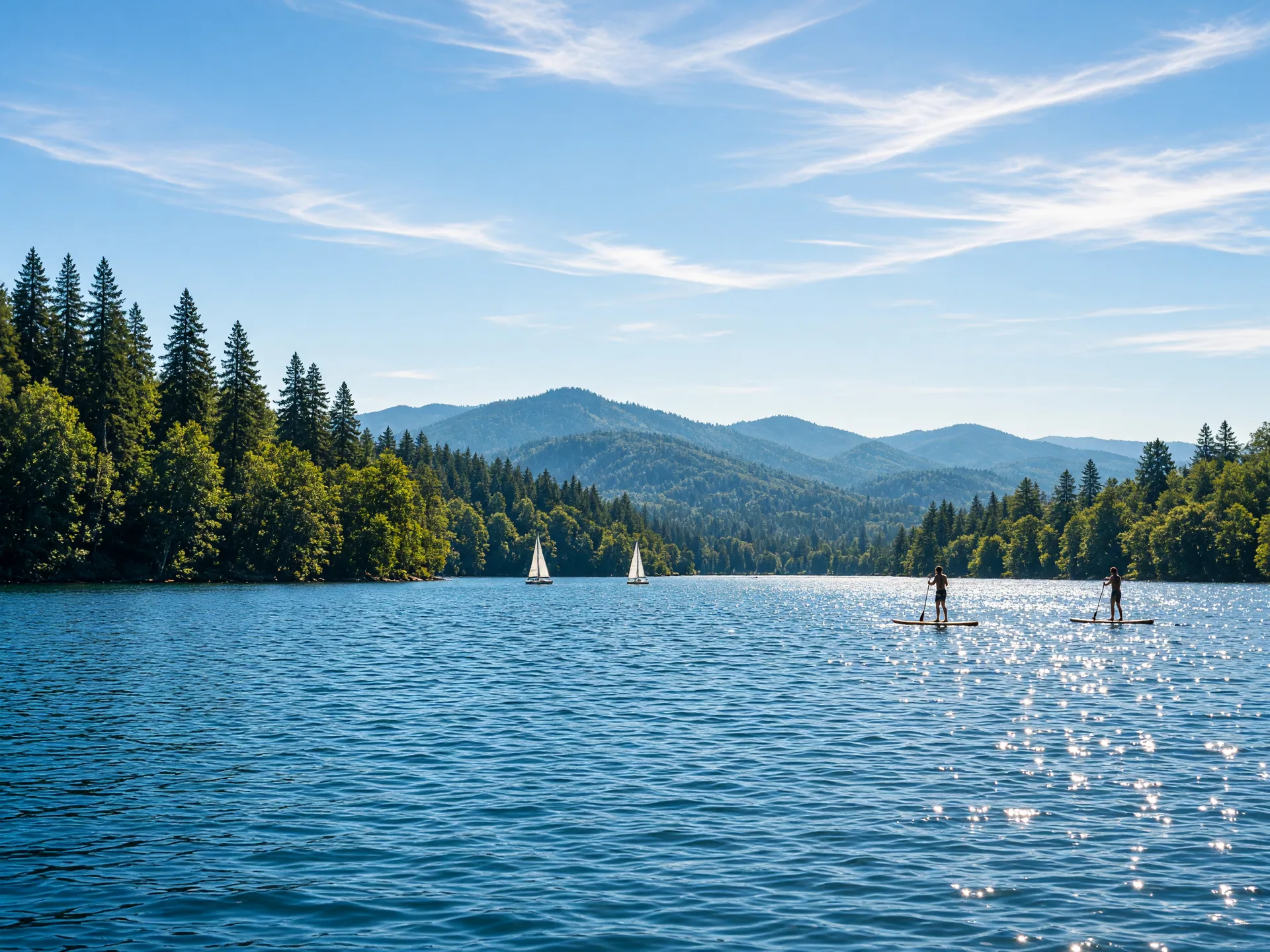
A Southern Oregon lake shoreline, where swimming suitability depends on water quality, access and conditions.
On a hot day, a mountain lake can look irresistible. But clear-looking water is not proof that swimming is safe, and a beautiful shoreline is not necessarily a designated swimming area. Before heading out, take a few minutes to check the rules, current advisories and conditions at the exact place you plan to visit.

Look for Managed Swimming Access
Developed recreation areas may provide easier access, parking, restrooms or designated swimming zones. Facilities vary widely, and lifeguards should never be assumed. Check the land manager's current information before traveling. Lake of the Woods is one regional destination people may consider for lakeside recreation, but specific swim access and operating conditions must be verified.
Cold Water Is a Serious Hazard
High-elevation lakes and shaded waterways may remain cold even when the weather is hot. Sudden immersion can impair breathing and movement. Enter cautiously, avoid jumping into unfamiliar water and use appropriate flotation. Never swim alone.
Watch for Harmful Algal Blooms
Cyanobacteria can sometimes produce toxins that pose risks to people and animals. Blooms may look like scum, paint, foam or discolored water, but toxins cannot be reliably identified by appearance. An absence of a posted advisory does not guarantee safety. Follow Oregon Health Authority guidance, avoid suspicious water and keep pets away.
Currents, Drop-Offs and Changing Conditions
Rivers can contain strong currents and submerged hazards. Lakes may have sudden depth changes, boat traffic or weather-driven waves. Check whether swimming is permitted and choose areas suited to your group's abilities.
Children and Pets Need Extra Attention
Assign an adult to active water supervision rather than assuming everyone is watching. Keep children within appropriate reach. Dogs can be harmed by cyanotoxins after swimming or licking contaminated fur; do not allow pets into suspicious water.
Plan a Better Lake Day
Bring drinking water, sun protection, layers, first-aid supplies and a backup activity. Check smoke and lightning forecasts. If conditions change, leaving early is a successful safety decision.
Check current water safety information before swimming
Swimming suitability changes with water quality, weather and site conditions. Check the current Oregon Health Authority advisory page and the land manager's information at the exact place you plan to visit. Never display or assume a static “safe today” status: verify before entering the water and keep pets away from suspicious blooms.
Conditions change. Verify lake information before you go.
Lake conditions, access, weather, water quality, fees, and regulations can change at any time. Verify current information with the managing agency and the official sources on this page before traveling. Never assume that a lake suitable for one activity is suitable for another.
Frequently Asked Questions
Does clear water mean a lake is safe?
No. Water quality and physical hazards cannot be judged from clarity alone.
Are there lifeguards at Southern Oregon lakes?
Do not assume so. Verify the specific site's facilities.
What if a lake has an algal advisory?
Follow official guidance and avoid activities that may expose people or pets to affected water.
Sources and Further Reading
- Oregon Health Authority — Harmful Algal Blooms
- Oregon State Marine Board
- CDC — Harmful Algal Blooms
- National Weather Service
Conditions, access, weather, water quality, fees, and regulations can change. Verify current information with the managing agency and the official sources above before traveling. On water-quality pages, the current Oregon Health Authority advisory page is the reference for harmful algal bloom status.
Related reading
Families comparing communities around Klamath Falls can explore Lincoln Home's local recreation and relocation guides to understand how lake access fits into daily life.