
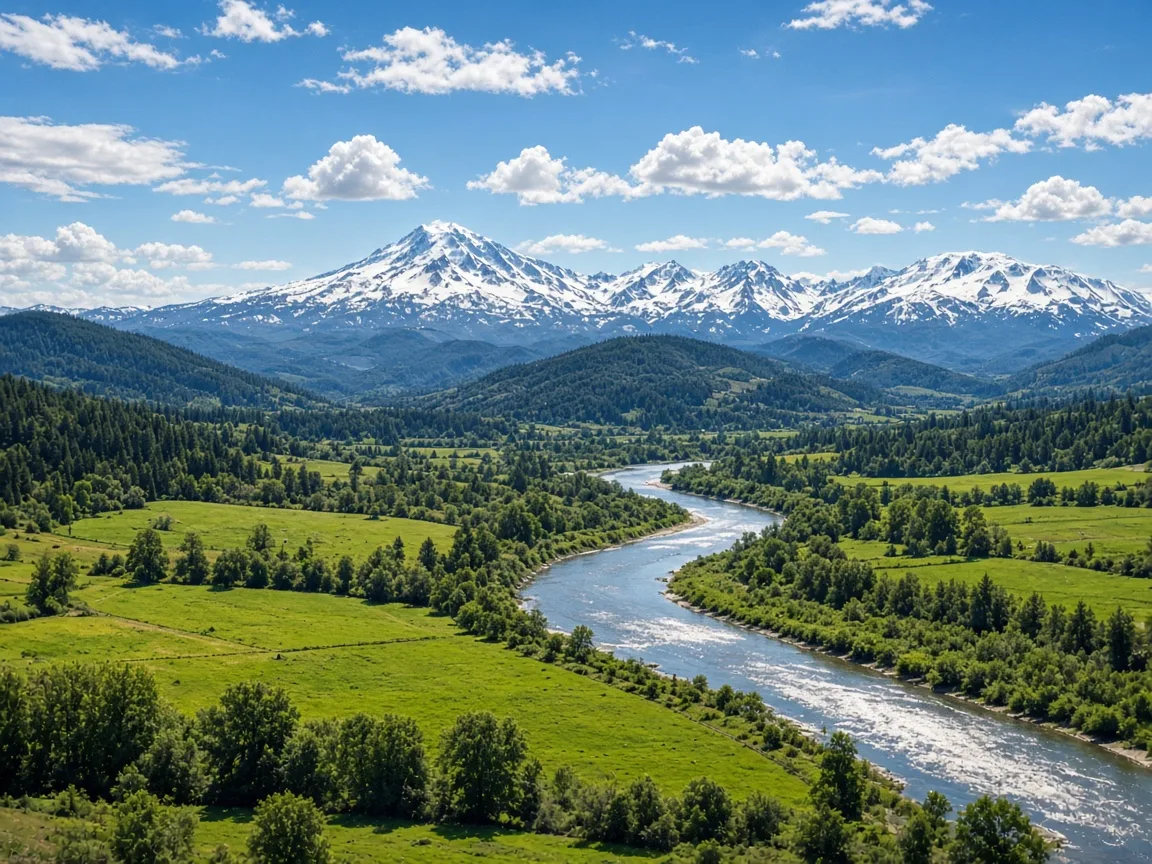
Before modern roads and railroads connected Southern Oregon, Indigenous communities maintained travel and exchange networks across the region.
These networks connected landscapes, resources and communities long before the establishment of modern towns.
Travel Across Different Environments
The Klamath Basin lies between mountain forests, lakes, wetlands and high desert.
Movement across these environments required detailed geographic knowledge.
Travel routes reflected terrain, water availability, seasonal conditions and relationships among communities.
Trade and Exchange
Indigenous communities exchanged materials and maintained connections with neighboring peoples.
Trade could involve useful resources, manufactured items and other goods.
These relationships were also social and cultural.
Geography and Knowledge
Knowing how to travel safely through mountain passes, wetlands and high desert terrain was valuable.
Routes were shaped by environmental conditions rather than modern administrative boundaries.
Settlement Changed Transportation
During the nineteenth century, new roads, military routes and commercial transportation systems developed.
Railroads later transformed regional commerce.
Yet these later systems did not mark the beginning of movement and exchange in the basin.
Why This History Matters
Understanding Indigenous travel networks challenges the idea that Southern Oregon was isolated until settlers arrived.
The region was connected through established Indigenous relationships long before the modern transportation system.
Sources
- https://klamathtribes.org/
- https://www.nps.gov/labe/learn/historyculture/modochomeland.htm
- https://www.oregonencyclopedia.org/
The linked references are editorial starting points researched from authoritative sources, including the Klamath Tribes and the National Park Service. Lincoln Home verifies source availability before publication.
Continue Reading
Related articles
Explore more from Lincoln Home