
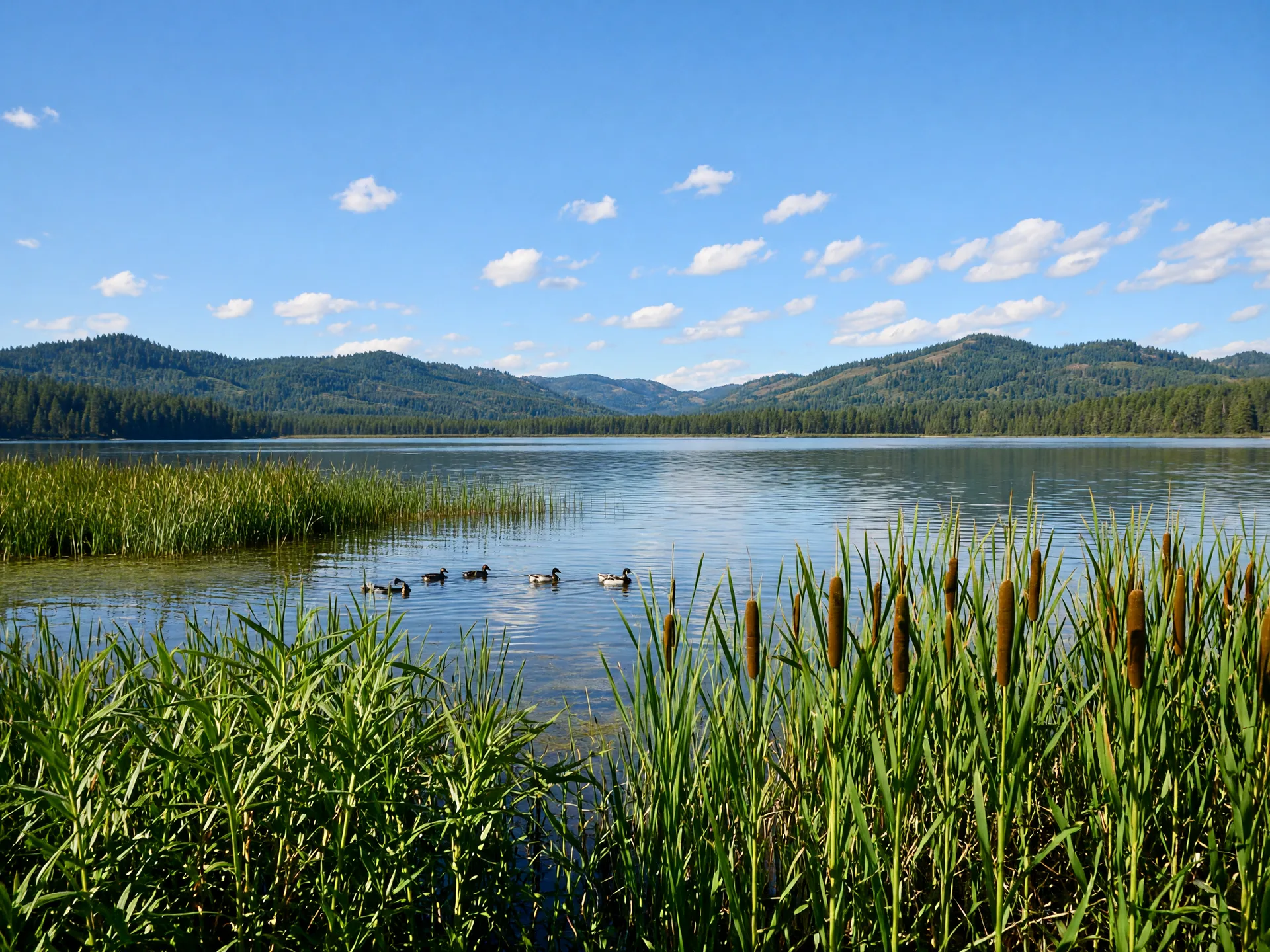
A tranquil freshwater marsh and lake in the Klamath Basin, a quiet-water canoeing landscape.
A canoe changes the pace of a day on the water. Instead of racing across a lake, you notice the sound of wind in the reeds, the movement of birds over the shoreline and the way mountains shift in the distance. The Klamath Basin's lakes and waterways can offer rewarding paddling experiences, but the right trip depends on current conditions and the skill of everyone aboard.
Match the Water to Your Experience
Not every beautiful lake is a beginner-friendly canoe destination. Large, open lakes can develop challenging wind and waves, while rivers may contain currents, obstacles, low-head dams or restricted areas. Begin by checking the actual launch location, shoreline access, forecast, water levels and any current advisories. Do not assume that a place suitable for motorboats is automatically suitable for an open canoe.
Plan Around Wind and Weather
Wind is one of the biggest practical considerations on exposed lakes. A calm morning can become difficult later in the day. Check the National Weather Service forecast, choose a sheltered route when appropriate and establish a turnaround time. Stay close enough to shore to manage conditions safely, while respecting private property and sensitive habitat.
Equipment That Matters
Everyone should wear a properly fitted U.S. Coast Guard-approved life jacket. Carry communication and navigation equipment appropriate to the outing, drinking water, weather protection and the safety gear required by Oregon rules. Cold water can be dangerous even when the air feels warm. Check Oregon State Marine Board guidance for current requirements, including any applicable Waterway Access Permit.
Paddle With Wildlife in Mind
The basin is known for wetlands and birds. Watching from a canoe can be wonderful, but maintain distance from nesting and resting wildlife. Do not pursue birds or enter seasonal closures. Keep noise low and use established access points.
Make It a Day Worth Remembering
A simple canoe trip can become a tradition: an early launch, a short paddle, a shoreline lunch in a lawful area and a return before conditions change. It is better to finish wanting another outing than to turn a pleasant morning into an exhausting emergency.
Canoeing and Life Near the Water
People considering a Southern Oregon lake-area home sometimes imagine carrying a canoe straight to the shore. Before buying, verify whether the property actually has legal water access, whether docks are permitted, how seasonal water levels change the shoreline and where boats can be stored. A water view and a legal launch right are not the same thing.
Canoe safety: wind, cold water, life jackets and lawful access
Wind is one of the biggest practical considerations on exposed lakes: check the forecast, choose a sheltered route and establish a turnaround time. Everyone aboard should wear a properly fitted U.S. Coast Guard-approved life jacket, and cold water can be dangerous even when the air feels warm. Only use lawful access points, and respect private property, habitat restrictions and site-specific rules.
Conditions change. Verify lake information before you go.
Lake conditions, access, weather, water quality, fees, and regulations can change at any time. Verify current information with the managing agency and the official sources on this page before traveling. Never assume that a lake suitable for one activity is suitable for another.
Frequently Asked Questions
Is Upper Klamath Lake suitable for beginner canoeists?
Its large, exposed waters can become windy and challenging. Suitability depends on route, weather, conditions and experience; beginners should seek a sheltered, verified location and appropriate instruction.
Do I need a permit for a canoe in Oregon?
Oregon has Waterway Access Permit requirements for certain nonmotorized boats. Check the current Marine Board rules for vessel length, exemptions and age requirements.
Can I launch anywhere along a lake?
No. Use lawful access points and respect private property, habitat restrictions and site-specific rules.
Sources and Further Reading
- Oregon State Marine Board
- National Weather Service
- U.S. Forest Service
- U.S. Fish and Wildlife Service
Conditions, access, weather, water quality, fees, and regulations can change. Verify current information with the managing agency and the official sources above before traveling. On water-quality pages, the current Oregon Health Authority advisory page is the reference for harmful algal bloom status.
Related reading
If access to lakes and paddling is part of your relocation wish list, Lincoln Home can help you compare the lifestyle you imagine with the practical details of a property.