
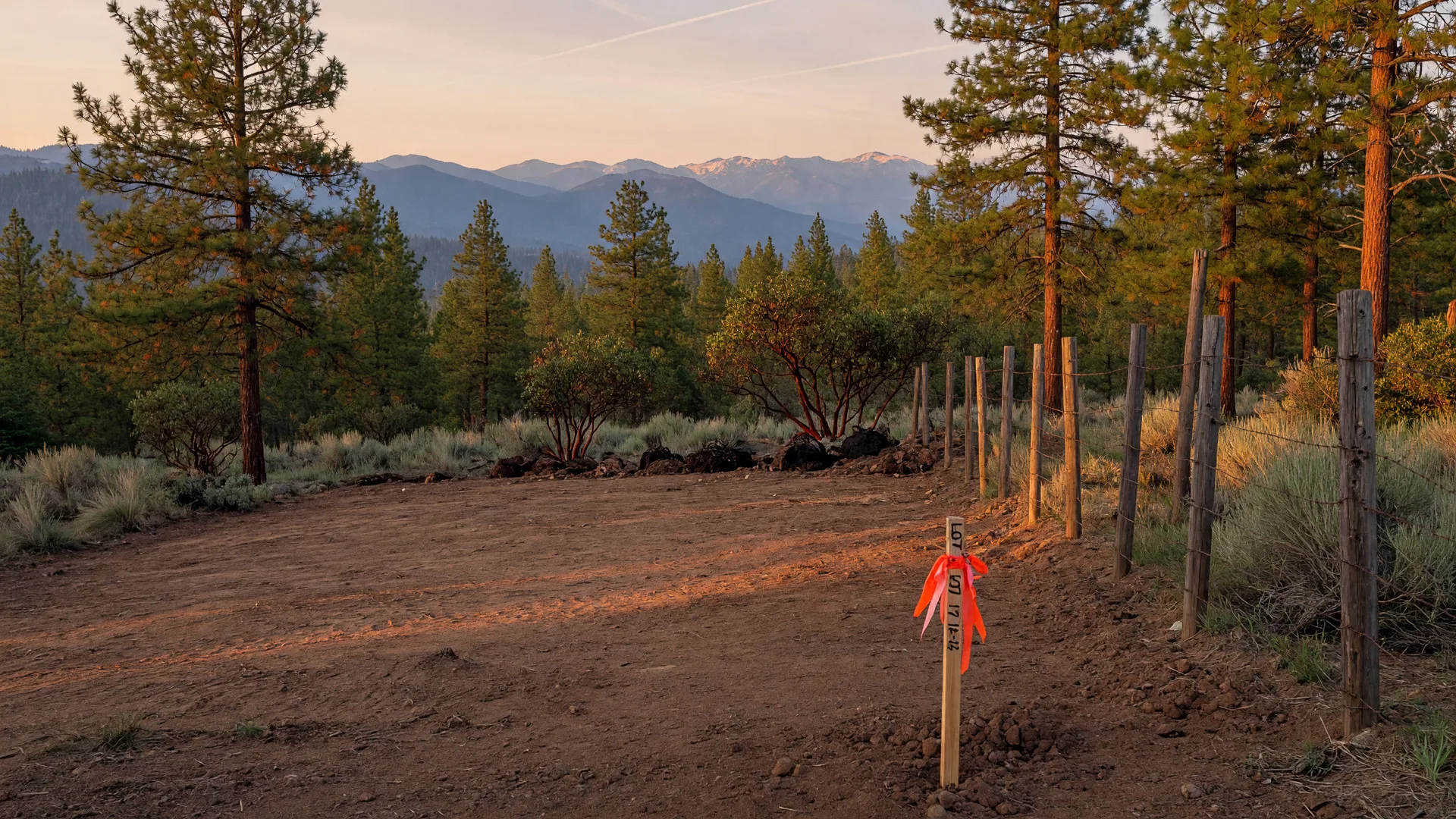
The Appeal of Starting From the Ground Up
For some buyers, the ideal home isn’t one that already exists.
It’s a home designed around the way they want to live.
Perhaps you want a main-level primary suite, generous windows overlooking the landscape, space for visiting family, or a floor plan that makes entertaining easy.
At Running Y Resort, the possibility of purchasing a residential homesite can make that vision particularly appealing.
But before choosing a lot because of its scenery or location near the golf course, it’s important to understand what building actually involves.
The land is only the beginning.
Start With the Property, Not the Floor Plan
It’s tempting to fall in love with a house design before choosing the land.
However, the characteristics of a lot can significantly influence what is practical to build.
Slope, drainage, soil conditions, access, vegetation, and available utilities may affect construction methods and costs.
A floor plan that works well on one property may require substantial changes on another.
Before committing to a design, investigate the actual building envelope and site requirements.
An architect, builder, surveyor, and other qualified professionals may be needed to determine what can be constructed.
Verify Legal Access
A parcel’s appearance on a map does not establish that all access questions have been resolved.
Confirm legal access, recorded easements, road responsibilities, and any applicable restrictions.
Consider how construction vehicles will reach the property.
Also investigate year-round access and the maintenance responsibilities associated with roads or shared infrastructure.
These issues can affect both the construction process and everyday ownership.
Utilities: Availability Is Not the Same as Connection
One of the most common mistakes in land purchases is assuming that nearby utilities are automatically available at a reasonable cost.
Before purchasing a Running Y homesite, investigate the actual availability and connection requirements for electricity, water, sewer, communications, and other necessary services.
Ask the relevant providers for written information whenever possible.
Determine whether connection fees, extensions, easements, capacity limitations, or other improvements may be required.
The difference between a utility being nearby and being ready for service can be financially significant.
Architectural Review and Community Standards
Properties within planned communities may be subject to architectural standards and review procedures.
These requirements can influence exterior materials, roof designs, landscaping, fencing, building placement, and other design choices.
Before buying a lot, obtain the applicable governing documents and current architectural guidelines.
Ask about the review process, submission requirements, fees, and expected timelines.
Do not assume that approval of a conceptual design guarantees approval of final construction plans.
Understand the Building Envelope
The portion of a lot where construction is permitted may be smaller than the overall parcel.
Setbacks, easements, topography, environmental conditions, and community restrictions can affect the usable building area.
A large lot is not necessarily a lot that accommodates a large home.
Have qualified professionals evaluate the site before relying on assumptions about the property’s development potential.
Budget Beyond the House
Construction budgets often begin with a cost per square foot.
That can be a useful starting point, but it is not a complete project budget.
Additional expenses may include surveys, design services, engineering, permits, site preparation, utility connections, driveways, landscaping, financing, and contingency reserves.
Changes during construction can also affect cost and timing.
Obtain current written estimates from qualified professionals rather than relying on generalized regional construction figures.
Consider the Construction Timeline
Building a home involves multiple stages.
Design, engineering, approvals, financing, contractor scheduling, site preparation, and construction all take time.
Weather and material availability may also affect progress.
Buyers should avoid planning around a guaranteed completion date unless the relevant parties have established realistic contractual commitments.
If you’re selling another home or relocating, consider how delays could affect housing arrangements and finances.
Building Near the Golf Course
A golf-oriented homesite may offer attractive scenery, but the exact relationship to the course matters.
Evaluate fairway orientation, privacy, potential exposure to golf activity, and any restrictions on landscaping or exterior improvements.
Confirm whether the property actually has golf frontage or a golf view.
A course-adjacent location should be assessed for both its appeal and its practical implications.
Financing a Land Purchase and Construction
Financing vacant land and new construction can differ from financing an existing home.
Lenders may evaluate the parcel, building plans, construction contract, borrower qualifications, and other factors.
Construction loans can involve staged disbursements and specific documentation requirements.
Talk with lenders experienced in land and construction financing before assuming that a conventional mortgage approval will cover the project.
A Smart Due-Diligence Process
Before purchasing, work through the major questions in a logical order.
First, confirm the parcel’s legal description and boundaries.
Next, investigate access, utilities, zoning, community restrictions, and site conditions.
Then consult appropriate design and construction professionals.
Finally, evaluate financing, total project cost, timelines, and contingency plans.
The goal is to discover major obstacles before they become expensive surprises.
Explore: Running Y Community Guide
Browse: Golf-Oriented Homes and Lots